
Before Memmo my notes were scattered across PDFs. Now a workspace pulls everything into one place — I see exactly what's still left to study.
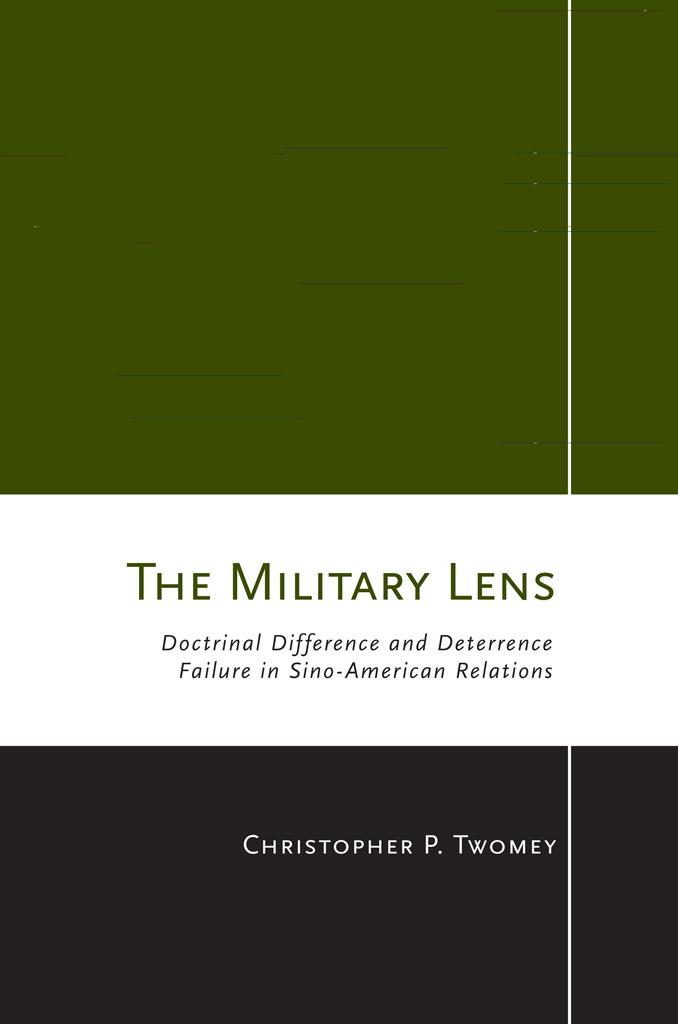
In The Military Lens, Christopher P. Twomey shows how differing military doctrines have led to misperceptions between the United States and China over foreign policy—and the potential dangers these might pose in future relations. Because of their different strategic situations, histories, and military cultures, nations may have radically disparate definitions of effective military doctrine, strategy, and capabilities. Twomey argues that when such doctrines—or "theories of victory"—differ across states, misperceptions about a rival's capabilities and intentions and false optimism about one's own are more likely to occur. In turn, these can impede international diplomacy and statecraft by making it more difficult to communicate and agree on assessments of the balance of power. When states engage in strategic coercion—either to deter or to compel action—such problems can lead to escalation and war.
Twomey assesses a wide array of sources in both the United States and China on military doctrine, strategic culture, misperception, and deterrence theory to build case studies of attempts at strategic coercion during Sino-American conflicts in Korea and the Taiwan Strait in the early years of the Cold War, as well as an examination of similar issues in the Arab-Israeli conflict. After demonstrating how these factors have contributed to past conflicts, Twomey amply documents the persistence of hazardous miscommunication in contemporary Sino-American relations. His unique analytic perspective on military capability suggests that policymakers need to carefully consider the military doctrine of the nations they are trying to influence.
Before Memmo my notes were scattered across PDFs. Now a workspace pulls everything into one place — I see exactly what's still left to study.
Memmo's summaries are gold before exams. I don't have to re-read 800 pages two weeks before — just the important parts.
The AI chat has saved me the night before an exam more than once. I just keep asking until I get it — no waiting on a study group to reply.
The quizzes hit exactly what I need to know. Memmo tracks what I get stuck on — so I only practice what's worth it.
Flashcards with spaced repetition are magic. Memmo knows when I'm about to forget something and brings it back.
The AI podcasts are my favorite. I listen on my way to school and get a recap without sitting at a computer.

Handbok i kvalitativa metoder
281 kr

Hållbar utveckling: en introduktion för ingenjörer och andra problemlösare
334 kr

Brymans Samhällsvetenskapliga metoder
390 kr

Projektledning
491 kr

Den orättvisa hälsan: om socioekonomiska skillnader i hälsa och livslängd
326 kr

Organizational Leadership
429 kr

Vetenskapsteori för nybörjare
196 kr

På väg mot läraryrket
172 kr

Det sociala livet i skolan: Socialpsykologiska perspektiv
253 kr

Betygsättningens didaktik
151 kr

Personality
402 kr

Studying Leadership
404 kr

Managing Innovation
477 kr

Introduktion till samhällsvetenskaplig metod
347 kr

The Psychology of Sex and Gender
698 kr

Evidens och kunskap för socialt arbete
207 kr

Introduction to Leadership
605 kr