
Before Memmo my notes were scattered across PDFs. Now a workspace pulls everything into one place — I see exactly what's still left to study.
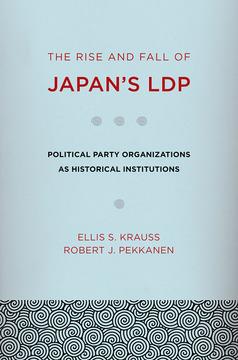
After holding power continuously from its inception in 1955 (with the exception of a ten-month hiatus in 1993–1994), Japan's Liberal Democratic Party (LDP) lost control of the national government decisively in September 2009. Despite its defeat, the LDP remains the most successful political party in a democracy in the post–World War II period. In The Rise and Fall of Japan's LDP, Ellis S. Krauss and Robert J. Pekkanen shed light on the puzzle of the LDP's long dominance and abrupt defeat. Several questions about institutional change in party politics are at the core of their investigation: What incentives do different electoral systems provide? How do politicians adapt to new incentives? How much does structure determine behavior, and how much opportunity does structure give politicians to influence outcomes? How adaptable are established political organizations?
The electoral system Japan established in 1955 resulted in a half-century of "one-party democracy." But as Krauss and Pekkanen detail, sweeping political reforms in 1994 changed voting rules and other key elements of the electoral system. Both the LDP and its adversaries had to adapt to a new system that gave citizens two votes: one for a party and one for a candidate. Under the leadership of the charismatic Koizumi Junichiro, the LDP managed to maintain its majority in the Japanese Diet, but his successors lost popular support as opposing parties learned how to operate in the new electoral environment. Drawing on the insights of historical institutionalism, Krauss and Pekkanen explain how Japanese politics functioned before and after the 1994 reform and why the persistence of party institutions (factions, PARC, koenkai) and the transformed role of party leadership contributed both to the LDP's success at remaining in power for fifteen years after the reforms and to its eventual downfall. In an epilogue, the authors assess the LDP's prospects in the near and medium term.
Before Memmo my notes were scattered across PDFs. Now a workspace pulls everything into one place — I see exactly what's still left to study.
Memmo's summaries are gold before exams. I don't have to re-read 800 pages two weeks before — just the important parts.
The AI chat has saved me the night before an exam more than once. I just keep asking until I get it — no waiting on a study group to reply.
The quizzes hit exactly what I need to know. Memmo tracks what I get stuck on — so I only practice what's worth it.
Flashcards with spaced repetition are magic. Memmo knows when I'm about to forget something and brings it back.
The AI podcasts are my favorite. I listen on my way to school and get a recap without sitting at a computer.

Handbok i kvalitativa metoder
281 kr

Hållbar utveckling: en introduktion för ingenjörer och andra problemlösare
334 kr

Brymans Samhällsvetenskapliga metoder
390 kr

Projektledning
491 kr

Den orättvisa hälsan: om socioekonomiska skillnader i hälsa och livslängd
326 kr

Vetenskapsteori för nybörjare
196 kr

Organizational Leadership
429 kr

På väg mot läraryrket
172 kr

Det sociala livet i skolan: Socialpsykologiska perspektiv
253 kr

Betygsättningens didaktik
151 kr

Personality
402 kr

Studying Leadership
404 kr

Managing Innovation
477 kr

Introduktion till samhällsvetenskaplig metod
347 kr

The Psychology of Sex and Gender
698 kr

Evidens och kunskap för socialt arbete
207 kr

Introduction to Leadership
605 kr