
Before Memmo my notes were scattered across PDFs. Now a workspace pulls everything into one place — I see exactly what's still left to study.
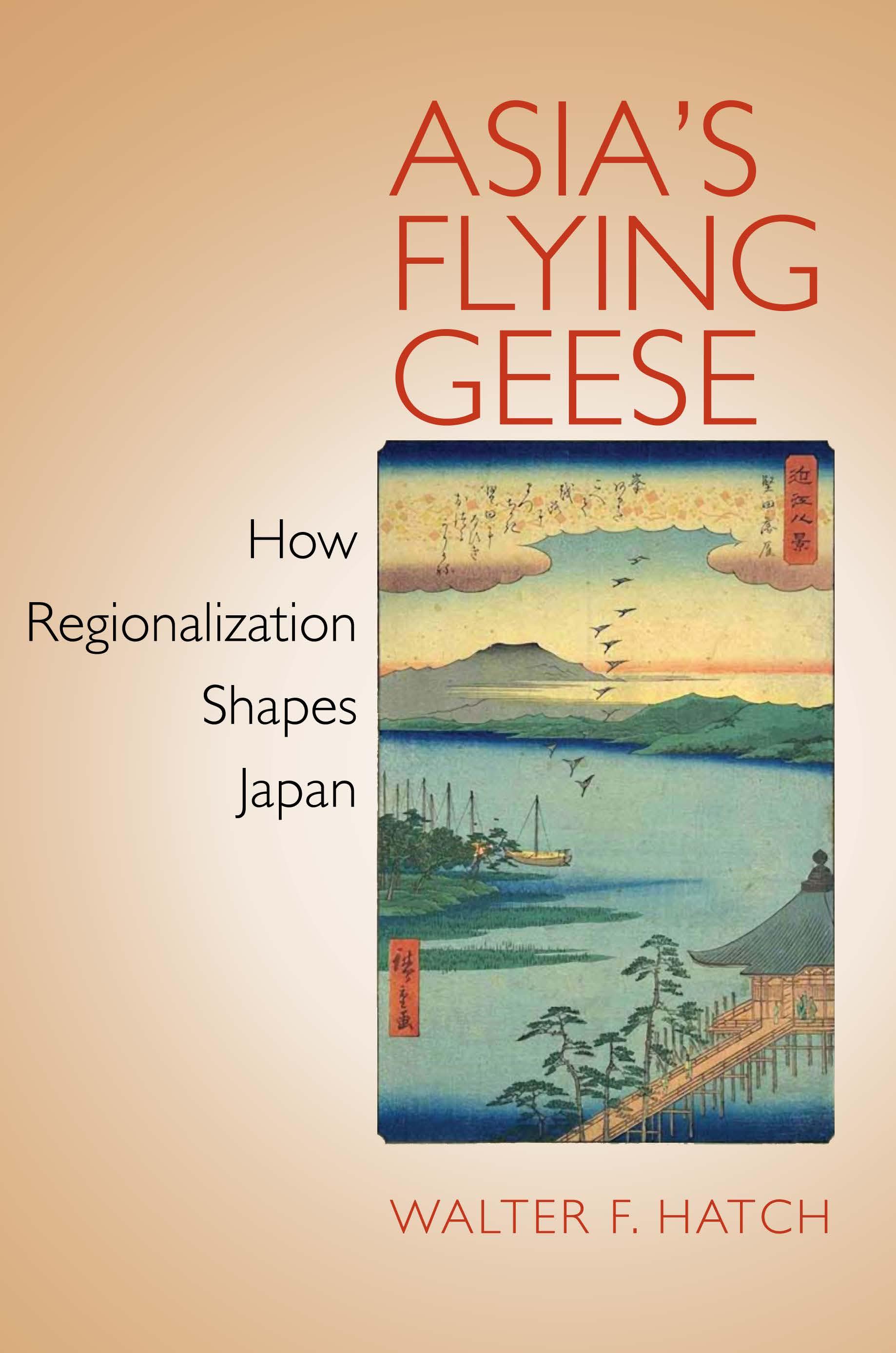
In Asia's Flying Geese, Walter F. Hatch tackles the puzzle of Japan's paradoxically slow change during the economic crisis it faced in the 1990s. Why didn't the purportedly unstoppable pressures of globalization force a rapid and radical shift in Japan's business model? In a book with lessons for the larger debate about globalization and its impact on national economies, Hatch shows how Japanese political and economic elites delayed—but could not in the end forestall—the transformation of their distinctive brand of capitalism by trying to extend it to the rest of Asia. For most of the 1990s, the region grew rapidly as an increasingly integrated but hierarchical group of economies. Japanese diplomats and economists came to call them "flying geese." The "lead goose" or most developed economy, Japan, supplied the capital, technology, and even developmental norms to second-tier "geese" such as Singapore and South Korea, which themselves traded with Thailand, Malaysia, and the Philippines, and so on down the V-shaped line to Indonesia and coastal China. Japan's model of capitalism, which Hatch calls "relationalism," was thus fortified, even as it became increasingly outdated.
Japanese elites enjoyed enormous benefits from their leadership in the region as long as the flock found ready markets for their products in the West. The decade following the collapse of Japan's real estate and stock markets would, however, see two developments that ultimately eroded the country's economic dominance. The Asian economic crisis in the late 1990s destabilized many of the surrounding economies upon which Japan had in some measure depended, and the People's Republic of China gained new prominence on the global scene as an economic dynamo. These changes, Hatch concludes, have forced real transformation in Japan's corporate governance, its domestic politics, and in its ongoing relations with its neighbors.
Before Memmo my notes were scattered across PDFs. Now a workspace pulls everything into one place — I see exactly what's still left to study.
Memmo's summaries are gold before exams. I don't have to re-read 800 pages two weeks before — just the important parts.
The AI chat has saved me the night before an exam more than once. I just keep asking until I get it — no waiting on a study group to reply.
The quizzes hit exactly what I need to know. Memmo tracks what I get stuck on — so I only practice what's worth it.
Flashcards with spaced repetition are magic. Memmo knows when I'm about to forget something and brings it back.
The AI podcasts are my favorite. I listen on my way to school and get a recap without sitting at a computer.

Handbok i kvalitativa metoder
281 kr

Hållbar utveckling: en introduktion för ingenjörer och andra problemlösare
334 kr

Brymans Samhällsvetenskapliga metoder
390 kr

Projektledning
491 kr

Den orättvisa hälsan: om socioekonomiska skillnader i hälsa och livslängd
326 kr

Vetenskapsteori för nybörjare
196 kr

Organizational Leadership
429 kr

På väg mot läraryrket
172 kr

Det sociala livet i skolan: Socialpsykologiska perspektiv
253 kr

Betygsättningens didaktik
151 kr

Personality
402 kr

Studying Leadership
404 kr

Managing Innovation
477 kr

Introduktion till samhällsvetenskaplig metod
347 kr

The Psychology of Sex and Gender
698 kr

Evidens och kunskap för socialt arbete
207 kr

Introduction to Leadership
605 kr