
Before Memmo my notes were scattered across PDFs. Now a workspace pulls everything into one place — I see exactly what's still left to study.
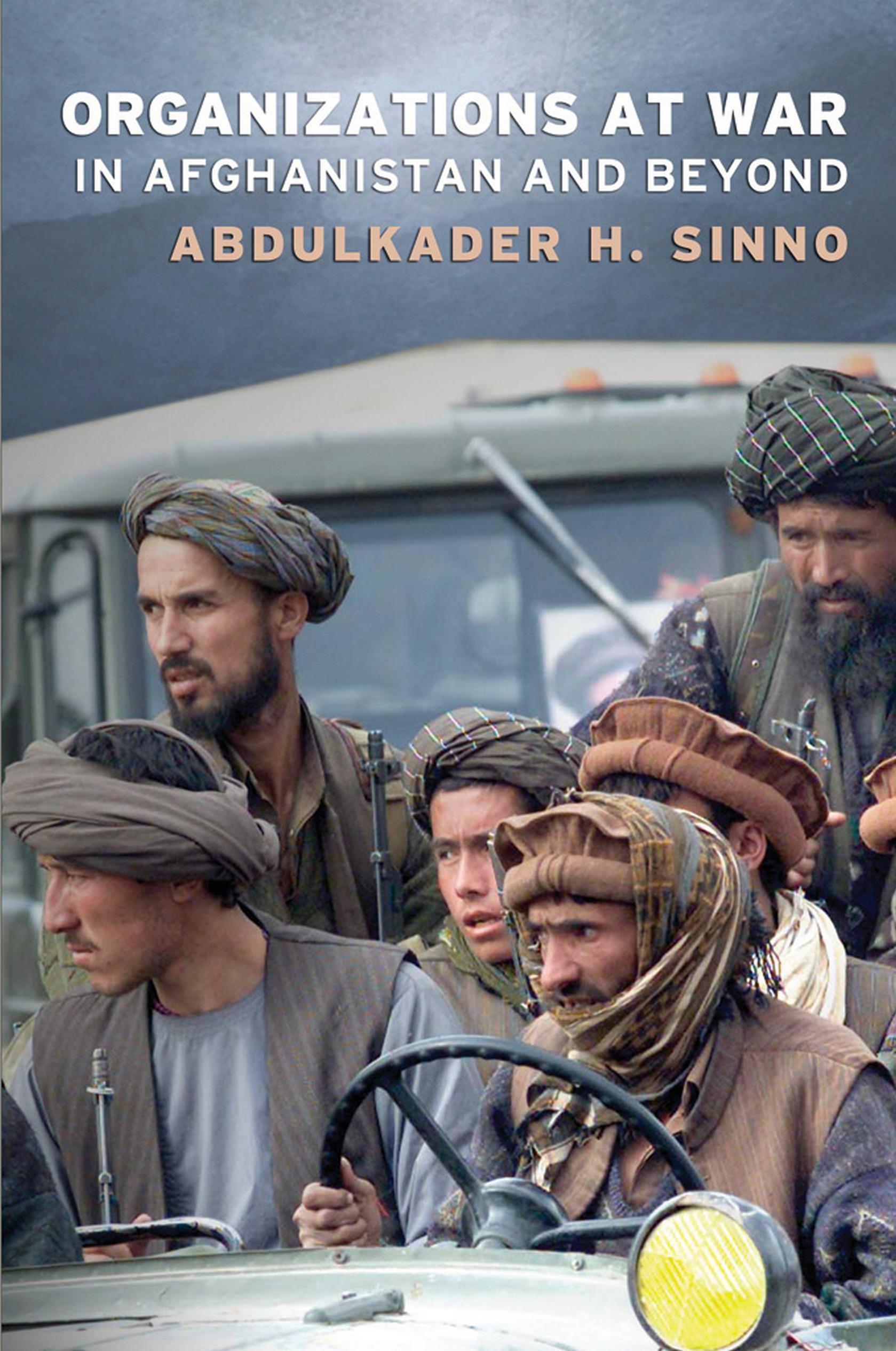
"After we had exchanged the requisite formalities over tea in his camp on the southern edge of Kabul's outer defense perimeter, the Afghan field commander told me that two of his bravest mujahideen were martyred because he did not have a pickup truck to take them to a Peshawar hospital. They had succumbed to their battle wounds. He asked me to tell his party's bureaucrats across the border that he needed such a vehicle desperately. I double-checked with my interpreter that he was indeed making this request. I wasn't puzzled because the request appeared unreasonable but because he was asking me, a twenty-year-old employee of a humanitarian organization, to intercede on his behalf with his own organization's bureaucracy. I understood on this dry summer day in Khurd Kabul that not all militant and political organizations are alike."—from Organizations at War in Afghanistan and Beyond
While popular accounts of warfare, particularly of nontraditional conflicts such as guerrilla wars and insurgencies, favor the roles of leaders or ideology, social-scientific analyses of these wars focus on aggregate categories such as ethnic groups, religious affiliations, socioeconomic classes, or civilizations. Challenging these constructions, Abdulkader H. Sinno closely examines the fortunes of the various factions in Afghanistan, including the mujahideen and the Taliban, that have been fighting each other and foreign armies since the 1979 Soviet invasion. Focusing on the organization of the combatants, Sinno offers a new understanding of the course and outcome of such conflicts.
Employing a wide range of sources, including his own fieldwork in Afghanistan and statistical data on conflicts across the region, Sinno contends that in Afghanistan, the groups that have outperformed and outlasted their opponents have done so because of their successful organization. Each organization's ability to mobilize effectively, execute strategy, coordinate efforts, manage disunity, and process information depends on how well its structure matches its ability to keep its rivals at bay. Centralized organizations, Sinno finds, are generally more effective than noncentralized ones, but noncentralized ones are more resilient absent a safe haven. Sinno's organizational theory explains otherwise puzzling behavior found in group conflicts: the longevity of unpopular regimes, the demise of popular movements, and efforts of those who share a common cause to undermine their ideological or ethnic kin. The author argues that the organizational theory applies not only to Afghanistan-where he doubts the effectiveness of American state-building efforts—but also to other ethnic, revolutionary, independence, and secessionist conflicts in North Africa, the Middle East, and beyond.
Before Memmo my notes were scattered across PDFs. Now a workspace pulls everything into one place — I see exactly what's still left to study.
Memmo's summaries are gold before exams. I don't have to re-read 800 pages two weeks before — just the important parts.
The AI chat has saved me the night before an exam more than once. I just keep asking until I get it — no waiting on a study group to reply.
The quizzes hit exactly what I need to know. Memmo tracks what I get stuck on — so I only practice what's worth it.
Flashcards with spaced repetition are magic. Memmo knows when I'm about to forget something and brings it back.
The AI podcasts are my favorite. I listen on my way to school and get a recap without sitting at a computer.

Handbok i kvalitativa metoder
281 kr

Hållbar utveckling: en introduktion för ingenjörer och andra problemlösare
334 kr

Brymans Samhällsvetenskapliga metoder
390 kr

Projektledning
491 kr

Den orättvisa hälsan: om socioekonomiska skillnader i hälsa och livslängd
326 kr

Vetenskapsteori för nybörjare
196 kr

Organizational Leadership
429 kr

På väg mot läraryrket
172 kr

Det sociala livet i skolan: Socialpsykologiska perspektiv
253 kr

Betygsättningens didaktik
151 kr

Personality
402 kr

Studying Leadership
404 kr

Managing Innovation
477 kr

Introduktion till samhällsvetenskaplig metod
347 kr

The Psychology of Sex and Gender
698 kr

Evidens och kunskap för socialt arbete
207 kr

Introduction to Leadership
605 kr