
Before Memmo my notes were scattered across PDFs. Now a workspace pulls everything into one place — I see exactly what's still left to study.
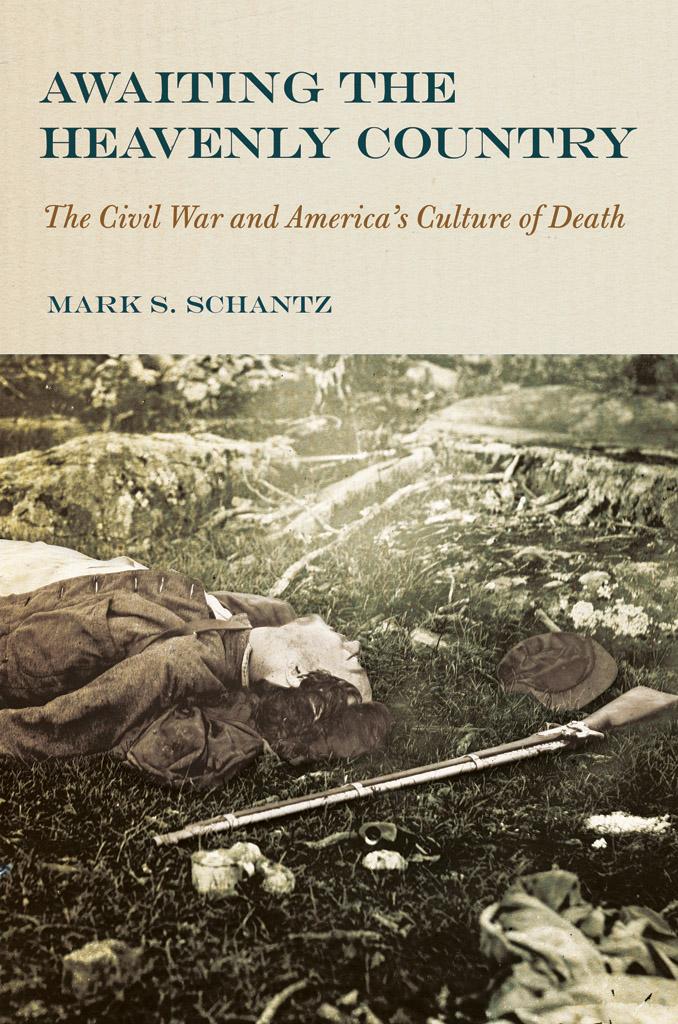
"Americans came to fight the Civil War in the midst of a wider cultural world that sent them messages about death that made it easier to kill and to be killed. They understood that death awaited all who were born and prized the ability to face death with a spirit of calm resignation. They believed that a heavenly eternity of transcendent beauty awaited them beyond the grave. They knew that their heroic achievements would be cherished forever by posterity. They grasped that death itself might be seen as artistically fascinating and even beautiful."—from Awaiting the Heavenly Country
How much loss can a nation bear? An America in which 620,000 men die at each other's hands in a war at home is almost inconceivable to us now, yet in 1861 American mothers proudly watched their sons, husbands, and fathers go off to war, knowing they would likely be killed. Today, the death of a soldier in Iraq can become headline news; during the Civil War, sometimes families did not learn of their loved ones' deaths until long after the fact.
Did antebellum Americans hold their lives so lightly, or was death so familiar to them that it did not bear avoiding? In Awaiting the Heavenly Country, Mark S. Schantz argues that American attitudes and ideas about death helped facilitate the war's tremendous carnage. Asserting that nineteenth-century attitudes toward death were firmly in place before the war began rather than arising from a sense of resignation after the losses became apparent, Schantz has written a fascinating and chilling narrative of how a society understood death and reckoned the magnitude of destruction it was willing to tolerate.
Schantz addresses topics such as the pervasiveness of death in the culture of antebellum America; theological discourse and debate on the nature of heaven and the afterlife; the rural cemetery movement and the inheritance of the Greek revival; death as a major topic in American poetry; African American notions of death, slavery, and citizenship; and a treatment of the art of death—including memorial lithographs, postmortem photography and Rembrandt Peale's major exhibition painting The Court of Death.
Awaiting the Heavenly Country is essential reading for anyone wanting a deeper understanding of the Civil War and the ways in which antebellum Americans comprehended death and the unimaginable bloodshed on the horizon.
Before Memmo my notes were scattered across PDFs. Now a workspace pulls everything into one place — I see exactly what's still left to study.
Memmo's summaries are gold before exams. I don't have to re-read 800 pages two weeks before — just the important parts.
The AI chat has saved me the night before an exam more than once. I just keep asking until I get it — no waiting on a study group to reply.
The quizzes hit exactly what I need to know. Memmo tracks what I get stuck on — so I only practice what's worth it.
Flashcards with spaced repetition are magic. Memmo knows when I'm about to forget something and brings it back.
The AI podcasts are my favorite. I listen on my way to school and get a recap without sitting at a computer.

Handbok i kvalitativa metoder
281 kr

Hållbar utveckling: en introduktion för ingenjörer och andra problemlösare
334 kr

Brymans Samhällsvetenskapliga metoder
390 kr

Projektledning
491 kr

Den orättvisa hälsan: om socioekonomiska skillnader i hälsa och livslängd
326 kr

Vetenskapsteori för nybörjare
196 kr

Organizational Leadership
429 kr

På väg mot läraryrket
172 kr

Det sociala livet i skolan: Socialpsykologiska perspektiv
253 kr

Betygsättningens didaktik
151 kr

Personality
402 kr

Studying Leadership
404 kr

Managing Innovation
477 kr

Introduktion till samhällsvetenskaplig metod
347 kr

The Psychology of Sex and Gender
698 kr

Evidens och kunskap för socialt arbete
207 kr

Introduction to Leadership
605 kr