
Before Memmo my notes were scattered across PDFs. Now a workspace pulls everything into one place — I see exactly what's still left to study.
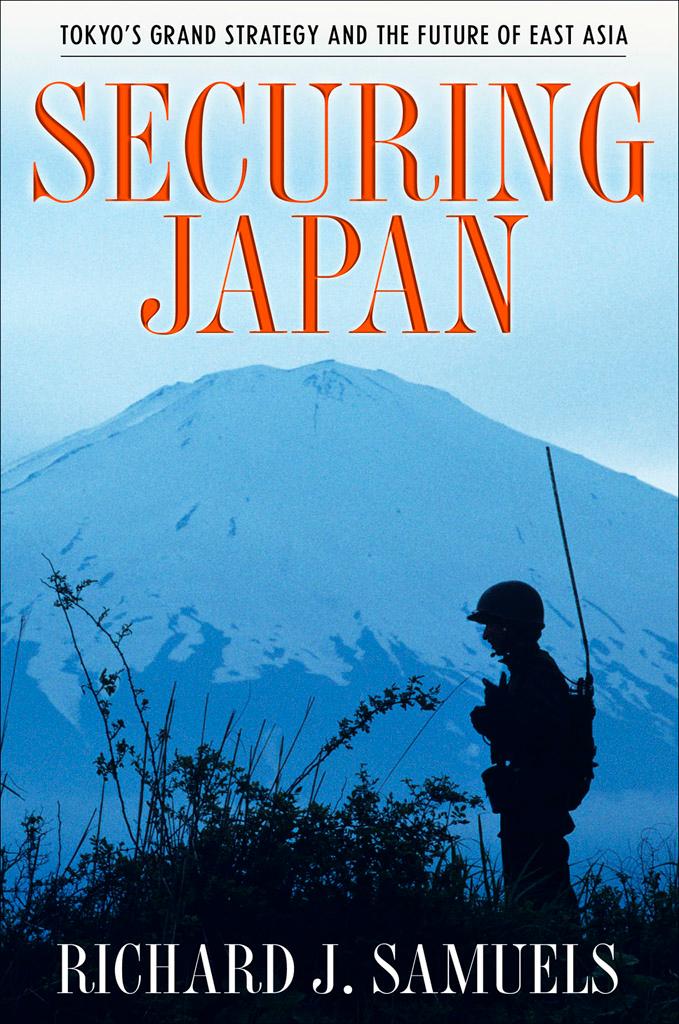
For the past sixty years, the U.S. government has assumed that Japan's security policies would reinforce American interests in Asia. The political and military profile of Asia is changing rapidly, however. Korea's nuclear program, China's rise, and the relative decline of U.S. power have commanded strategic review in Tokyo just as these matters have in Washington. What is the next step for Japan's security policy? Will confluence with U.S. interests—and the alliance—survive intact? Will the policy be transformed? Or will Japan become more autonomous?
Richard J. Samuels demonstrates that over the last decade, a revisionist group of Japanese policymakers has consolidated power. The Koizumi government of the early 2000s took bold steps to position Japan's military to play a global security role. It left its successor, the Abe government, to further define and legitimate Japan's new grand strategy, a project well under way-and vigorously contested both at home and in the region.
Securing Japan begins by tracing the history of Japan's grand strategy—from the Meiji rulers, who recognized the intimate connection between economic success and military advance, to the Konoye consensus that led to Japan's defeat in World War II and the postwar compact with the United States. Samuels shows how the ideological connections across these wars and agreements help explain today's debate. He then explores Japan's recent strategic choices, arguing that Japan will ultimately strike a balance between national strength and national autonomy, a position that will allow it to exist securely without being either too dependent on the United States or too vulnerable to threats from China.
Samuels's insights into Japanese history, society, and politics have been honed over a distinguished career and enriched by interviews with policymakers and original archival research. Securing Japan is a definitive assessment of Japanese security policy and its implications for the future of East Asia.
Before Memmo my notes were scattered across PDFs. Now a workspace pulls everything into one place — I see exactly what's still left to study.
Memmo's summaries are gold before exams. I don't have to re-read 800 pages two weeks before — just the important parts.
The AI chat has saved me the night before an exam more than once. I just keep asking until I get it — no waiting on a study group to reply.
The quizzes hit exactly what I need to know. Memmo tracks what I get stuck on — so I only practice what's worth it.
Flashcards with spaced repetition are magic. Memmo knows when I'm about to forget something and brings it back.
The AI podcasts are my favorite. I listen on my way to school and get a recap without sitting at a computer.

Handbok i kvalitativa metoder
281 kr

Hållbar utveckling: en introduktion för ingenjörer och andra problemlösare
334 kr

Brymans Samhällsvetenskapliga metoder
390 kr

Projektledning
491 kr

Den orättvisa hälsan: om socioekonomiska skillnader i hälsa och livslängd
326 kr

Organizational Leadership
429 kr

Vetenskapsteori för nybörjare
196 kr

På väg mot läraryrket
172 kr

Det sociala livet i skolan: Socialpsykologiska perspektiv
253 kr

Betygsättningens didaktik
151 kr

Personality
402 kr

Studying Leadership
404 kr

Managing Innovation
477 kr

Introduktion till samhällsvetenskaplig metod
347 kr

The Psychology of Sex and Gender
698 kr

Evidens och kunskap för socialt arbete
207 kr

Introduction to Leadership
605 kr