
Before Memmo my notes were scattered across PDFs. Now a workspace pulls everything into one place — I see exactly what's still left to study.
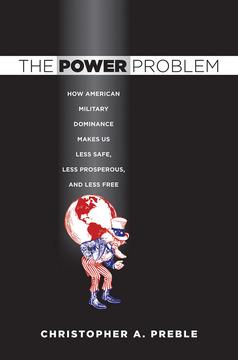
Numerous polls show that Americans want to reduce our military presence abroad, allowing our allies and other nations to assume greater responsibility both for their own defense and for enforcing security in their respective regions. In The Power Problem, Christopher A. Preble explores the aims, costs, and limitations of the use of this nation's military power; throughout, he makes the case that the majority of Americans are right, and the foreign policy experts who disdain the public's perspective are wrong. Preble is a keen and skeptical observer of recent U.S. foreign policy experiences, which have been marked by the promiscuous use of armed intervention. He documents how the possession of vast military strength runs contrary to the original intent of the Founders, and has, as they feared, shifted the balance of power away from individual citizens and toward the central government, and from the legislative and judicial branches of government to the executive.
In Preble's estimate, if policymakers in Washington have at their disposal immense military might, they will constantly be tempted to overreach, and to redefine ever more broadly the "national interest." Preble holds that the core national interest—preserving American security—is easily defined and largely immutable. Possessing vast military power in order to further other objectives is, he asserts, illicit and to be resisted. Preble views military power as purely instrumental: if it advances U.S. security, then it is fulfilling its essential role. If it does not—if it undermines our security, imposes unnecessary costs, and forces all Americans to incur additional risks—then our military power is a problem, one that only we can solve. As it stands today, Washington's eagerness to maintain and use an enormous and expensive military is corrosive to contemporary American democracy.
Before Memmo my notes were scattered across PDFs. Now a workspace pulls everything into one place — I see exactly what's still left to study.
Memmo's summaries are gold before exams. I don't have to re-read 800 pages two weeks before — just the important parts.
The AI chat has saved me the night before an exam more than once. I just keep asking until I get it — no waiting on a study group to reply.
The quizzes hit exactly what I need to know. Memmo tracks what I get stuck on — so I only practice what's worth it.
Flashcards with spaced repetition are magic. Memmo knows when I'm about to forget something and brings it back.
The AI podcasts are my favorite. I listen on my way to school and get a recap without sitting at a computer.

Handbok i kvalitativa metoder
281 kr

Hållbar utveckling: en introduktion för ingenjörer och andra problemlösare
334 kr

Brymans Samhällsvetenskapliga metoder
390 kr

Projektledning
491 kr

Den orättvisa hälsan: om socioekonomiska skillnader i hälsa och livslängd
326 kr

Vetenskapsteori för nybörjare
196 kr

Organizational Leadership
429 kr

På väg mot läraryrket
172 kr

Det sociala livet i skolan: Socialpsykologiska perspektiv
253 kr

Betygsättningens didaktik
151 kr

Personality
402 kr

Studying Leadership
404 kr

Managing Innovation
477 kr

Introduktion till samhällsvetenskaplig metod
347 kr

The Psychology of Sex and Gender
698 kr

Evidens och kunskap för socialt arbete
207 kr

Introduction to Leadership
605 kr