
Before Memmo my notes were scattered across PDFs. Now a workspace pulls everything into one place — I see exactly what's still left to study.
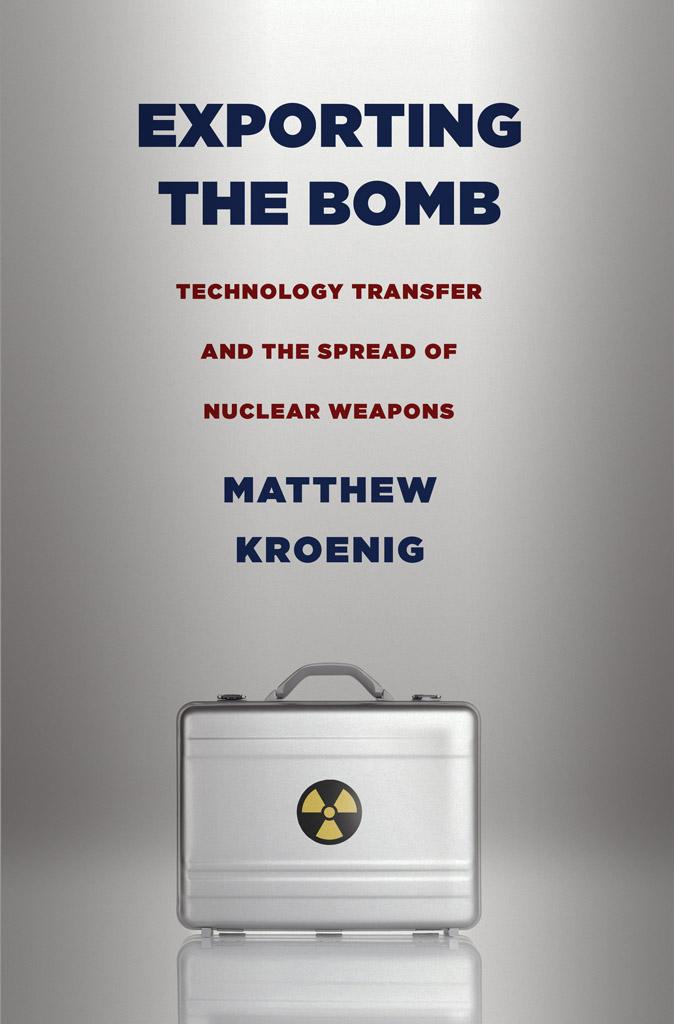
In a vitally important book for anyone interested in nuclear proliferation, defense strategy, or international security, Matthew Kroenig points out that nearly every country with a nuclear weapons arsenal received substantial help at some point from a more advanced nuclear state. Why do some countries help others to develop nuclear weapons? Many analysts assume that nuclear transfers are driven by economic considerations. States in dire economic need, they suggest, export sensitive nuclear materials and technology—and ignore the security risk—in a desperate search for hard currency.
Kroenig challenges this conventional wisdom. He finds that state decisions to provide sensitive nuclear assistance are the result of a coherent, strategic logic. The spread of nuclear weapons threatens powerful states more than it threatens weak states, and these differential effects of nuclear proliferation encourage countries to provide sensitive nuclear assistance under certain strategic conditions. Countries are more likely to export sensitive nuclear materials and technology when it would have the effect of constraining an enemy and less likely to do so when it would threaten themselves. In Exporting the Bomb, Kroenig examines the most important historical cases, including France's nuclear assistance to Israel in the 1950s and 1960s; the Soviet Union's sensitive transfers to China from 1958 to 1960; China's nuclear aid to Pakistan in the 1980s; and Pakistan's recent technology transfers, with the help of "rogue" scientist A. Q. Khan, from 1987 to 2002. Understanding why states provide sensitive nuclear assistance not only adds to our knowledge of international politics but also aids in international efforts to control the spread of nuclear weapons.
Before Memmo my notes were scattered across PDFs. Now a workspace pulls everything into one place — I see exactly what's still left to study.
Memmo's summaries are gold before exams. I don't have to re-read 800 pages two weeks before — just the important parts.
The AI chat has saved me the night before an exam more than once. I just keep asking until I get it — no waiting on a study group to reply.
The quizzes hit exactly what I need to know. Memmo tracks what I get stuck on — so I only practice what's worth it.
Flashcards with spaced repetition are magic. Memmo knows when I'm about to forget something and brings it back.
The AI podcasts are my favorite. I listen on my way to school and get a recap without sitting at a computer.

Handbok i kvalitativa metoder
281 kr

Hållbar utveckling: en introduktion för ingenjörer och andra problemlösare
334 kr

Brymans Samhällsvetenskapliga metoder
390 kr

Projektledning
491 kr

Den orättvisa hälsan: om socioekonomiska skillnader i hälsa och livslängd
326 kr

Organizational Leadership
429 kr

Vetenskapsteori för nybörjare
196 kr

På väg mot läraryrket
172 kr

Det sociala livet i skolan: Socialpsykologiska perspektiv
253 kr

Betygsättningens didaktik
151 kr

Personality
402 kr

Studying Leadership
404 kr

Managing Innovation
477 kr

Introduktion till samhällsvetenskaplig metod
347 kr

The Psychology of Sex and Gender
698 kr

Evidens och kunskap för socialt arbete
207 kr

Introduction to Leadership
605 kr