
Before Memmo my notes were scattered across PDFs. Now a workspace pulls everything into one place — I see exactly what's still left to study.
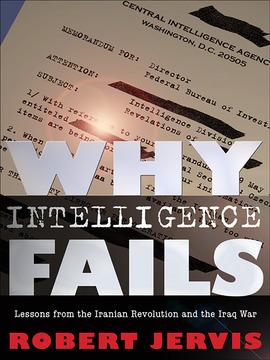
The U.S. government spends enormous resources each year on the gathering and analysis of intelligence, yet the history of American foreign policy is littered with missteps and misunderstandings that have resulted from intelligence failures.
In Why Intelligence Fails, Robert Jervis examines the politics and psychology of two of the more spectacular intelligence failures in recent memory: the mistaken belief that the regime of the Shah in Iran was secure and stable in 1978, and the claim that Iraq had active WMD programs in 2002.
The Iran case is based on a recently declassified report Jervis was commissioned to undertake by CIA thirty years ago and includes memoranda written by CIA officials in response to Jervis's findings. The Iraq case, also grounded in a review of the intelligence community's performance, is based on close readings of both classified and declassified documents, though Jervis's conclusions are entirely supported by evidence that has been declassified.
In both cases, Jervis finds not only that intelligence was badly flawed but also that later explanations—analysts were bowing to political pressure and telling the White House what it wanted to hear or were willfully blind—were also incorrect. Proponents of these explanations claimed that initial errors were compounded by groupthink, lack of coordination within the government, and failure to share information. Policy prescriptions, including the recent establishment of a Director of National Intelligence, were supposed to remedy the situation.
In Jervis's estimation, neither the explanations nor the prescriptions are adequate. The inferences that intelligence drew were actually quite plausible given the information available. Errors arose, he concludes, from insufficient attention to the ways in which information should be gathered and interpreted, a lack of self-awareness about the factors that led to the judgments, and an organizational culture that failed to probe for weaknesses and explore alternatives. Evaluating the inherent tensions between the methods and aims of intelligence personnel and policymakers from a unique insider's perspective, Jervis forcefully criticizes recent proposals for improving the performance of the intelligence community and discusses ways in which future analysis can be improved.
Before Memmo my notes were scattered across PDFs. Now a workspace pulls everything into one place — I see exactly what's still left to study.
Memmo's summaries are gold before exams. I don't have to re-read 800 pages two weeks before — just the important parts.
The AI chat has saved me the night before an exam more than once. I just keep asking until I get it — no waiting on a study group to reply.
The quizzes hit exactly what I need to know. Memmo tracks what I get stuck on — so I only practice what's worth it.
Flashcards with spaced repetition are magic. Memmo knows when I'm about to forget something and brings it back.
The AI podcasts are my favorite. I listen on my way to school and get a recap without sitting at a computer.

Handbok i kvalitativa metoder
281 kr

Hållbar utveckling: en introduktion för ingenjörer och andra problemlösare
334 kr

Brymans Samhällsvetenskapliga metoder
390 kr

Projektledning
491 kr

Den orättvisa hälsan: om socioekonomiska skillnader i hälsa och livslängd
326 kr

Vetenskapsteori för nybörjare
196 kr

Organizational Leadership
429 kr

På väg mot läraryrket
172 kr

Det sociala livet i skolan: Socialpsykologiska perspektiv
253 kr

Betygsättningens didaktik
151 kr

Personality
402 kr

Studying Leadership
404 kr

Managing Innovation
477 kr

Introduktion till samhällsvetenskaplig metod
347 kr

The Psychology of Sex and Gender
698 kr

Evidens och kunskap för socialt arbete
207 kr

Introduction to Leadership
605 kr