
Before Memmo my notes were scattered across PDFs. Now a workspace pulls everything into one place — I see exactly what's still left to study.
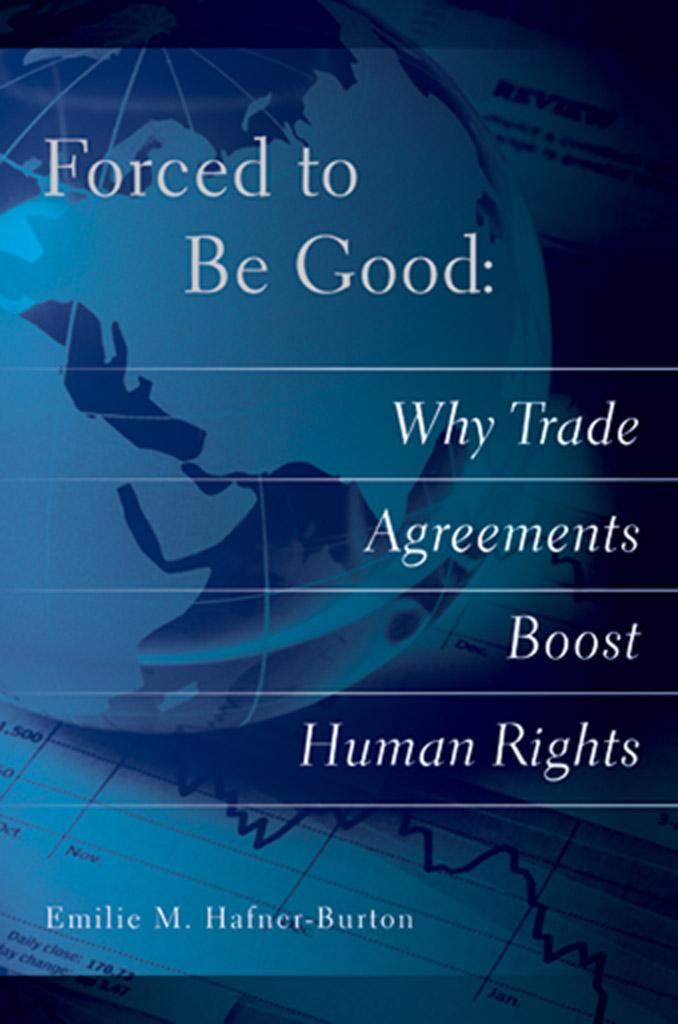
Preferential trade agreements have become common ways to protect or restrict access to national markets in products and services. The United States has signed trade agreements with almost two dozen countries as close as Mexico and Canada and as distant as Morocco and Australia. The European Union has done the same. In addition to addressing economic issues, these agreements also regulate the protection of human rights. In Forced to Be Good Emilie M. Hafner-Burton tells the story of the politics of such agreements and of the ways in which governments pursue market integration policies that advance their own political interests, including human rights.
How and why do global norms for social justice become international regulations linked to seemingly unrelated issues, such as trade? Hafner-Burton finds that the process has been unconventional. Efforts by human rights advocates and labor unions to spread human rights ideals, for example, do not explain why American and European governments employ preferential trade agreements to protect human rights. Instead, most of the regulations protecting human rights are codified in global moral principles and laws only because they serve policymakers' interests in accumulating power or resources or solving other problems. Otherwise, demands by moral advocates are tossed aside.
And, as Hafner-Burton shows, even the inclusion of human rights protections in trade agreements is no guarantee of real change, because many of the governments that sign on to fair trade regulations oppose such protections and do not intend to force their implementation. Ultimately, Hafner-Burton finds that, despite the difficulty of enforcing good regulations and the less-than-noble motives for including them, trade agreements that include human rights provisions have made a positive difference in the lives of some of the people they are intended-on paper, at least-to protect.
Before Memmo my notes were scattered across PDFs. Now a workspace pulls everything into one place — I see exactly what's still left to study.
Memmo's summaries are gold before exams. I don't have to re-read 800 pages two weeks before — just the important parts.
The AI chat has saved me the night before an exam more than once. I just keep asking until I get it — no waiting on a study group to reply.
The quizzes hit exactly what I need to know. Memmo tracks what I get stuck on — so I only practice what's worth it.
Flashcards with spaced repetition are magic. Memmo knows when I'm about to forget something and brings it back.
The AI podcasts are my favorite. I listen on my way to school and get a recap without sitting at a computer.

Handbok i kvalitativa metoder
281 kr

Hållbar utveckling: en introduktion för ingenjörer och andra problemlösare
334 kr

Brymans Samhällsvetenskapliga metoder
390 kr

Projektledning
491 kr

Den orättvisa hälsan: om socioekonomiska skillnader i hälsa och livslängd
326 kr

Organizational Leadership
429 kr

Vetenskapsteori för nybörjare
196 kr

På väg mot läraryrket
172 kr

Det sociala livet i skolan: Socialpsykologiska perspektiv
253 kr

Betygsättningens didaktik
151 kr

Personality
402 kr

Studying Leadership
404 kr

Managing Innovation
477 kr

Introduktion till samhällsvetenskaplig metod
347 kr

The Psychology of Sex and Gender
698 kr

Evidens och kunskap för socialt arbete
207 kr

Introduction to Leadership
605 kr