
Before Memmo my notes were scattered across PDFs. Now a workspace pulls everything into one place — I see exactly what's still left to study.
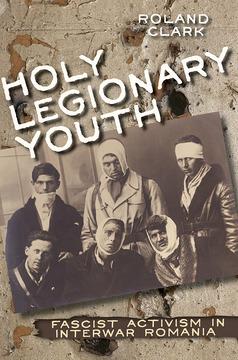
Founded in 1927, Romania's Legion of the Archangel Michael was one of Europe's largest and longest-lived fascist social movements. In Holy Legionary Youth, Roland Clark draws on oral histories, memoirs, and substantial research in the archives of the Romanian secret police to provide the most comprehensive account of the Legion in English to date. Clark approaches Romanian fascism by asking what membership in the Legion meant to young Romanian men and women. Viewing fascism "from below," as a social category that had practical consequences for those who embraced it, he shows how the personal significance of fascism emerged out of Legionaries' interactions with each other, the state, other political parties, families and friends, and fascist groups abroad. Official repression, fascist spectacle, and the frequency and nature of legionary activities changed a person's everyday activities and relationships in profound ways.
Clark's sweeping history traces fascist organizing in interwar Romania to nineteenth-century grassroots nationalist movements that demanded political independence from the Austro-Hungarian Empire. It also shows how closely the movement was associated with the Romanian Orthodox Church and how the uniforms, marches, and rituals were inspired by the muscular, martial aesthetic of fascism elsewhere in Europe. Although antisemitism was a key feature of official fascist ideology, state violence against Legionaries rather than the extensive fascist violence against Jews had a far greater impact on how Romanians viewed the movement and their role in it. Approaching fascism in interwar Romania as an everyday practice, Holy Legionary Youth offers a new perspective on European fascism, highlighting how ordinary people "performed" fascism by working together to promote a unique and totalizing social identity.
Before Memmo my notes were scattered across PDFs. Now a workspace pulls everything into one place — I see exactly what's still left to study.
Memmo's summaries are gold before exams. I don't have to re-read 800 pages two weeks before — just the important parts.
The AI chat has saved me the night before an exam more than once. I just keep asking until I get it — no waiting on a study group to reply.
The quizzes hit exactly what I need to know. Memmo tracks what I get stuck on — so I only practice what's worth it.
Flashcards with spaced repetition are magic. Memmo knows when I'm about to forget something and brings it back.
The AI podcasts are my favorite. I listen on my way to school and get a recap without sitting at a computer.

Handbok i kvalitativa metoder
281 kr

Hållbar utveckling: en introduktion för ingenjörer och andra problemlösare
334 kr

Brymans Samhällsvetenskapliga metoder
390 kr

Projektledning
491 kr

Den orättvisa hälsan: om socioekonomiska skillnader i hälsa och livslängd
326 kr

Vetenskapsteori för nybörjare
196 kr

Organizational Leadership
429 kr

På väg mot läraryrket
172 kr

Det sociala livet i skolan: Socialpsykologiska perspektiv
253 kr

Betygsättningens didaktik
151 kr

Personality
402 kr

Studying Leadership
404 kr

Managing Innovation
477 kr

Introduktion till samhällsvetenskaplig metod
347 kr

The Psychology of Sex and Gender
698 kr

Evidens och kunskap för socialt arbete
207 kr

Introduction to Leadership
605 kr