
Before Memmo my notes were scattered across PDFs. Now a workspace pulls everything into one place — I see exactly what's still left to study.
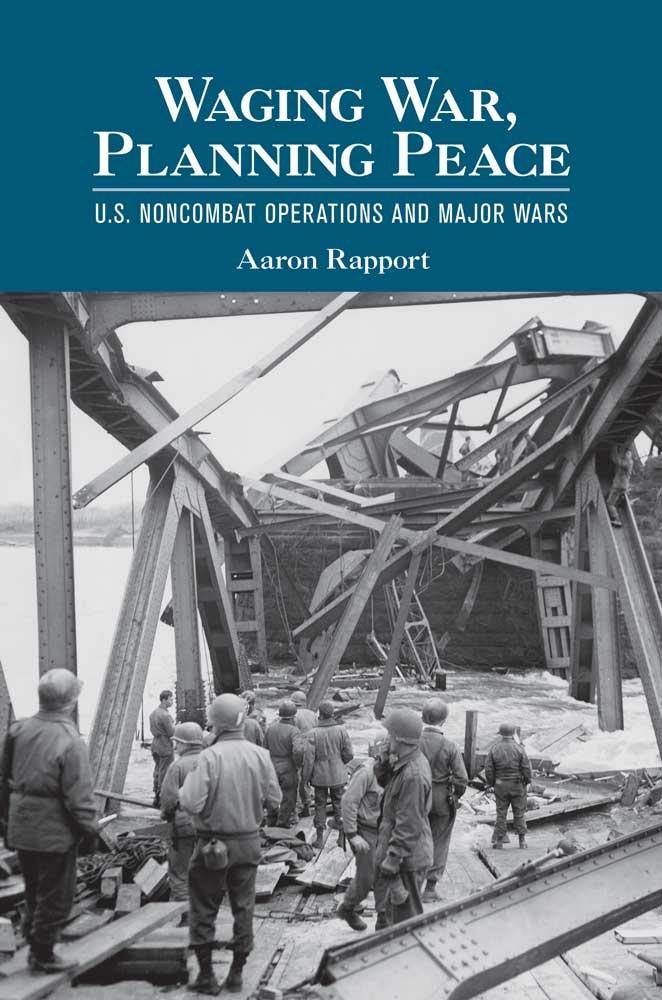
As the U.S. experience in Iraq following the 2003 invasion made abundantly clear, failure to properly plan for risks associated with postconflict stabilization and reconstruction can have a devastating impact on the overall success of a military mission. In Waging War, Planning Peace, Aaron Rapport investigates how U.S. presidents and their senior advisers have managed vital noncombat activities while the nation is in the midst of fighting or preparing to fight major wars. He argues that research from psychology—specifically, construal level theory—can help explain how individuals reason about the costs of postconflict noncombat operations that they perceive as lying in the distant future.
In addition to preparations for "Phase IV" in the lead-up to the Iraq War, Rapport looks at the occupation of Germany after World War II, the planned occupation of North Korea in 1950, and noncombat operations in Vietnam in 1964 and 1965. Applying his insights to these cases, he finds that civilian and military planners tend to think about near-term tasks in concrete terms, seriously assessing the feasibility of the means they plan to employ to secure valued ends. For tasks they perceive as further removed in time, they tend to focus more on the desirability of the overarching goals they are pursuing rather than the potential costs, risks, and challenges associated with the means necessary to achieve these goals. Construal level theory, Rapport contends, provides a coherent explanation of how a strategic disconnect can occur. It can also show postwar planners how to avoid such perilous missteps.
Before Memmo my notes were scattered across PDFs. Now a workspace pulls everything into one place — I see exactly what's still left to study.
Memmo's summaries are gold before exams. I don't have to re-read 800 pages two weeks before — just the important parts.
The AI chat has saved me the night before an exam more than once. I just keep asking until I get it — no waiting on a study group to reply.
The quizzes hit exactly what I need to know. Memmo tracks what I get stuck on — so I only practice what's worth it.
Flashcards with spaced repetition are magic. Memmo knows when I'm about to forget something and brings it back.
The AI podcasts are my favorite. I listen on my way to school and get a recap without sitting at a computer.

Handbok i kvalitativa metoder
281 kr

Hållbar utveckling: en introduktion för ingenjörer och andra problemlösare
334 kr

Brymans Samhällsvetenskapliga metoder
390 kr

Projektledning
491 kr

Den orättvisa hälsan: om socioekonomiska skillnader i hälsa och livslängd
326 kr

Vetenskapsteori för nybörjare
196 kr

Organizational Leadership
429 kr

På väg mot läraryrket
172 kr

Det sociala livet i skolan: Socialpsykologiska perspektiv
253 kr

Betygsättningens didaktik
151 kr

Personality
402 kr

Studying Leadership
404 kr

Managing Innovation
477 kr

Introduktion till samhällsvetenskaplig metod
347 kr

The Psychology of Sex and Gender
698 kr

Evidens och kunskap för socialt arbete
207 kr

Introduction to Leadership
605 kr