
Before Memmo my notes were scattered across PDFs. Now a workspace pulls everything into one place — I see exactly what's still left to study.
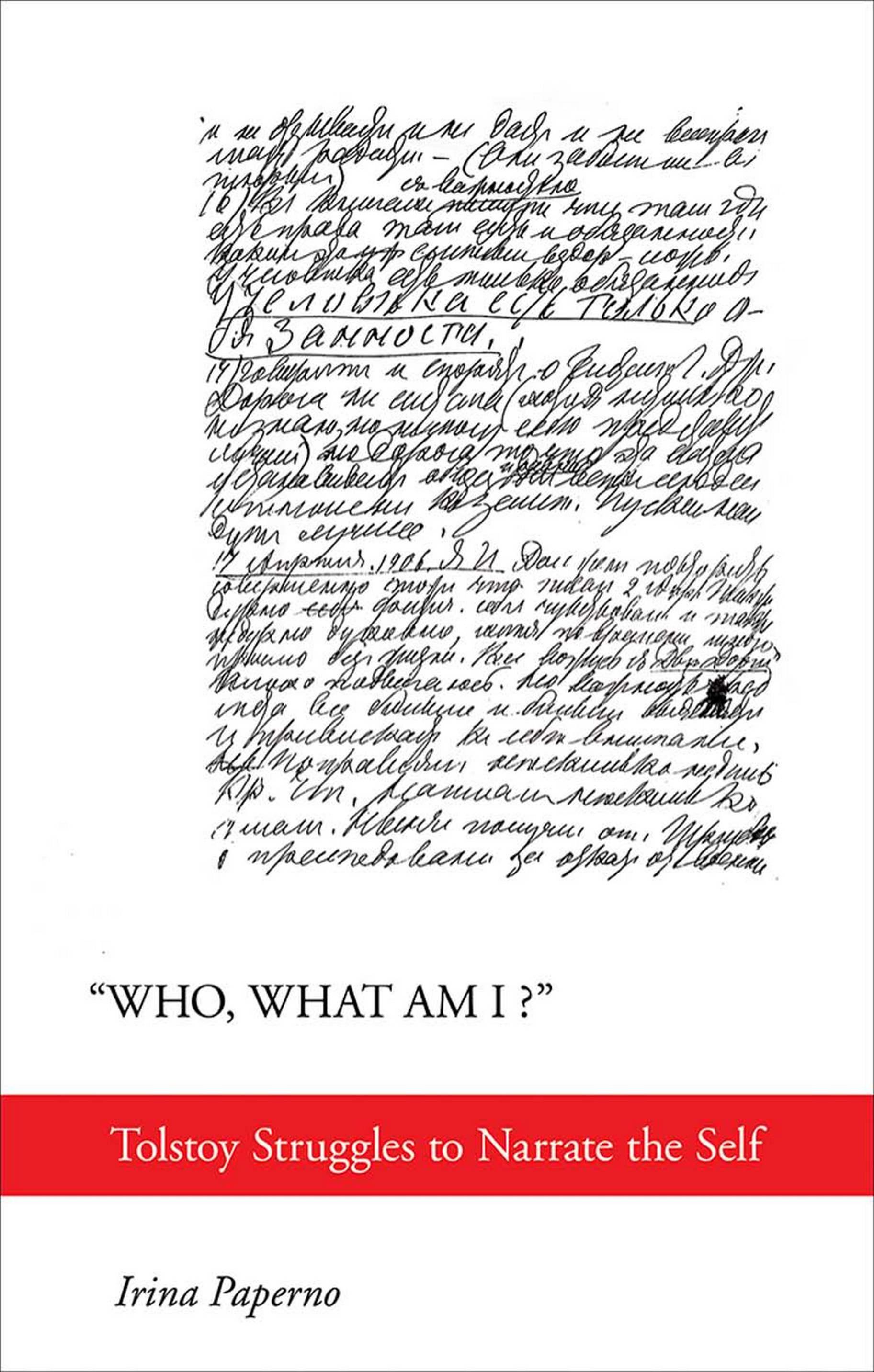
"God only knows how many diverse, captivating impressions and thoughts evoked by these impressions... pass in a single day. If it were only possible to render them in such a way that I could easily read myself and that others could read me as I do." Such was the desire of the young Tolstoy. Although he knew that this narrative utopia—turning the totality of his life into a book—would remain unfulfilled, Tolstoy would spend the rest of his life attempting to achieve it. "Who, What Am I?" is an account of Tolstoy's lifelong attempt to find adequate ways to represent the self, to probe its limits and, ultimately, to arrive at an identity not based on the bodily self and its accumulated life experience.
This book guides readers through the voluminous, highly personal nonfiction writings that Tolstoy produced from the 1850s until his death in 1910. The variety of these texts is enormous, including diaries, religious tracts, personal confessions, letters, autobiographical fragments, and the meticulous accounts of dreams. For Tolstoy, inherent in the structure of the narrative form was a conception of life that accorded linear temporal order a predominant role, and this implied finitude. Tolstoy refused to accept that human life stopped with death and that the self was limited to what could be remembered and told. In short, Tolstoy's was a philosophical and religious quest, and he followed in the footsteps of many, from Plato and Augustine to Rousseau and Schopenhauer. In reconstructing Tolstoy's struggles, this book reflects on the problems of self and narrative as well as provides an intellectual and psychological biography of the writer.
Before Memmo my notes were scattered across PDFs. Now a workspace pulls everything into one place — I see exactly what's still left to study.
Memmo's summaries are gold before exams. I don't have to re-read 800 pages two weeks before — just the important parts.
The AI chat has saved me the night before an exam more than once. I just keep asking until I get it — no waiting on a study group to reply.
The quizzes hit exactly what I need to know. Memmo tracks what I get stuck on — so I only practice what's worth it.
Flashcards with spaced repetition are magic. Memmo knows when I'm about to forget something and brings it back.
The AI podcasts are my favorite. I listen on my way to school and get a recap without sitting at a computer.

Handbok i kvalitativa metoder
281 kr

Hållbar utveckling: en introduktion för ingenjörer och andra problemlösare
334 kr

Brymans Samhällsvetenskapliga metoder
390 kr

Projektledning
491 kr

Den orättvisa hälsan: om socioekonomiska skillnader i hälsa och livslängd
326 kr

Vetenskapsteori för nybörjare
196 kr

Organizational Leadership
429 kr

På väg mot läraryrket
172 kr

Det sociala livet i skolan: Socialpsykologiska perspektiv
253 kr

Betygsättningens didaktik
151 kr

Personality
402 kr

Studying Leadership
404 kr

Managing Innovation
477 kr

Introduktion till samhällsvetenskaplig metod
347 kr

The Psychology of Sex and Gender
698 kr

Evidens och kunskap för socialt arbete
207 kr

Introduction to Leadership
605 kr