
Before Memmo my notes were scattered across PDFs. Now a workspace pulls everything into one place — I see exactly what's still left to study.
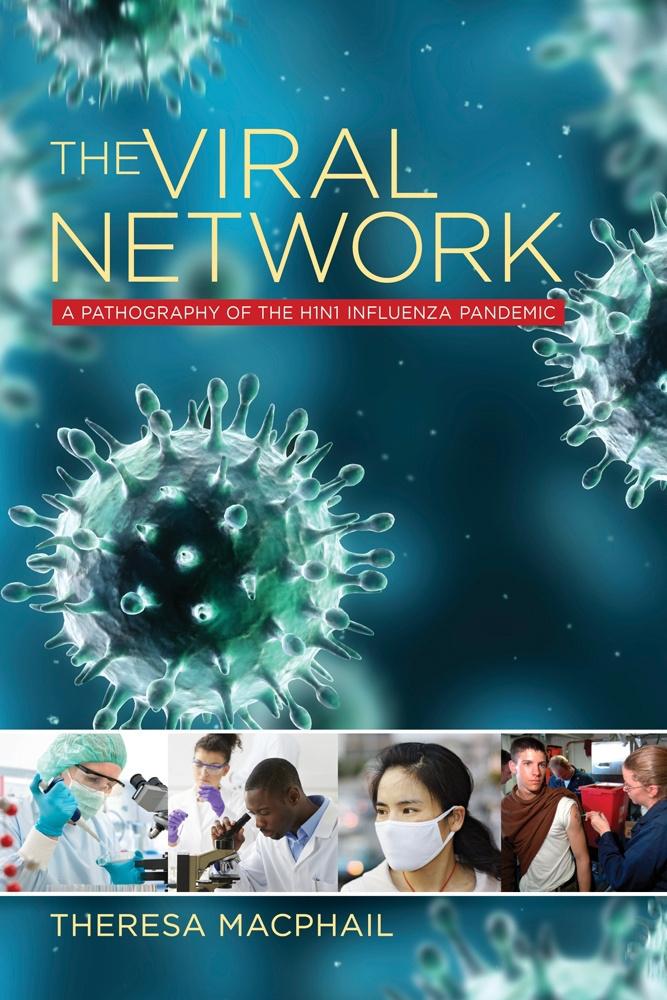
In The Viral Network, Theresa MacPhail examines our collective fascination with and fear of viruses through the lens of the 2009 H1N1 pandemic. In April 2009, a novel strain of H1N1 influenza virus resulting from a combination of bird, swine, and human flu viruses emerged in Veracruz, Mexico. The Director-General of the World Health Organization (WHO) announced an official end to the pandemic in August 2010. Experts agree that the global death toll reached 284,500. The public health response to the pandemic was complicated by the simultaneous economic crisis and by the public scrutiny of official response in an atmosphere of widespread connectivity. MacPhail follows the H1N1 influenza virus's trajectory through time and space in order to construct a three-dimensional picture of what happens when global public health comes down with a case of the flu.
The Viral Network affords a rare look inside the U.S. Centers for Disease Control, as well as Hong Kong's virology labs and Centre for Health Protection, during a pandemic. MacPhail looks at the day-to-day practices of virologists and epidemiologists to ask questions about the production of scientific knowledge, the construction of expertise, disease narratives, and the different "cultures" of public health in the United States, Europe, Hong Kong, and China. The chapters of the book move from the micro to the macro, from Hong Kong to Atlanta, from the lab to the WHO, from the pandemic past in 1918 to the future. The various historical, scientific, and cultural narratives about flu recounted in this book show how biological genes and cultural memes become interwoven in the stories we tell during a pandemic. Ultimately, MacPhail argues that the institution of global public health is as viral as the viruses it tracks, studies, and helps to contain or eradicate. The "global" is itself viral in nature.
Before Memmo my notes were scattered across PDFs. Now a workspace pulls everything into one place — I see exactly what's still left to study.
Memmo's summaries are gold before exams. I don't have to re-read 800 pages two weeks before — just the important parts.
The AI chat has saved me the night before an exam more than once. I just keep asking until I get it — no waiting on a study group to reply.
The quizzes hit exactly what I need to know. Memmo tracks what I get stuck on — so I only practice what's worth it.
Flashcards with spaced repetition are magic. Memmo knows when I'm about to forget something and brings it back.
The AI podcasts are my favorite. I listen on my way to school and get a recap without sitting at a computer.

Handbok i kvalitativa metoder
281 kr

Hållbar utveckling: en introduktion för ingenjörer och andra problemlösare
334 kr

Brymans Samhällsvetenskapliga metoder
390 kr

Projektledning
491 kr

Den orättvisa hälsan: om socioekonomiska skillnader i hälsa och livslängd
326 kr

Organizational Leadership
429 kr

Vetenskapsteori för nybörjare
196 kr

På väg mot läraryrket
172 kr

Det sociala livet i skolan: Socialpsykologiska perspektiv
253 kr

Betygsättningens didaktik
151 kr

Personality
402 kr

Studying Leadership
404 kr

Managing Innovation
477 kr

Introduktion till samhällsvetenskaplig metod
347 kr

The Psychology of Sex and Gender
698 kr

Evidens och kunskap för socialt arbete
207 kr

Introduction to Leadership
605 kr