
Before Memmo my notes were scattered across PDFs. Now a workspace pulls everything into one place — I see exactly what's still left to study.
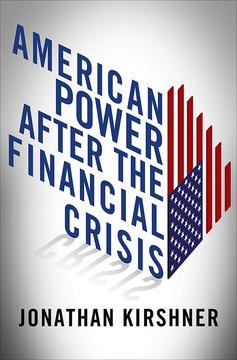
The global financial crisis of 2007–2008 was both an economic catastrophe and a watershed event in world politics. In American Power after the Financial Crisis, Jonathan Kirshner explains how the crisis altered the international balance of power, affecting the patterns and pulse of world politics. The crisis, Kirshner argues, brought about an end to what he identifies as the "second postwar American order" because it undermined the legitimacy of the economic ideas that underpinned that order—especially those that encouraged and even insisted upon uninhibited financial deregulation. The crisis also accelerated two existing trends: the relative erosion of the power and political influence of the United States and the increased political influence of other states, most notably, but not exclusively, China.
Looking ahead, Kirshner anticipates a "New Heterogeneity" in thinking about how best to manage domestic and international money and finance. These divergences—such as varying assessments of and reactions to newly visible vulnerabilities in the American economy and changing attitudes about the long-term appeal of the dollar—will offer a bold challenge to the United States and its essentially unchanged disposition toward financial policy and regulation. This New Heterogeneity will contribute to greater discord among nations about how best to manage the global economy. A provocative look at how the 2007–2008 economic collapse diminished U.S. dominance in world politics, American Power after the Financial Crisis suggests that the most significant and lasting impact of the crisis and the Great Recession will be the inability of the United States to enforce its political and economic priorities on an increasingly recalcitrant world.
Before Memmo my notes were scattered across PDFs. Now a workspace pulls everything into one place — I see exactly what's still left to study.
Memmo's summaries are gold before exams. I don't have to re-read 800 pages two weeks before — just the important parts.
The AI chat has saved me the night before an exam more than once. I just keep asking until I get it — no waiting on a study group to reply.
The quizzes hit exactly what I need to know. Memmo tracks what I get stuck on — so I only practice what's worth it.
Flashcards with spaced repetition are magic. Memmo knows when I'm about to forget something and brings it back.
The AI podcasts are my favorite. I listen on my way to school and get a recap without sitting at a computer.

Handbok i kvalitativa metoder
281 kr

Hållbar utveckling: en introduktion för ingenjörer och andra problemlösare
334 kr

Brymans Samhällsvetenskapliga metoder
390 kr

Projektledning
491 kr

Den orättvisa hälsan: om socioekonomiska skillnader i hälsa och livslängd
326 kr

Vetenskapsteori för nybörjare
196 kr

Organizational Leadership
429 kr

På väg mot läraryrket
172 kr

Det sociala livet i skolan: Socialpsykologiska perspektiv
253 kr

Betygsättningens didaktik
151 kr

Personality
402 kr

Studying Leadership
404 kr

Managing Innovation
477 kr

Introduktion till samhällsvetenskaplig metod
347 kr

The Psychology of Sex and Gender
698 kr

Evidens och kunskap för socialt arbete
207 kr

Introduction to Leadership
605 kr