
Before Memmo my notes were scattered across PDFs. Now a workspace pulls everything into one place — I see exactly what's still left to study.
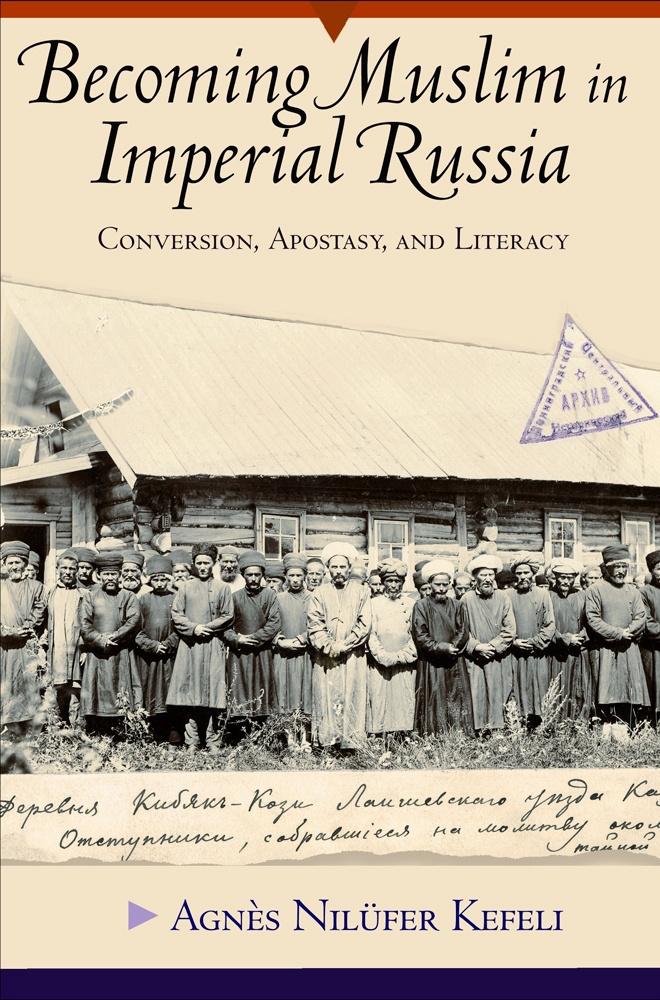
In the nineteenth century, the Russian Empire's Middle Volga region (today's Tatarstan) was the site of a prolonged struggle between Russian Orthodoxy and Islam, each of which sought to solidify its influence among the frontier's mix of Turkic, Finno-Ugric, and Slavic peoples. The immediate catalyst of the events that Agnès Nilüfer Kefeli chronicles in Becoming Muslim in Imperial Russia was the collective turn to Islam by many of the region's Kräshens, the Muslim and animist Tatars who converted to Russian Orthodoxy between the sixteenth and eighteenth centuries.
The traditional view holds that the apostates had really been Muslim all along or that their conversions had been forced by the state or undertaken voluntarily as a matter of convenience. In Kefeli's view, this argument vastly oversimplifies the complexity of a region where many participated in the religious cultures of both Islam and Orthodox Christianity and where a vibrant Kräshen community has survived to the present. By analyzing Russian, Eurasian, and Central Asian ethnographic, administrative, literary, and missionary sources, Kefeli shows how traditional education, with Sufi mystical components, helped to Islamize Finno-Ugric and Turkic peoples in the Kama-Volga countryside and set the stage for the development of modernist Islam in Russia. Of particular interest is Kefeli's emphasis on the role that Tatar women (both Kräshen and Muslim) played as holders and transmitters of Sufi knowledge. Today, she notes, intellectuals and mullahs in Tatarstan seek to revive both Sufi and modernist traditions to counteract new expressions of Islam and promote a purely Tatar Islam aware of its specificity in a post-Christian and secular environment.
Before Memmo my notes were scattered across PDFs. Now a workspace pulls everything into one place — I see exactly what's still left to study.
Memmo's summaries are gold before exams. I don't have to re-read 800 pages two weeks before — just the important parts.
The AI chat has saved me the night before an exam more than once. I just keep asking until I get it — no waiting on a study group to reply.
The quizzes hit exactly what I need to know. Memmo tracks what I get stuck on — so I only practice what's worth it.
Flashcards with spaced repetition are magic. Memmo knows when I'm about to forget something and brings it back.
The AI podcasts are my favorite. I listen on my way to school and get a recap without sitting at a computer.

Handbok i kvalitativa metoder
281 kr

Hållbar utveckling: en introduktion för ingenjörer och andra problemlösare
334 kr

Brymans Samhällsvetenskapliga metoder
390 kr

Projektledning
491 kr

Den orättvisa hälsan: om socioekonomiska skillnader i hälsa och livslängd
326 kr

Vetenskapsteori för nybörjare
196 kr

Organizational Leadership
429 kr

På väg mot läraryrket
172 kr

Det sociala livet i skolan: Socialpsykologiska perspektiv
253 kr

Betygsättningens didaktik
151 kr

Personality
402 kr

Studying Leadership
404 kr

Managing Innovation
477 kr

Introduktion till samhällsvetenskaplig metod
347 kr

The Psychology of Sex and Gender
698 kr

Evidens och kunskap för socialt arbete
207 kr

Introduction to Leadership
605 kr