
Before Memmo my notes were scattered across PDFs. Now a workspace pulls everything into one place — I see exactly what's still left to study.
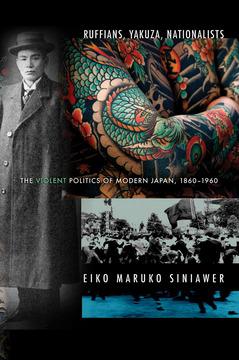
Violence and democracy may seem fundamentally incompatible, but the two have often been intimately and inextricably linked. In Ruffians, Yakuza, Nationalists, Eiko Maruko Siniawer argues that violence has been embedded in the practice of modern Japanese politics from the very inception of the country's experiment with democracy. As soon as the parliament opened its doors in 1890, brawls, fistfights, vandalism, threats, and intimidation quickly became a fixture in Japanese politics, from campaigns and elections to legislative debates. Most of this physical force was wielded by what Siniawer calls "violence specialists": ruffians and yakuza. Their systemic and enduring political violence-in the streets, in the halls of parliament, during popular protests, and amid labor strife-ultimately compromised party politics in Japan and contributed to the rise of militarism in the 1930s.
For the post-World War II years, Siniawer illustrates how the Japanese developed a preference for money over violence as a political tool of choice. This change in tactics signaled a political shift, but not necessarily an evolution, as corruption and bribery were in some ways more insidious, exclusionary, and undemocratic than violence.
Siniawer demonstrates that the practice of politics in Japan has been dangerous, chaotic, and far more violent than previously thought. Additionally, crime has been more political. Throughout the book, Siniawer makes clear that certain yakuza groups were ideological in nature, contrary to the common understanding of organized crime as nonideological. Ruffians, Yakuza, Nationalists is essential reading for anyone wanting to comprehend the role of violence in the formation of modern nation-states and its place in both democratic and fascist movements.
Before Memmo my notes were scattered across PDFs. Now a workspace pulls everything into one place — I see exactly what's still left to study.
Memmo's summaries are gold before exams. I don't have to re-read 800 pages two weeks before — just the important parts.
The AI chat has saved me the night before an exam more than once. I just keep asking until I get it — no waiting on a study group to reply.
The quizzes hit exactly what I need to know. Memmo tracks what I get stuck on — so I only practice what's worth it.
Flashcards with spaced repetition are magic. Memmo knows when I'm about to forget something and brings it back.
The AI podcasts are my favorite. I listen on my way to school and get a recap without sitting at a computer.

Handbok i kvalitativa metoder
281 kr

Hållbar utveckling: en introduktion för ingenjörer och andra problemlösare
334 kr

Brymans Samhällsvetenskapliga metoder
390 kr

Projektledning
491 kr

Den orättvisa hälsan: om socioekonomiska skillnader i hälsa och livslängd
326 kr

Vetenskapsteori för nybörjare
196 kr

Organizational Leadership
429 kr

På väg mot läraryrket
172 kr

Det sociala livet i skolan: Socialpsykologiska perspektiv
253 kr

Betygsättningens didaktik
151 kr

Personality
402 kr

Studying Leadership
404 kr

Managing Innovation
477 kr

Introduktion till samhällsvetenskaplig metod
347 kr

The Psychology of Sex and Gender
698 kr

Evidens och kunskap för socialt arbete
207 kr

Introduction to Leadership
605 kr