
Before Memmo my notes were scattered across PDFs. Now a workspace pulls everything into one place — I see exactly what's still left to study.
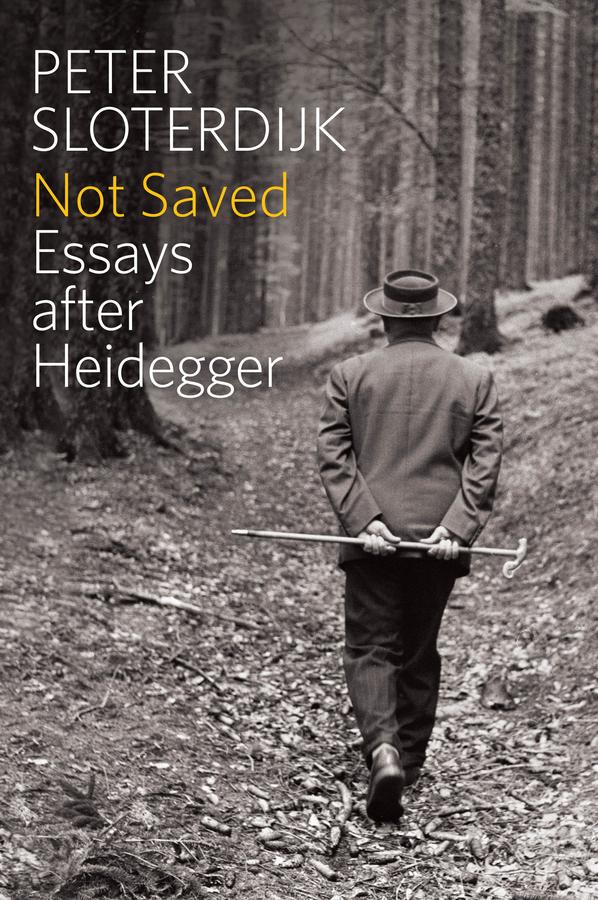
One can rightly say of Peter Sloterdijk that each of his essays and lectures is also an unwritten book. That is why the texts presented here, which sketch a philosophical physiognomy of Martin Heidegger, should also be characterized as a collected renunciation of exhaustiveness.
In order to situate Heidegger's thought in the history of ideas and problems, Peter Sloterdijk approaches Heidegger's work with questions such as: If Western philosophy emerged from the spirit of the polis, what are we to make of the philosophical suitability of a man who never made a secret of his stubborn attachment to rural life? Is there a provincial truth of which the cosmopolitan city knows nothing? Is there a truth in country roads and cabins that would be able to undermine the universities with their standardized languages and globally influential discourses? From where does this odd professor speak, when from his professorial chair in Freiburg he claims to inquire into what lies beyond the history of Western metaphysics?
Sloterdijk also considers several other crucial twentieth-century thinkers who provide some needed contrast for the philosophical physiognomy of Martin Heidegger. A consideration of Niklas Luhmann as a kind of contemporary version of the Devil's Advocate, a provocative critical interpretation of Theodor Adorno's philosophy that focuses on its theological underpinnings and which also includes reflections on the philosophical significance of hyperbole, and a short sketch of the pessimistic thought of Emil Cioran all round out and deepen Sloterdijk's attempts to think with, against, and beyond Heidegger. Finally, in essays such as "Domestication of Being" and the "Rules for the Human Park," which incited an international controversy around the time of its publication and has been translated afresh for this volume, Sloterdijk develops some of his most intriguing and important ideas on anthropogenesis, humanism, technology, and genetic engineering.
Before Memmo my notes were scattered across PDFs. Now a workspace pulls everything into one place — I see exactly what's still left to study.
Memmo's summaries are gold before exams. I don't have to re-read 800 pages two weeks before — just the important parts.
The AI chat has saved me the night before an exam more than once. I just keep asking until I get it — no waiting on a study group to reply.
The quizzes hit exactly what I need to know. Memmo tracks what I get stuck on — so I only practice what's worth it.
Flashcards with spaced repetition are magic. Memmo knows when I'm about to forget something and brings it back.
The AI podcasts are my favorite. I listen on my way to school and get a recap without sitting at a computer.

Handbok i kvalitativa metoder
281 kr

Hållbar utveckling: en introduktion för ingenjörer och andra problemlösare
334 kr

Brymans Samhällsvetenskapliga metoder
390 kr

Projektledning
491 kr

Den orättvisa hälsan: om socioekonomiska skillnader i hälsa och livslängd
326 kr

Organizational Leadership
429 kr

Vetenskapsteori för nybörjare
196 kr

På väg mot läraryrket
172 kr

Det sociala livet i skolan: Socialpsykologiska perspektiv
253 kr

Betygsättningens didaktik
151 kr

Personality
402 kr

Studying Leadership
404 kr

Managing Innovation
477 kr

Introduktion till samhällsvetenskaplig metod
347 kr

The Psychology of Sex and Gender
698 kr

Evidens och kunskap för socialt arbete
207 kr

Introduction to Leadership
605 kr