
Before Memmo my notes were scattered across PDFs. Now a workspace pulls everything into one place — I see exactly what's still left to study.
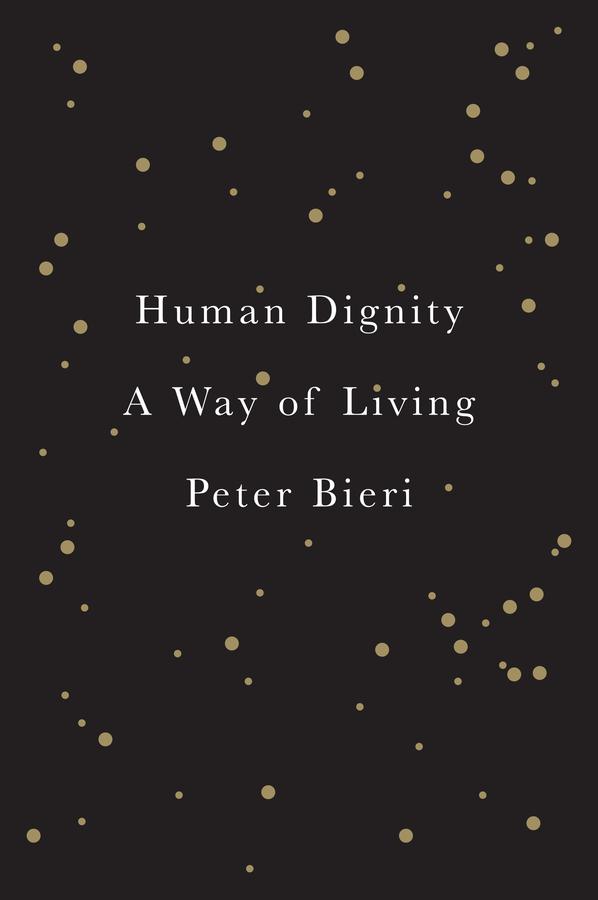
Dignity is humanity�s most prized possession. We experience the loss of dignity as a terrible humiliation: when we lose our dignity we feel deprived of something without which life no longer seems worth living. But what exactly is this trait that we value so highly?
In this important new book, distinguished philosopher Peter Bieri looks afresh at the notion of human dignity. In contrast to most traditional views, he argues that dignity is not an innate quality of human beings or a right that we possess by virtue of being human. Rather, dignity is a certain way to lead one�s life. It is a pattern of thought, experience and action in other words, a way of living.
In Bieri�s account, there are three key dimensions to dignity as a way of living. The first is the way I am treated by others: they can treat me in a way that leaves my dignity intact or they can destroy my dignity. The second dimension concerns the way that I treat other people: do I treat them in a way that allows me to live a dignified life? The third dimension concerns the view that I have of myself: which ways of seeing and treating myself allow me to maintain a sense of dignity? In the actual flow of day-to-day life these three dimensions of dignity are often interwoven, and this accounts in part for the complexity of the situations and experiences in which our dignity is at stake.
So, why did we invent dignity and what role does it play in our lives? As thinking and acting beings, our lives are fragile and constantly under threat. A dignified way of living, argues Bieri, is humanity�s way of coping with this threat. In our constantly endangered lives, it is important to stand our ground with confidence. Thus a dignified way of living is not any way of living: it is a particular way of responding to the existential experience of being under threat. It is also a particular way of answering the question: What kind of life do we wish to live?
This beautifully written reflection on our most cherished human value will be of interest to a wide readership.
Before Memmo my notes were scattered across PDFs. Now a workspace pulls everything into one place — I see exactly what's still left to study.
Memmo's summaries are gold before exams. I don't have to re-read 800 pages two weeks before — just the important parts.
The AI chat has saved me the night before an exam more than once. I just keep asking until I get it — no waiting on a study group to reply.
The quizzes hit exactly what I need to know. Memmo tracks what I get stuck on — so I only practice what's worth it.
Flashcards with spaced repetition are magic. Memmo knows when I'm about to forget something and brings it back.
The AI podcasts are my favorite. I listen on my way to school and get a recap without sitting at a computer.

Handbok i kvalitativa metoder
281 kr

Hållbar utveckling: en introduktion för ingenjörer och andra problemlösare
334 kr

Brymans Samhällsvetenskapliga metoder
390 kr

Projektledning
491 kr

Den orättvisa hälsan: om socioekonomiska skillnader i hälsa och livslängd
326 kr

Organizational Leadership
429 kr

Vetenskapsteori för nybörjare
196 kr

På väg mot läraryrket
172 kr

Det sociala livet i skolan: Socialpsykologiska perspektiv
253 kr

Betygsättningens didaktik
151 kr

Personality
402 kr

Studying Leadership
404 kr

Managing Innovation
477 kr

Introduktion till samhällsvetenskaplig metod
347 kr

The Psychology of Sex and Gender
698 kr

Evidens och kunskap för socialt arbete
207 kr

Introduction to Leadership
605 kr