
Before Memmo my notes were scattered across PDFs. Now a workspace pulls everything into one place — I see exactly what's still left to study.
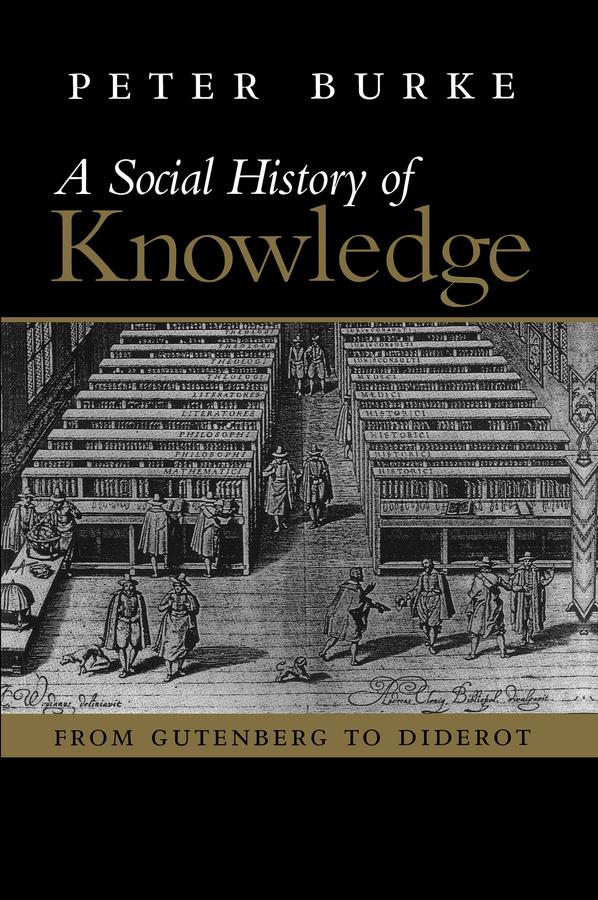
The book opens with an assessment of different sociologies of knowledge from Mannheim to Foucault and beyond, and goes on to discuss intellectuals as a social group and the social institutions (especially universities and academies) which encouraged or discouraged intellectual innovation. Then, in a series of separate chapters, Burke explores the geography, anthropology, politics and economics of knowledge, focusing on the role of cities, academies, states and markets in the process of gathering, classifying, spreading and sometimes concealing information. The final chapters deal with knowledge from the point of view of the individual reader, listener, viewer or consumer, including the problem of the reliability of knowledge discussed so vigorously in the seventeenth century.
One of the most original features of this book is its discussion of knowledges in the plural. It centres on printed knowledge, especially academic knowledge, but it treats the history of the knowledge 'explosion' which followed the invention of printing and the discovery of the world beyond Europe as a process of exchange or negotiation between different knowledges, such as male and female, theoretical and practical, high-status and low-status, and European and non-European.
Although written primarily as a contribution to social or socio-cultural history, this book will also be of interest to historians of science, sociologists, anthropologists, geographers and others in another age of information explosion.
Before Memmo my notes were scattered across PDFs. Now a workspace pulls everything into one place — I see exactly what's still left to study.
Memmo's summaries are gold before exams. I don't have to re-read 800 pages two weeks before — just the important parts.
The AI chat has saved me the night before an exam more than once. I just keep asking until I get it — no waiting on a study group to reply.
The quizzes hit exactly what I need to know. Memmo tracks what I get stuck on — so I only practice what's worth it.
Flashcards with spaced repetition are magic. Memmo knows when I'm about to forget something and brings it back.
The AI podcasts are my favorite. I listen on my way to school and get a recap without sitting at a computer.

Handbok i kvalitativa metoder
281 kr

Hållbar utveckling: en introduktion för ingenjörer och andra problemlösare
334 kr

Brymans Samhällsvetenskapliga metoder
390 kr

Projektledning
491 kr

Den orättvisa hälsan: om socioekonomiska skillnader i hälsa och livslängd
326 kr

Vetenskapsteori för nybörjare
196 kr

Organizational Leadership
429 kr

På väg mot läraryrket
172 kr

Det sociala livet i skolan: Socialpsykologiska perspektiv
253 kr

Betygsättningens didaktik
151 kr

Personality
402 kr

Studying Leadership
404 kr

Managing Innovation
477 kr

Introduktion till samhällsvetenskaplig metod
347 kr

The Psychology of Sex and Gender
698 kr

Evidens och kunskap för socialt arbete
207 kr

Introduction to Leadership
605 kr