
Before Memmo my notes were scattered across PDFs. Now a workspace pulls everything into one place — I see exactly what's still left to study.
‘Superior … A broad-ranging guide that explains the global power structure over the last eight decades’ Carlos Marichal, El Colegio de México
‘Covering the history of the Bank from its early days as a prop to European colonialism through the Rwandan genocide, the Washington Consensus and the Iraq war, Toussaint argues that the Bank is incorrigible and should be abolished. Read and judge for yourselves’ James K. Galbraith, author, Welcome to the Poisoned Chalice: The Destruction of Greece and the Future of Europe
‘Invites fresh thinking on the need to streamline human rights considerations into lending. Recommended reading’ Andrés Solimano, founder, International Center for Globalization and Development
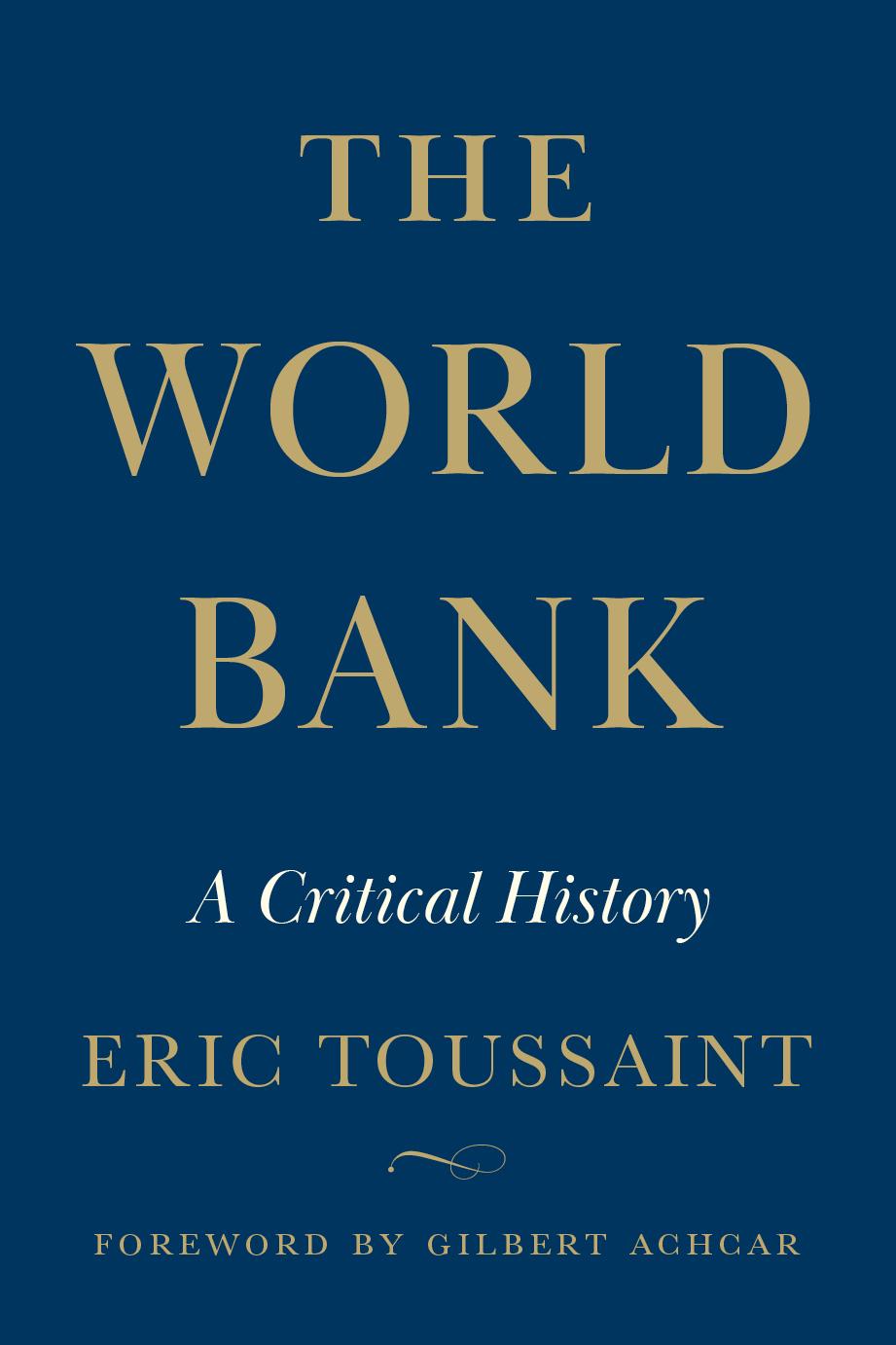
In 1944, the Bretton Woods Conference ushered in a new international economic order. The World Bank emerged as one of the most powerful financial institutions in the world, and a new colonial authority in all but name. But how does it operate, who funds it, and what agenda does it work to promote?
In The World Bank: A Critical History, Éric Toussaint answers all of these questions and more. Offering up a highly readable yet uniquely authoritative account, the book analyses the Bank from its beginnings to the present day. Chapters on gender, climate and the pandemic era provide the reader with a truly contemporary, definitive text.
Seven international case studies illustrate the impact of World Bank policy, and Toussaint also explores the political, economic and strategic motives of the US government with regard to the World Bank. The book concludes with a proposal for replacing the World Bank, IMF and WTO with new, multilateral and democratic institutions.
Éric Toussaint is a historian and political scientist. He is spokesperson for the Committee for the Abolition of Illegitimate Debt, of which he is one of the founding members. He is the author or co-author of numerous books including Bankocracy, The Life and Crimes of an Exemplary Man, and Debt, the IMF, and the World Bank: Sixty Questions, Sixty Answers. His books have been translated into more than a dozen languages.
Before Memmo my notes were scattered across PDFs. Now a workspace pulls everything into one place — I see exactly what's still left to study.
Memmo's summaries are gold before exams. I don't have to re-read 800 pages two weeks before — just the important parts.
The AI chat has saved me the night before an exam more than once. I just keep asking until I get it — no waiting on a study group to reply.
The quizzes hit exactly what I need to know. Memmo tracks what I get stuck on — so I only practice what's worth it.
Flashcards with spaced repetition are magic. Memmo knows when I'm about to forget something and brings it back.
The AI podcasts are my favorite. I listen on my way to school and get a recap without sitting at a computer.

Handbok i kvalitativa metoder
281 kr

Hållbar utveckling: en introduktion för ingenjörer och andra problemlösare
334 kr

Brymans Samhällsvetenskapliga metoder
390 kr

Projektledning
491 kr

Den orättvisa hälsan: om socioekonomiska skillnader i hälsa och livslängd
326 kr

Vetenskapsteori för nybörjare
196 kr

Organizational Leadership
429 kr

På väg mot läraryrket
172 kr

Det sociala livet i skolan: Socialpsykologiska perspektiv
253 kr

Betygsättningens didaktik
151 kr

Personality
402 kr

Studying Leadership
404 kr

Managing Innovation
477 kr

Introduktion till samhällsvetenskaplig metod
347 kr

The Psychology of Sex and Gender
698 kr

Evidens och kunskap för socialt arbete
207 kr

Introduction to Leadership
605 kr