
Before Memmo my notes were scattered across PDFs. Now a workspace pulls everything into one place — I see exactly what's still left to study.
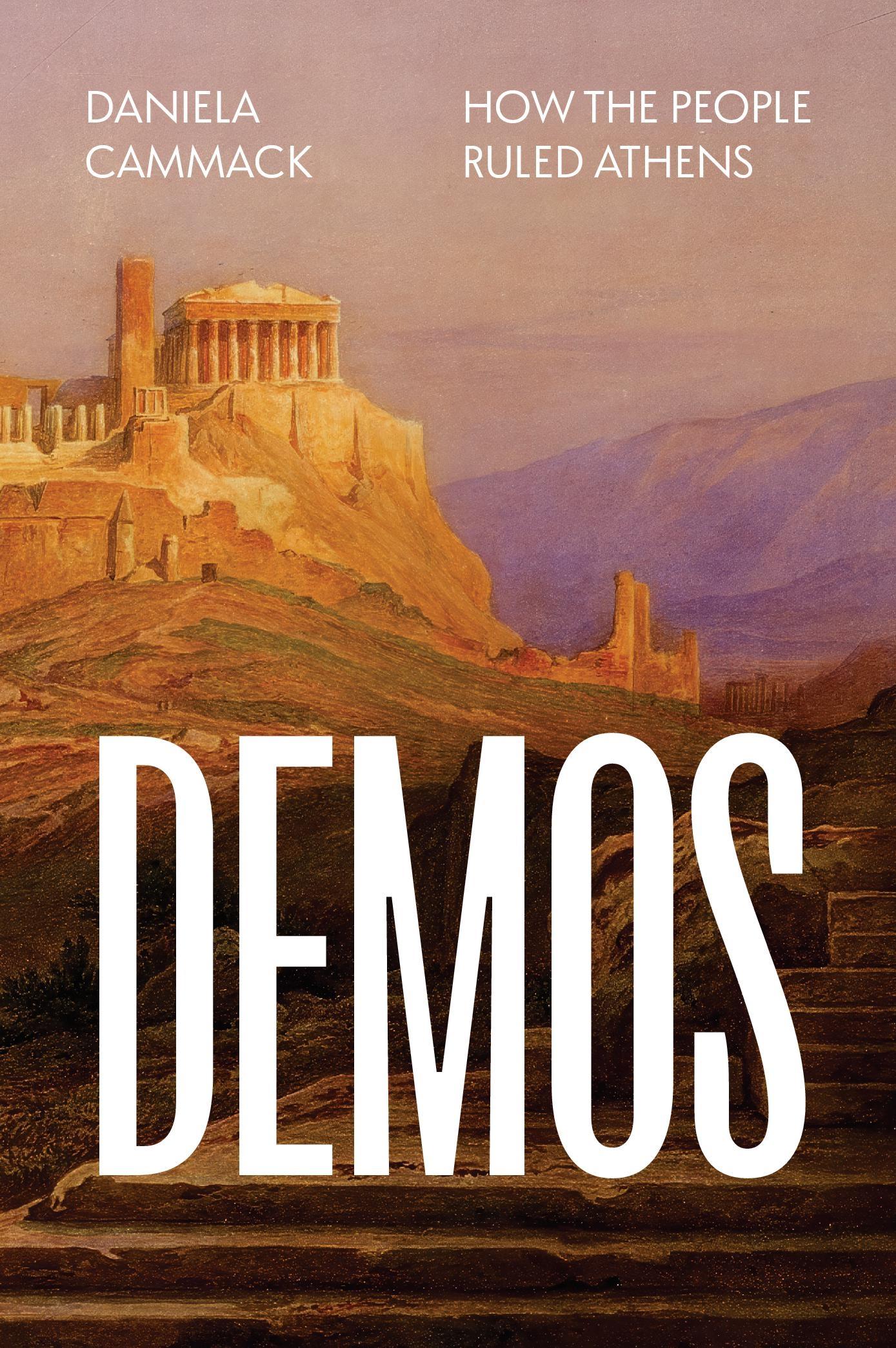
A compelling reinterpretation of ancient Greek democracy showing that the people ruled by securing mass control over leaders
In ancient Greece, demokratia meant “rule by the people”—but what people, and how did they rule? Scholars have long argued that demokratia signified the rule of all adult male citizens over themselves. In Demos, Daniela Cammack counters this view by arguing that demokratia meant rule by the crowd that assembled when a public meeting was held. This crowd was the demos, which the Greeks distinguished from orators, generals, councilors, public benefactors, and other civic leaders. Drawing on literary and epigraphical evidence as well as the key theoretical insights of Aristotle and Hobbes, Cammack explains how constantly changing masses of ordinary ancient Greek men ruled while their leaders were ruled over.
This political system relied on kratos, the power to prevail militarily, epitomized by the victories of the Athenian demos in civil conflicts around 508 and 404 BC. In peacetime, the superior strength of the demos revealed itself in large, frequently summoned crowds of ordinary citizens acting as policymakers, legislators, and (crucially) judges, who wielded great power over politicians. Aristotle characterized the years 403 to 322 as the era of “ultimate democracy,” and it was during this period that the Athenians pulled off a feat unmatched by modern democrats: making use of talented and ambitious leaders without being ruled by them. By contrast, the Greeks called rule by elected office-holders “oligarchy.” As people today lose faith in democratic institutions, Cammack’s account prompts us to ask if we’ve been doing democracy all wrong—or even at all.
Before Memmo my notes were scattered across PDFs. Now a workspace pulls everything into one place — I see exactly what's still left to study.
Memmo's summaries are gold before exams. I don't have to re-read 800 pages two weeks before — just the important parts.
The AI chat has saved me the night before an exam more than once. I just keep asking until I get it — no waiting on a study group to reply.
The quizzes hit exactly what I need to know. Memmo tracks what I get stuck on — so I only practice what's worth it.
Flashcards with spaced repetition are magic. Memmo knows when I'm about to forget something and brings it back.
The AI podcasts are my favorite. I listen on my way to school and get a recap without sitting at a computer.

Handbok i kvalitativa metoder
281 kr

Hållbar utveckling: en introduktion för ingenjörer och andra problemlösare
334 kr

Brymans Samhällsvetenskapliga metoder
390 kr

Projektledning
491 kr

Den orättvisa hälsan: om socioekonomiska skillnader i hälsa och livslängd
326 kr

Vetenskapsteori för nybörjare
196 kr

Organizational Leadership
429 kr

På väg mot läraryrket
172 kr

Det sociala livet i skolan: Socialpsykologiska perspektiv
253 kr

Betygsättningens didaktik
151 kr

Personality
402 kr

Studying Leadership
404 kr

Managing Innovation
477 kr

Introduktion till samhällsvetenskaplig metod
347 kr

The Psychology of Sex and Gender
698 kr

Evidens och kunskap för socialt arbete
207 kr

Introduction to Leadership
605 kr