
Before Memmo my notes were scattered across PDFs. Now a workspace pulls everything into one place — I see exactly what's still left to study.
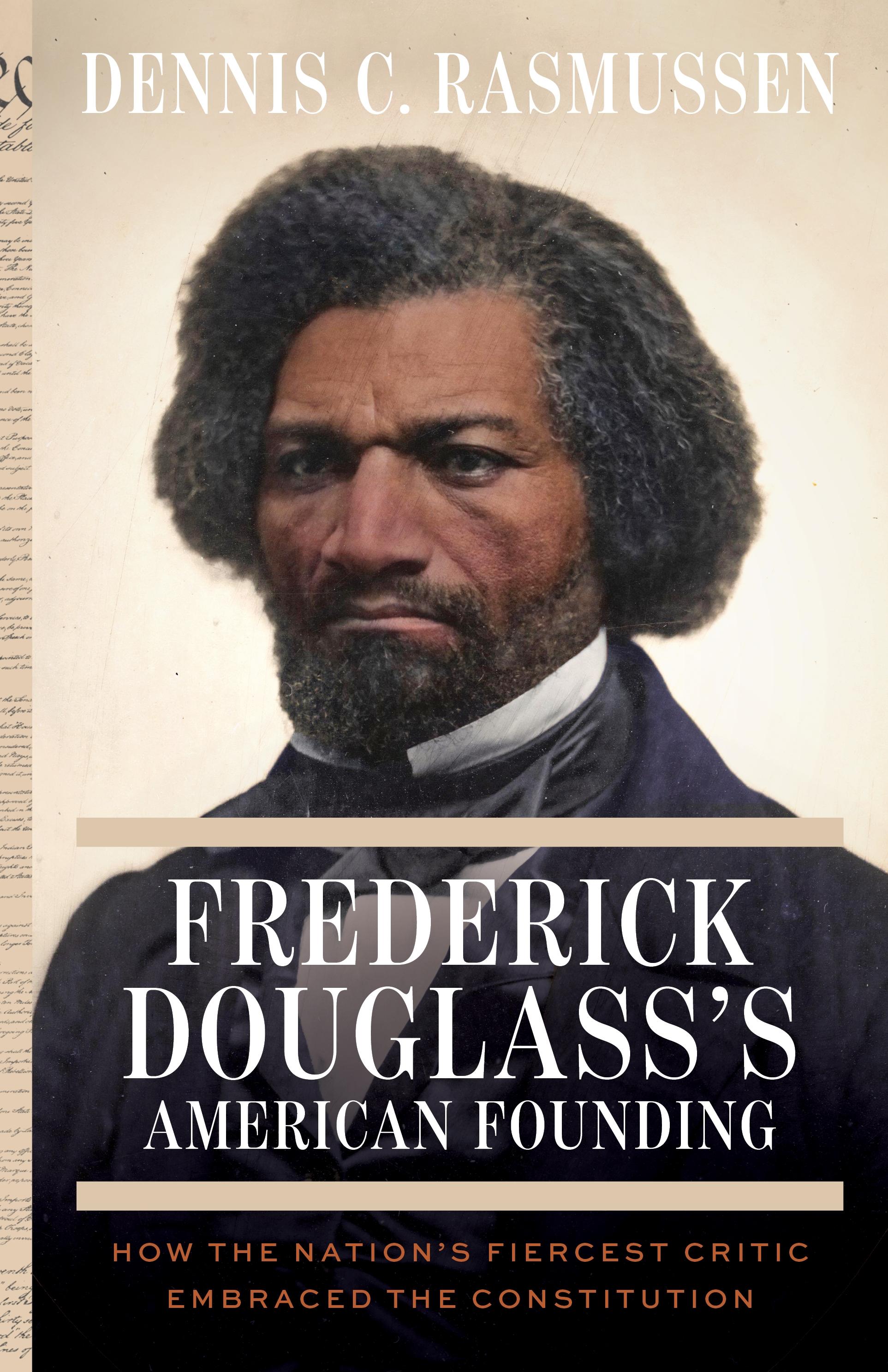
The remarkable story of how Frederick Douglass went from condemning the Constitution as a proslavery pact to celebrating it as a “glorious liberty document” that promises freedom to everyone
The speeches and writings of Frederick Douglass contain some of the most probing examinations ever of the role that slavery played in America’s founding. In Frederick Douglass’s American Founding, Dennis Rasmussen traces the great abolitionist’s intellectual journey from denouncing the founders as hypocrites and the Constitution as evil to embracing them both.
Throughout the 1840s, Douglass described the founders as “little better than a band of pirates” and the Constitution as “a most cunningly-devised and wicked compact.” Beginning in 1849, however, he undertook a long period of study and reflection that produced a dramatic change of mind. From 1851 on, Douglass contended that the founders were resolutely opposed to slavery and that the Constitution was a “glorious liberty document” that mandated immediate emancipation, despite several clauses that appeared to suggest otherwise. Even after embracing the Constitution and the founders, Douglass remained second to none in castigating America for the evils of slavery. Indeed, as he argued in his greatest speech, “What to the Slave Is the Fourth of July?” (1852), the glory of the nation’s founding ideals only put their persistent betrayal into starker relief. Douglass also came to regard the founders as radicals in their fight against tyranny. That was why he insisted that he and his fellow abolitionists, rather than moderates like Abraham Lincoln, were the founders’ true heirs.
Whatever you think about the founding, Douglass’s arguments will challenge—and perhaps even change—your views. After seeing the Constitution through Douglass’s eyes, it is difficult to look at it in the same way again.
Before Memmo my notes were scattered across PDFs. Now a workspace pulls everything into one place — I see exactly what's still left to study.
Memmo's summaries are gold before exams. I don't have to re-read 800 pages two weeks before — just the important parts.
The AI chat has saved me the night before an exam more than once. I just keep asking until I get it — no waiting on a study group to reply.
The quizzes hit exactly what I need to know. Memmo tracks what I get stuck on — so I only practice what's worth it.
Flashcards with spaced repetition are magic. Memmo knows when I'm about to forget something and brings it back.
The AI podcasts are my favorite. I listen on my way to school and get a recap without sitting at a computer.

Handbok i kvalitativa metoder
281 kr

Hållbar utveckling: en introduktion för ingenjörer och andra problemlösare
334 kr

Brymans Samhällsvetenskapliga metoder
390 kr

Projektledning
491 kr

Den orättvisa hälsan: om socioekonomiska skillnader i hälsa och livslängd
326 kr

Organizational Leadership
429 kr

Vetenskapsteori för nybörjare
196 kr

På väg mot läraryrket
172 kr

Det sociala livet i skolan: Socialpsykologiska perspektiv
253 kr

Betygsättningens didaktik
151 kr

Personality
402 kr

Studying Leadership
404 kr

Managing Innovation
477 kr

Introduktion till samhällsvetenskaplig metod
347 kr

The Psychology of Sex and Gender
698 kr

Evidens och kunskap för socialt arbete
207 kr

Introduction to Leadership
605 kr