
Before Memmo my notes were scattered across PDFs. Now a workspace pulls everything into one place — I see exactly what's still left to study.
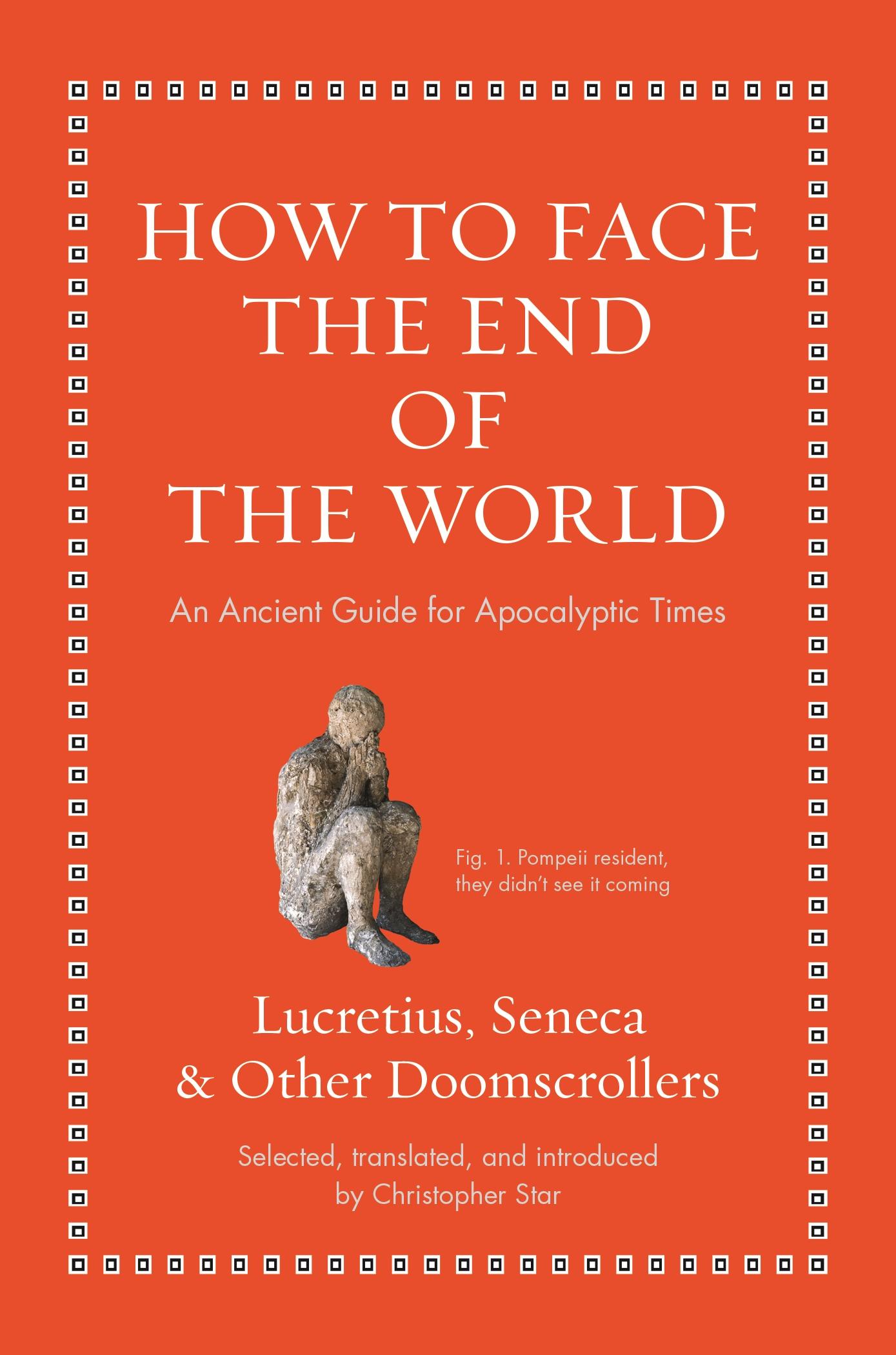
A grimly entertaining anthology of ancient Greek and Roman writings about how to fearlessly prepare for the end of the world and other disasters
A remarkable percentage of people believe we are living in the end times, according to pollsters. Between the climate crisis, nuclear weapons, AI, and other existential threats, it’s easy to see why. How should we think about the apocalypse? How can we mentally prepare for doomsday and other disasters? This anthology presents ancient Greek and Roman writings about the end of the world—from the poet Hesiod and his prediction that Zeus will destroy humanity to philosophers such as Plato, Lucretius, Seneca, and Epictetus, who viewed the end of the world as an inevitable and regular process of nature and the cosmos. These writers—the original doomscrollers—show how thinking about the annihilation of civilization or the planet can be instructive and healthy, and they seek to teach readers how to face catastrophe without fear.
Featuring fresh new translations and an introduction, as well as the original Greek and Latin texts on facing pages, this collection presents stories and ideas that are both familiar and unfamiliar. Here, Plato invents the tale of Atlantis to illustrate the idea that civilization is periodically wiped out by natural disasters, the Epicureans envision total planetary destruction in a universe guided by natural laws, the Stoics theorize that the cosmos is repeatedly consumed by its “creative fire” and then reborn, and much more.
Along the way, we discover the ancient roots of modern doomsday prepping and postapocalyptic fiction. But most of all, we learn how thinking about the end of the world can be oddly reassuring and improve how we live today.
Before Memmo my notes were scattered across PDFs. Now a workspace pulls everything into one place — I see exactly what's still left to study.
Memmo's summaries are gold before exams. I don't have to re-read 800 pages two weeks before — just the important parts.
The AI chat has saved me the night before an exam more than once. I just keep asking until I get it — no waiting on a study group to reply.
The quizzes hit exactly what I need to know. Memmo tracks what I get stuck on — so I only practice what's worth it.
Flashcards with spaced repetition are magic. Memmo knows when I'm about to forget something and brings it back.
The AI podcasts are my favorite. I listen on my way to school and get a recap without sitting at a computer.

Handbok i kvalitativa metoder
281 kr

Hållbar utveckling: en introduktion för ingenjörer och andra problemlösare
334 kr

Brymans Samhällsvetenskapliga metoder
390 kr

Projektledning
491 kr

Den orättvisa hälsan: om socioekonomiska skillnader i hälsa och livslängd
326 kr

Vetenskapsteori för nybörjare
196 kr

Organizational Leadership
429 kr

På väg mot läraryrket
172 kr

Det sociala livet i skolan: Socialpsykologiska perspektiv
253 kr

Betygsättningens didaktik
151 kr

Personality
402 kr

Studying Leadership
404 kr

Managing Innovation
477 kr

Introduktion till samhällsvetenskaplig metod
347 kr

The Psychology of Sex and Gender
698 kr

Evidens och kunskap för socialt arbete
207 kr

Introduction to Leadership
605 kr