
Before Memmo my notes were scattered across PDFs. Now a workspace pulls everything into one place — I see exactly what's still left to study.
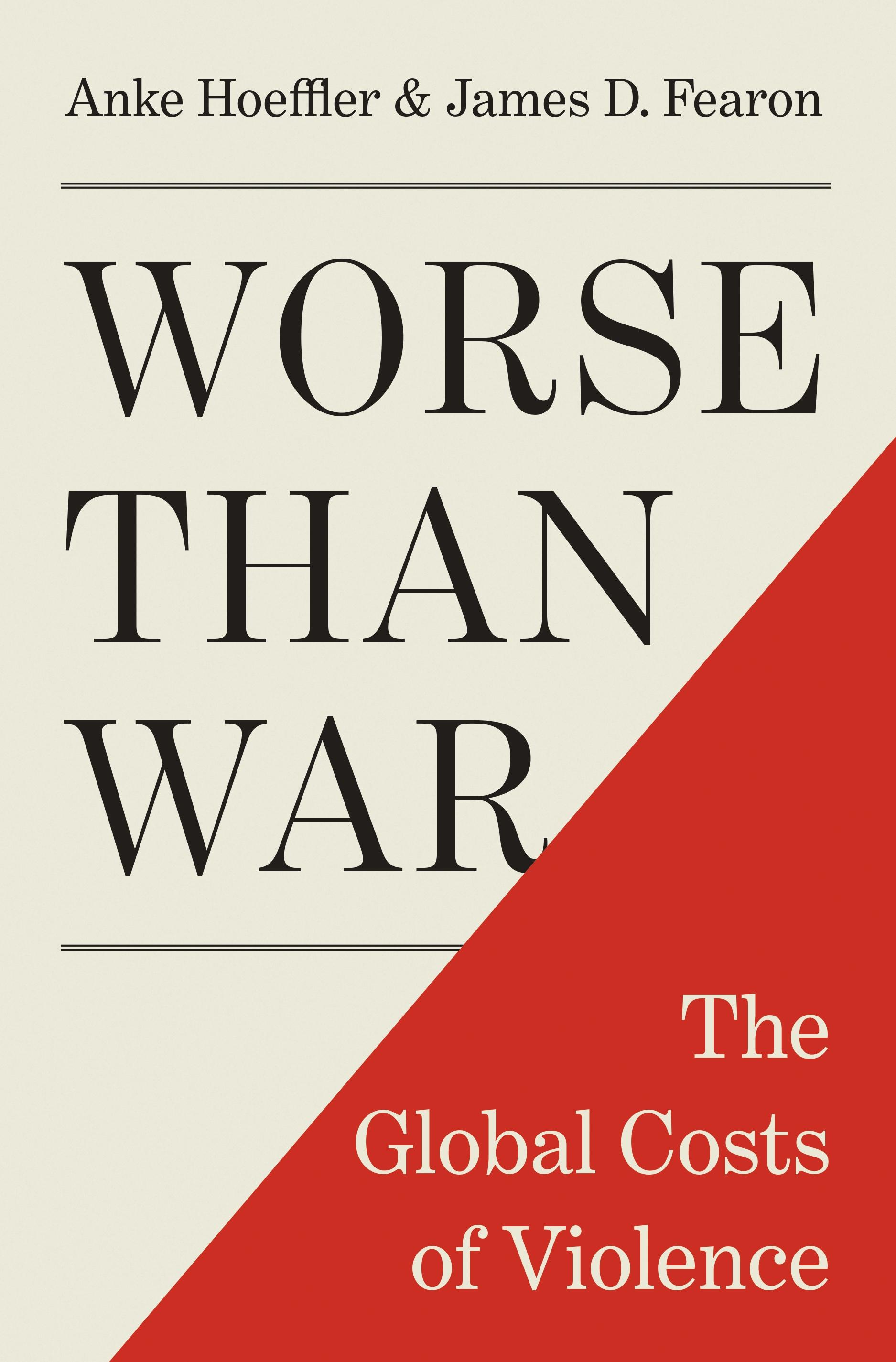
An empirically powerful account of why interpersonal violence across the globe exacts a far greater cumulative cost on society than war and terrorism combined
Civil wars, interstate wars, and terrorism receive a great deal of media and policy attention, for good reasons. By contrast, the major forms of interpersonal violence—homicide, intimate partner violence, and severe physical punishment of children—generally have a much lower profile.
In Worse than War, Anke Hoeffler and James Fearon assemble and analyze the data on the global prevalence and costs of collective and interpersonal violence. They show that interpersonal violence is vastly more widespread and imposes far greater societal costs than collective violence. Wars tend to be concentrated in a small number of countries, and often relatively small areas within them. By contrast, almost all countries have rates of homicide and nonfatal assault, particularly of women and children, that far exceed the global average rates of death and injury in wars and terrorism.
Hoeffler and Fearon argue that high rates of interpersonal violence are not simply fixed by culture or other structural factors. Evidence from a host of program evaluations, natural experiments, and longer-term social movements make it clear that rates of homicide, intimate partner violence, and severe physical punishment of children can be reduced if they are effectively targeted. Interventions that promote peace in civil war–torn countries are also possible, but the opportunities are few and increasingly far between. Drawing on ideas and methods from many fields—economics, political science, public health, psychology, sociology, and others—the authors show that money and policy efforts directed toward reducing interpersonal violence thus merit higher priority both within countries and by international donors.
Before Memmo my notes were scattered across PDFs. Now a workspace pulls everything into one place — I see exactly what's still left to study.
Memmo's summaries are gold before exams. I don't have to re-read 800 pages two weeks before — just the important parts.
The AI chat has saved me the night before an exam more than once. I just keep asking until I get it — no waiting on a study group to reply.
The quizzes hit exactly what I need to know. Memmo tracks what I get stuck on — so I only practice what's worth it.
Flashcards with spaced repetition are magic. Memmo knows when I'm about to forget something and brings it back.
The AI podcasts are my favorite. I listen on my way to school and get a recap without sitting at a computer.

Handbok i kvalitativa metoder
281 kr

Hållbar utveckling: en introduktion för ingenjörer och andra problemlösare
334 kr

Brymans Samhällsvetenskapliga metoder
390 kr

Projektledning
491 kr

Den orättvisa hälsan: om socioekonomiska skillnader i hälsa och livslängd
326 kr

Organizational Leadership
429 kr

Vetenskapsteori för nybörjare
196 kr

På väg mot läraryrket
172 kr

Det sociala livet i skolan: Socialpsykologiska perspektiv
253 kr

Betygsättningens didaktik
151 kr

Personality
402 kr

Studying Leadership
404 kr

Managing Innovation
477 kr

Introduktion till samhällsvetenskaplig metod
347 kr

The Psychology of Sex and Gender
698 kr

Evidens och kunskap för socialt arbete
207 kr

Introduction to Leadership
605 kr