
Before Memmo my notes were scattered across PDFs. Now a workspace pulls everything into one place — I see exactly what's still left to study.
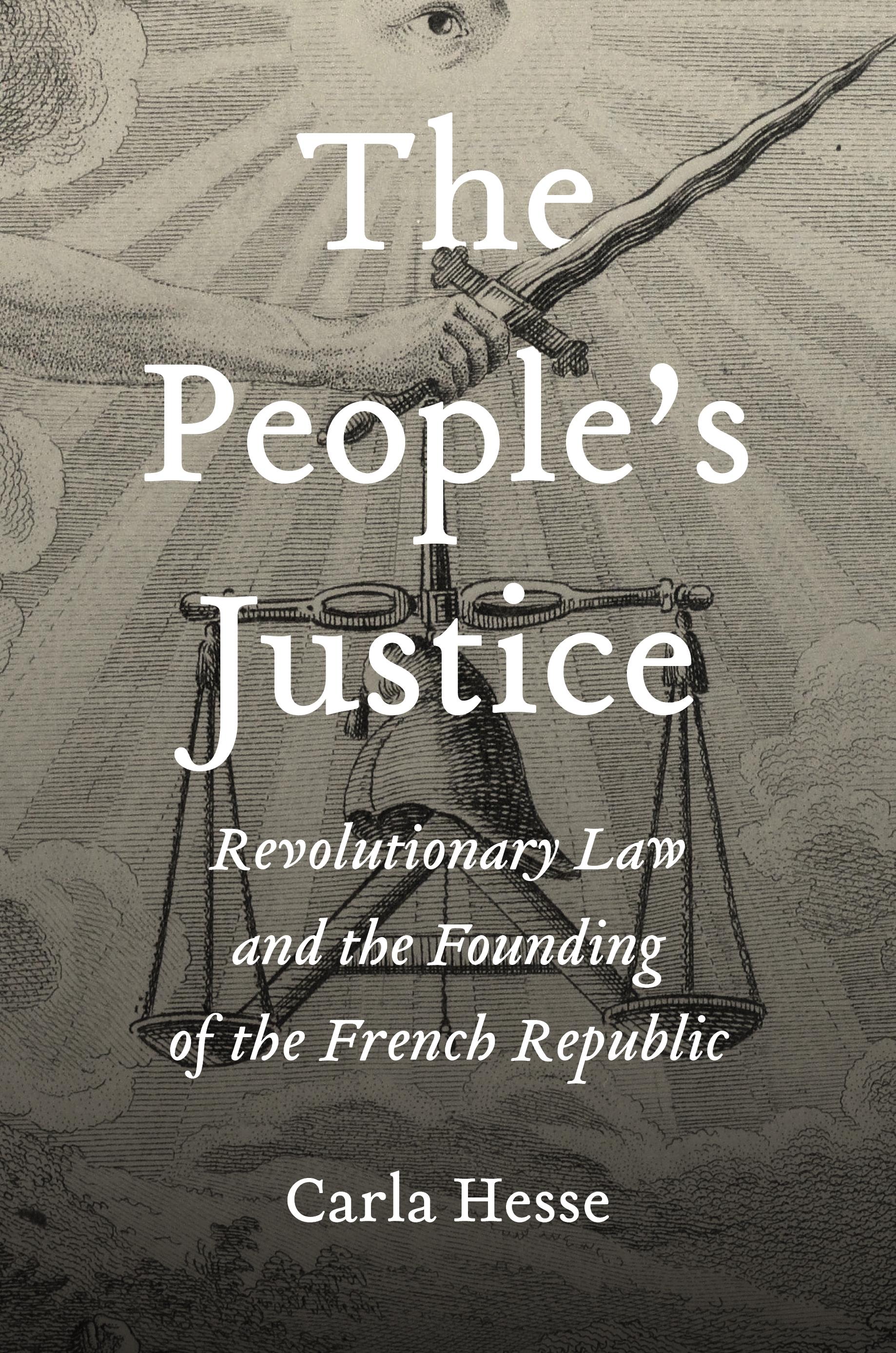
A major new interpretation of the French Revolution that brings to life the criminal tribunals at the heart of the Republic’s political culture
In The People’s Justice, Carla Hesse offers a sweeping reappraisal of political violence in the French Revolution. From Charles Dickens to Hannah Arendt, the Revolution of 1789–1799 in France has been depicted as the bloodiest of the eighteenth-century democratic revolutions. Through extensive new archival research, Hesse shows that, to the contrary, what set the French Revolution apart was neither the scale nor the intensity of its violence but rather the ubiquity of its political tribunals and the use of novel forms of criminal law and procedure as a means of adjudicating political conflict.
More than 5,000 political trials were prosecuted by the Revolutionary Tribunal in Paris alone, and, with an acquittal rate of more than 50 percent, these were neither perfunctory nor foregone in their outcomes. They had a repressive function, to be sure, but more importantly, they played a critical role in founding a republic in France and in shaping its social and political norms. Through jury deliberation, public witnessing, and media coverage, these political trials legitimated a republic and the revolutionary struggle that brought it into being. They were animated less by class warfare, factional hatreds, or utopian ideology than by a patriotic, albeit tragic, effort to hold fellow citizens accountable. Over the course of the last two centuries, France, of course, has successfully established itself as a constitutional regime, but this constitutional tradition is still rooted in and haunted by its revolutionary past. Since 1793, the French Republic has, to some extent or another, kept itself alive by keeping itself perpetually on trial.
Before Memmo my notes were scattered across PDFs. Now a workspace pulls everything into one place — I see exactly what's still left to study.
Memmo's summaries are gold before exams. I don't have to re-read 800 pages two weeks before — just the important parts.
The AI chat has saved me the night before an exam more than once. I just keep asking until I get it — no waiting on a study group to reply.
The quizzes hit exactly what I need to know. Memmo tracks what I get stuck on — so I only practice what's worth it.
Flashcards with spaced repetition are magic. Memmo knows when I'm about to forget something and brings it back.
The AI podcasts are my favorite. I listen on my way to school and get a recap without sitting at a computer.

Handbok i kvalitativa metoder
281 kr

Hållbar utveckling: en introduktion för ingenjörer och andra problemlösare
334 kr

Brymans Samhällsvetenskapliga metoder
390 kr

Projektledning
491 kr

Den orättvisa hälsan: om socioekonomiska skillnader i hälsa och livslängd
326 kr

Vetenskapsteori för nybörjare
196 kr

Organizational Leadership
429 kr

På väg mot läraryrket
172 kr

Det sociala livet i skolan: Socialpsykologiska perspektiv
253 kr

Betygsättningens didaktik
151 kr

Personality
402 kr

Studying Leadership
404 kr

Managing Innovation
477 kr

Introduktion till samhällsvetenskaplig metod
347 kr

The Psychology of Sex and Gender
698 kr

Evidens och kunskap för socialt arbete
207 kr

Introduction to Leadership
605 kr