
Before Memmo my notes were scattered across PDFs. Now a workspace pulls everything into one place — I see exactly what's still left to study.
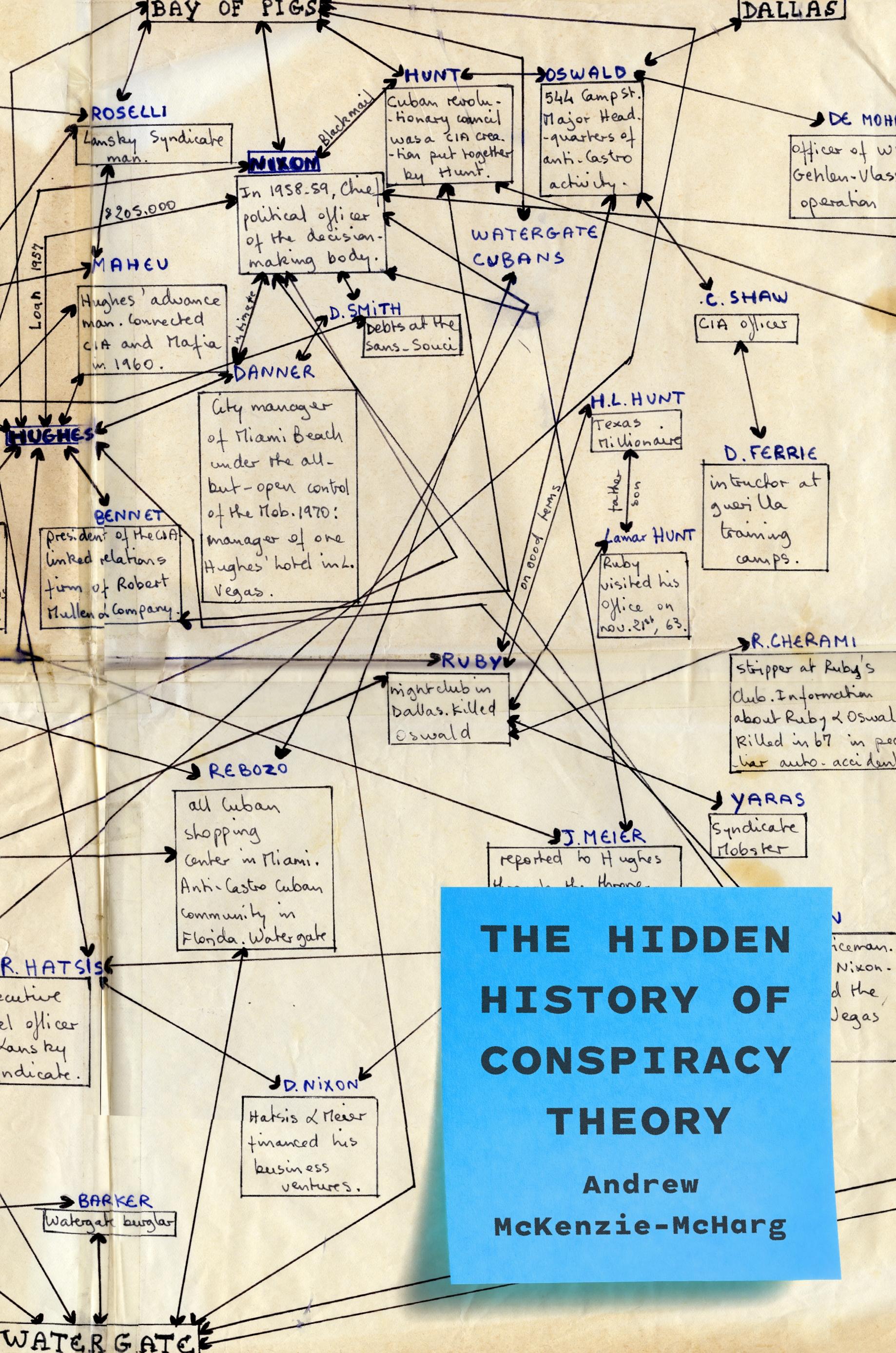
Tracing the genealogy of conspiracy theory, from Machiavelli through the “paranoid style” to QAnon
Truthers, birthers, flat-Earthers, the deep state, crisis actors, chemtrails, the Epstein files, Pizzagate, the Plandemic—it seems as though there’s a conspiracy theory for every situation. But what exactly is a conspiracy theory? And why is the term used to describe beliefs that are so very unlike theories (at least in the scientific sense of the word)? In this erudite and original book, Andrew McKenzie-McHarg answers these questions not by formulating a definition but by tracing a genealogy. He uncovers two crucial strands of contemporary conspiracy theorizing on the threshold of modernity: on the one hand, political analysis as realized by Niccolò Machiavelli in such works as The Prince and, on the other, apocalyptic prophecy as channeled by the charismatic preacher Girolamo Savonarola.
The French Revolution, the antisemitic hoax known as the Protocols of the Elders of Zion, and the Nuremberg Trials number among the subsequent episodes that progressively entangled these strands before finally knotting them into the twentieth-century concept of conspiracy theory. Alternative labels were also offered, most strikingly by the historian Richard Hofstadter, whose engagement with American right-wing politics in the 1950s and 1960s inspired his notion of the paranoid style. As McKenzie-McHarg shows, Hofstadter’s coinage, with its psychological bent, contributed to personalizing our understanding of conspiracy theory, thus yielding a specific type of person that, for better or worse, has become all too familiar to us today: the conspiracy theorist.
Proceeding from The Prince through The Protocols to the paranoid style and then beyond to QAnon, The Hidden History of Conspiracy Theory sheds new light on a complex and troubling phenomenon.
Before Memmo my notes were scattered across PDFs. Now a workspace pulls everything into one place — I see exactly what's still left to study.
Memmo's summaries are gold before exams. I don't have to re-read 800 pages two weeks before — just the important parts.
The AI chat has saved me the night before an exam more than once. I just keep asking until I get it — no waiting on a study group to reply.
The quizzes hit exactly what I need to know. Memmo tracks what I get stuck on — so I only practice what's worth it.
Flashcards with spaced repetition are magic. Memmo knows when I'm about to forget something and brings it back.
The AI podcasts are my favorite. I listen on my way to school and get a recap without sitting at a computer.

Handbok i kvalitativa metoder
281 kr

Hållbar utveckling: en introduktion för ingenjörer och andra problemlösare
334 kr

Brymans Samhällsvetenskapliga metoder
390 kr

Projektledning
491 kr

Den orättvisa hälsan: om socioekonomiska skillnader i hälsa och livslängd
326 kr

Vetenskapsteori för nybörjare
196 kr

Organizational Leadership
429 kr

På väg mot läraryrket
172 kr

Det sociala livet i skolan: Socialpsykologiska perspektiv
253 kr

Betygsättningens didaktik
151 kr

Personality
402 kr

Studying Leadership
404 kr

Managing Innovation
477 kr

Introduktion till samhällsvetenskaplig metod
347 kr

The Psychology of Sex and Gender
698 kr

Evidens och kunskap för socialt arbete
207 kr

Introduction to Leadership
605 kr