
Before Memmo my notes were scattered across PDFs. Now a workspace pulls everything into one place — I see exactly what's still left to study.
How the civil legal system undermines the political lives of marginalized communities
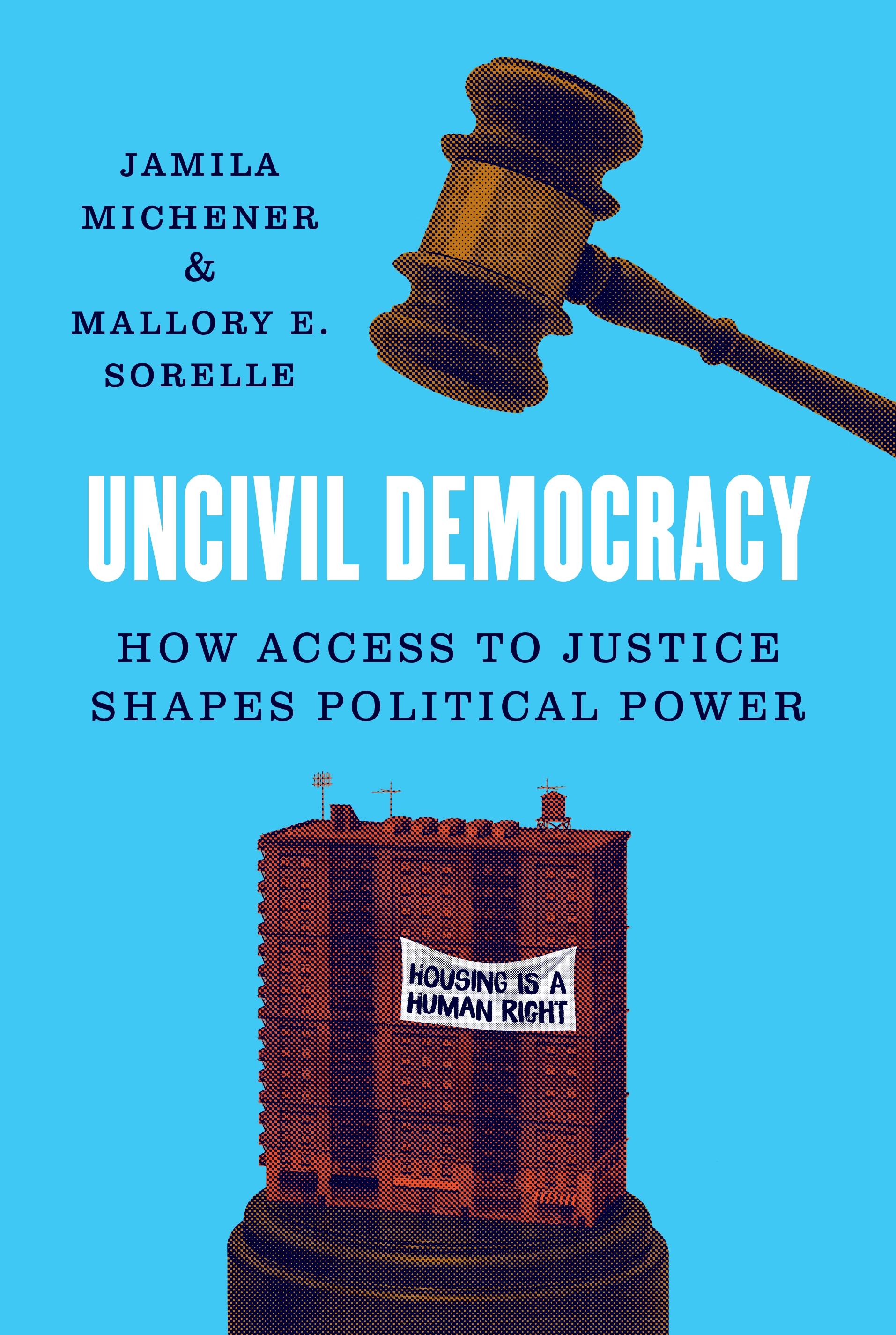
Each year, as many as 250 million Americans face civil legal problems like eviction, debt collection, and substandard housing. These problems are disproportionately shouldered by racially and economically marginalized people, particularly women of color. Civil courts and legal aid organizations are supposed to protect their rights, yet more than 90 percent of low-income people receive inadequate or no legal assistance. Instead, access to justice is reserved for those who can afford its high price. For those who can’t, the repercussions can be devastating, from homelessness and loss of public benefits to broken families and diminished health. Uncivil Democracy looks at the US civil justice system through the eyes of the people whose very citizenship is indelibly shaped by it.
Jamila Michener and Mallory SoRelle show how civil legal problems, and the institutions meant to address them, greatly erode trust in the legal system among marginalized communities, undermining their broader sense of democratic citizenship and political standing. While legal representation offers vital protections, increased access to justice through an ever-growing supply of lawyers does not address the structural problems that generate demand for lawyers in the first place. Looking at cases involving unfair evictions and substandard housing, Michener and SoRelle demonstrate how community groups such as tenants’ unions can fill this justice gap and provide the means to build political power that transforms the conditions that create precarity.
Drawing on eye-opening qualitative evidence and a wealth of historical and survey data, Uncivil Democracy explains why collective organizing holds the greatest promise for altering the systems that create civil legal problems and exercising the political power necessary for meaningful change.
Before Memmo my notes were scattered across PDFs. Now a workspace pulls everything into one place — I see exactly what's still left to study.
Memmo's summaries are gold before exams. I don't have to re-read 800 pages two weeks before — just the important parts.
The AI chat has saved me the night before an exam more than once. I just keep asking until I get it — no waiting on a study group to reply.
The quizzes hit exactly what I need to know. Memmo tracks what I get stuck on — so I only practice what's worth it.
Flashcards with spaced repetition are magic. Memmo knows when I'm about to forget something and brings it back.
The AI podcasts are my favorite. I listen on my way to school and get a recap without sitting at a computer.

Handbok i kvalitativa metoder
281 kr

Hållbar utveckling: en introduktion för ingenjörer och andra problemlösare
334 kr

Brymans Samhällsvetenskapliga metoder
390 kr

Projektledning
491 kr

Den orättvisa hälsan: om socioekonomiska skillnader i hälsa och livslängd
326 kr

Vetenskapsteori för nybörjare
196 kr

Organizational Leadership
429 kr

På väg mot läraryrket
172 kr

Det sociala livet i skolan: Socialpsykologiska perspektiv
253 kr

Betygsättningens didaktik
151 kr

Personality
402 kr

Studying Leadership
404 kr

Managing Innovation
477 kr

Introduktion till samhällsvetenskaplig metod
347 kr

The Psychology of Sex and Gender
698 kr

Evidens och kunskap för socialt arbete
207 kr

Introduction to Leadership
605 kr