
Before Memmo my notes were scattered across PDFs. Now a workspace pulls everything into one place — I see exactly what's still left to study.
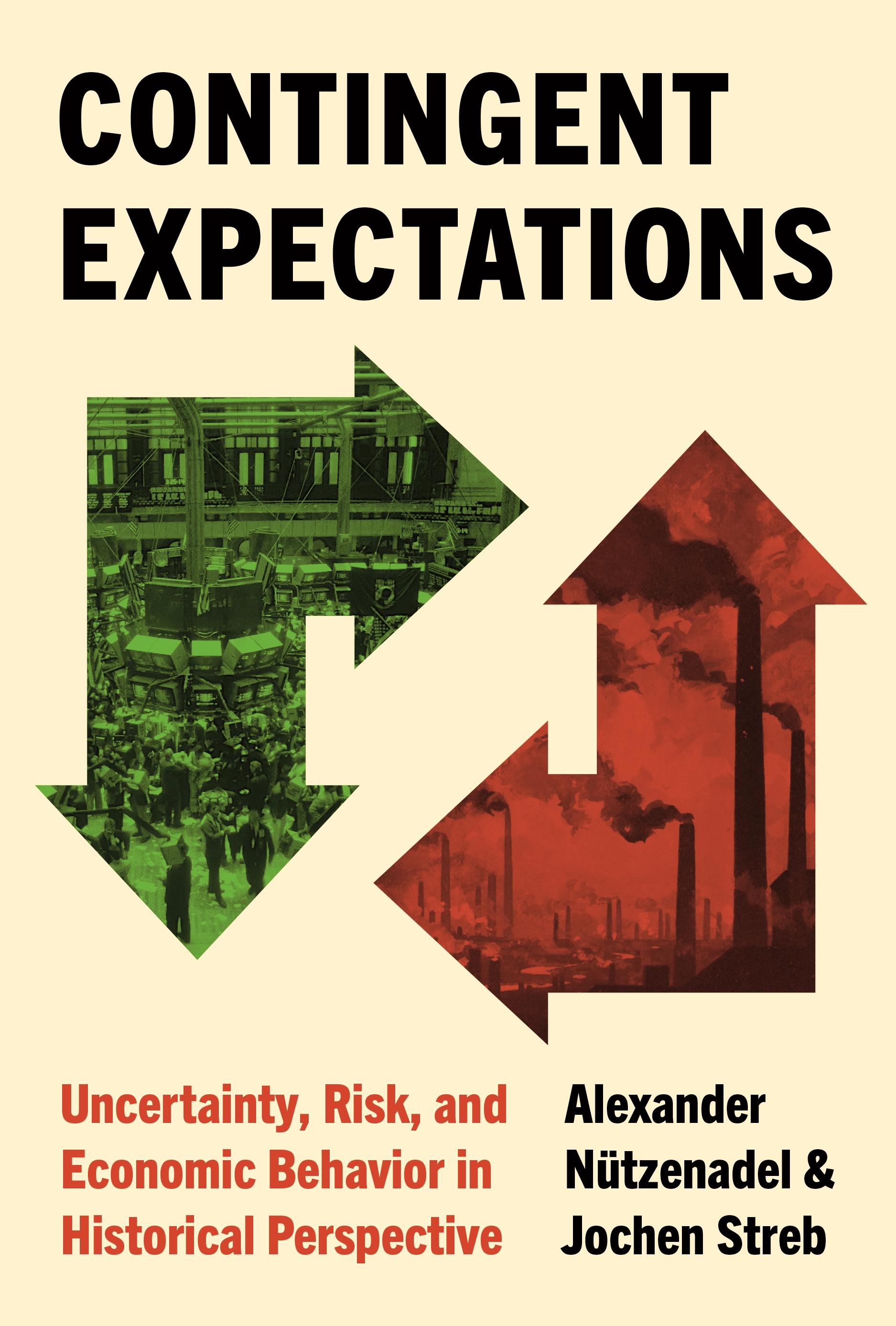
An empirical analysis and new theoretical framework for understanding economic expectations and decision-making in different historical settings.
Expectations play a crucial role in shaping economic behavior. But how are expectations actually formed, and how has this changed over time? The financial crisis of 2007–08 cast doubt on traditional theories of expectation formation, particularly the rational expectations framework. In Contingent Expectations, Alexander Nützenadel and Jochen Streb examine the ways that past experiences influence the economic expectations and decision-making of households, investors, and policymakers through history, and offer an alternative perspective. Combining a comprehensive empirical analysis of expectation formation from the eighteenth century to the present day with an assessment of the relevant economic theory, Nützenadel and Streb present a new theoretical framework, contingent expectations, for understanding economic expectation.
Nützenadel and Streb show how economic actors developed new forecasting methods in response to rising uncertainty brought on by the Industrial Revolution, the expansion of global trade, financial market integration, and environmental crises. Tracing the evolution of economic theories on expectations, they find that when growing market volatility made forecasting more complex, economic agents often adapted with remarkable flexibility to changing circumstances. Challenging prevailing concepts of expectations, including rational choice and adaptive expectations, Nützenadel and Streb emphasize the heterogeneity of economic agents’ cognitive practices—in particular, the need to consider variation in information costs and historical experience. Expectation formation, they argue, is contingent on each individual’s current decision-making situation. Their account of the history of economic expectations has significant implications for current debates in economics.
Before Memmo my notes were scattered across PDFs. Now a workspace pulls everything into one place — I see exactly what's still left to study.
Memmo's summaries are gold before exams. I don't have to re-read 800 pages two weeks before — just the important parts.
The AI chat has saved me the night before an exam more than once. I just keep asking until I get it — no waiting on a study group to reply.
The quizzes hit exactly what I need to know. Memmo tracks what I get stuck on — so I only practice what's worth it.
Flashcards with spaced repetition are magic. Memmo knows when I'm about to forget something and brings it back.
The AI podcasts are my favorite. I listen on my way to school and get a recap without sitting at a computer.

Handbok i kvalitativa metoder
281 kr

Hållbar utveckling: en introduktion för ingenjörer och andra problemlösare
334 kr

Brymans Samhällsvetenskapliga metoder
390 kr

Projektledning
491 kr

Den orättvisa hälsan: om socioekonomiska skillnader i hälsa och livslängd
326 kr

Organizational Leadership
429 kr

Vetenskapsteori för nybörjare
196 kr

På väg mot läraryrket
172 kr

Det sociala livet i skolan: Socialpsykologiska perspektiv
253 kr

Betygsättningens didaktik
151 kr

Personality
402 kr

Studying Leadership
404 kr

Managing Innovation
477 kr

Introduktion till samhällsvetenskaplig metod
347 kr

The Psychology of Sex and Gender
698 kr

Evidens och kunskap för socialt arbete
207 kr

Introduction to Leadership
605 kr