
Before Memmo my notes were scattered across PDFs. Now a workspace pulls everything into one place — I see exactly what's still left to study.
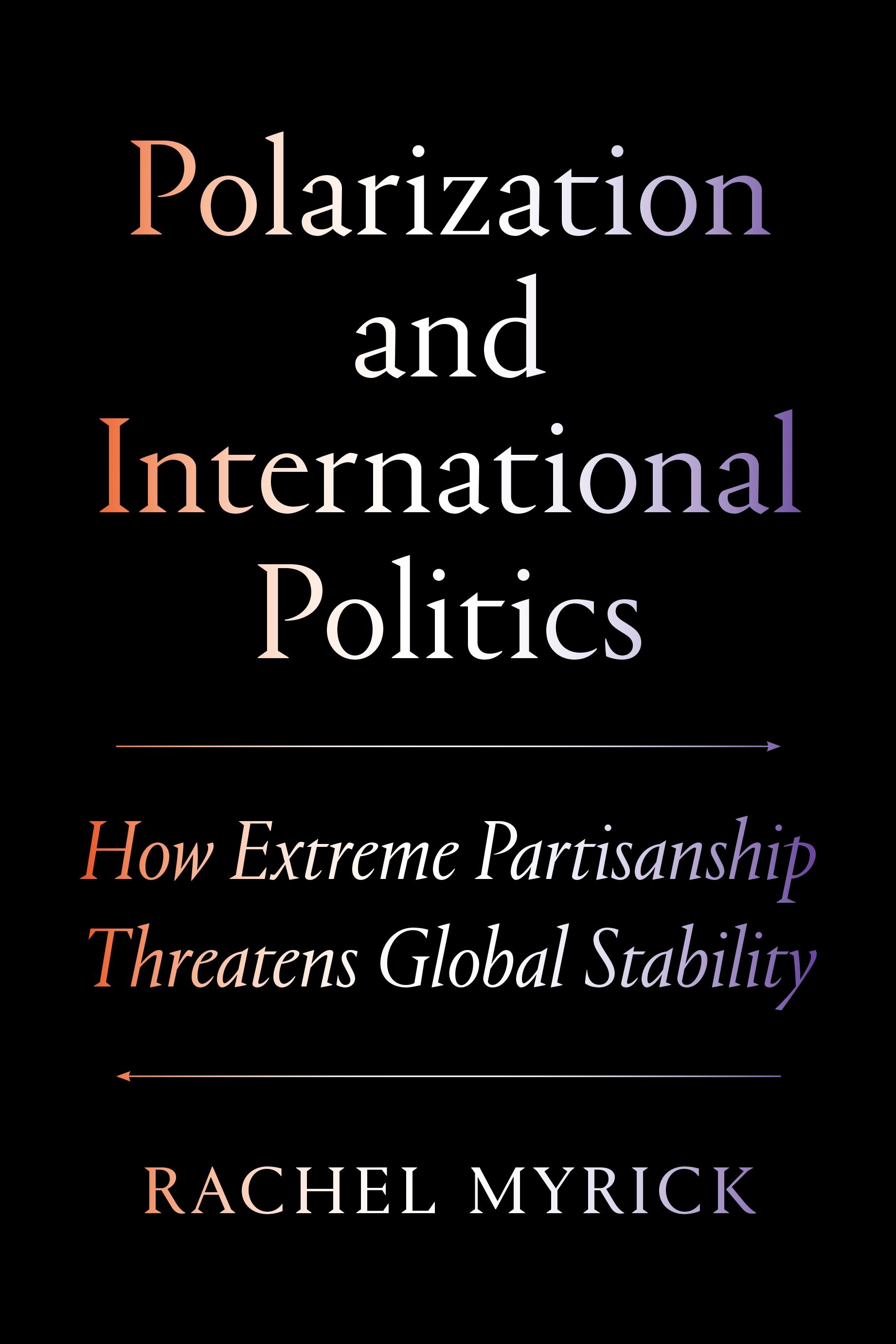
How extreme polarization undermines the advantages that democracies have when formulating foreign policy
Polarization is a defining feature of politics in the United States and many other democracies. Yet although there is much research focusing on the effects of polarization on domestic politics, little is known about how polarization influences international cooperation and conflict. Democracies are thought to have advantages over nondemocratic nations in international relations, including the ability to keep foreign policy stable across time, credibly signal information to adversaries, and maintain commitments to allies. Does domestic polarization affect these “democratic advantages”? In this timely book, Rachel Myrick argues that polarization reshapes the nature of constraints on democratic leaders, which in turn erodes the advantages democracies have in foreign affairs.
Drawing on a range of evidence, including cross-national analyses, observational and experimental public opinion research, descriptive data on the behavior of politicians, and interviews with policymakers, Myrick develops metrics that explain the effect of extreme polarization on international politics and traces the pathways by which polarization undermines each of the democratic advantages. Turning to the case of contemporary US foreign policy, Myrick shows that as its political leaders become less responsive to the public and less accountable to political opposition, the United States loses both reliability as an ally and credibility as an adversary. Myrick’s account links the effects of polarization on democratic governance to theories of international relations, integrating work across the fields of international relations, comparative politics, and American politics to explore how patterns of domestic polarization shape the international system.
Before Memmo my notes were scattered across PDFs. Now a workspace pulls everything into one place — I see exactly what's still left to study.
Memmo's summaries are gold before exams. I don't have to re-read 800 pages two weeks before — just the important parts.
The AI chat has saved me the night before an exam more than once. I just keep asking until I get it — no waiting on a study group to reply.
The quizzes hit exactly what I need to know. Memmo tracks what I get stuck on — so I only practice what's worth it.
Flashcards with spaced repetition are magic. Memmo knows when I'm about to forget something and brings it back.
The AI podcasts are my favorite. I listen on my way to school and get a recap without sitting at a computer.

Handbok i kvalitativa metoder
281 kr

Hållbar utveckling: en introduktion för ingenjörer och andra problemlösare
334 kr

Brymans Samhällsvetenskapliga metoder
390 kr

Projektledning
491 kr

Den orättvisa hälsan: om socioekonomiska skillnader i hälsa och livslängd
326 kr

Vetenskapsteori för nybörjare
196 kr

Organizational Leadership
429 kr

På väg mot läraryrket
172 kr

Det sociala livet i skolan: Socialpsykologiska perspektiv
253 kr

Betygsättningens didaktik
151 kr

Personality
402 kr

Studying Leadership
404 kr

Managing Innovation
477 kr

Introduktion till samhällsvetenskaplig metod
347 kr

The Psychology of Sex and Gender
698 kr

Evidens och kunskap för socialt arbete
207 kr

Introduction to Leadership
605 kr