
Before Memmo my notes were scattered across PDFs. Now a workspace pulls everything into one place — I see exactly what's still left to study.
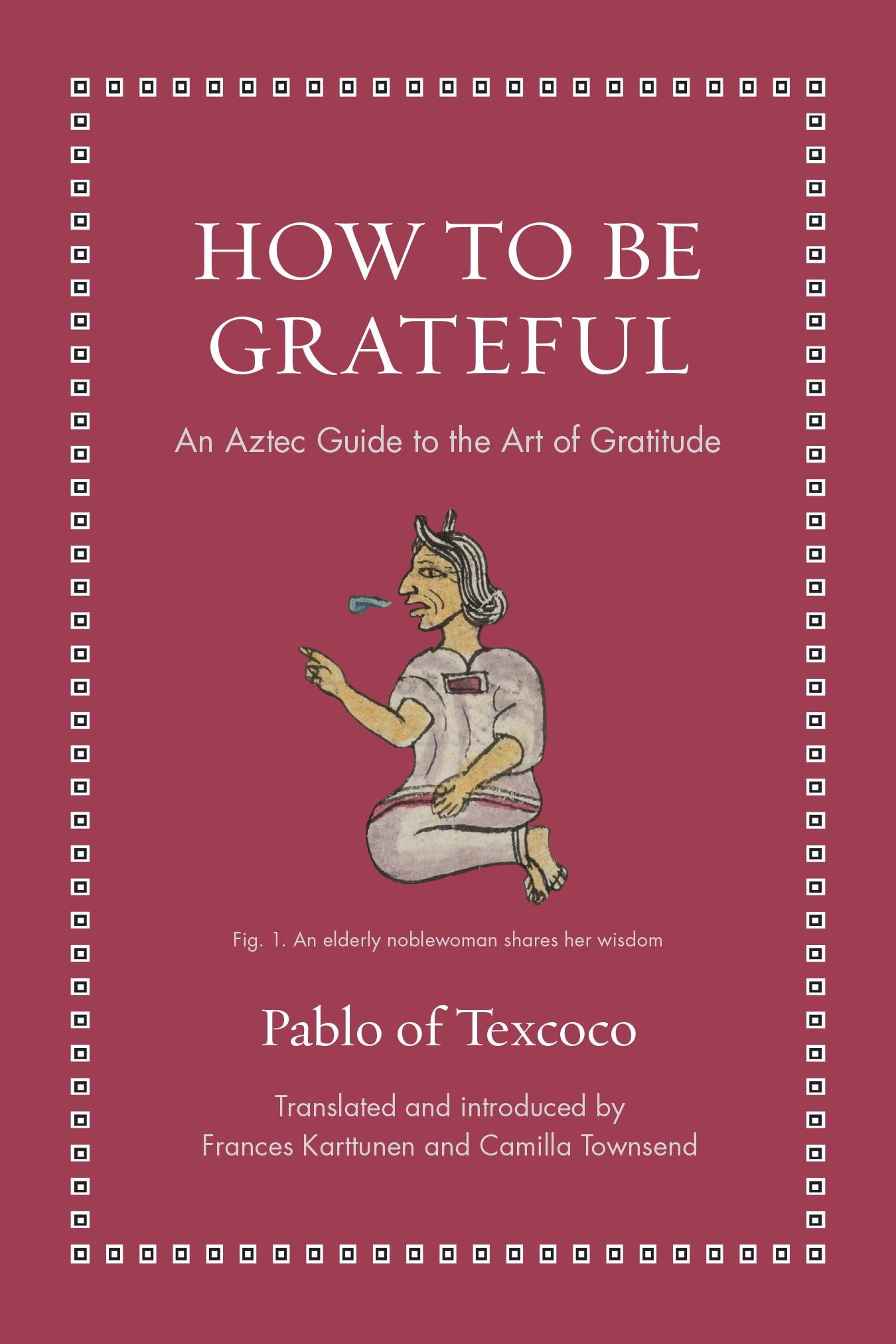
A delightful Aztec work that has much to teach us about the value of giving thanks—to our contemporaries, our elders, and our ancestors
Centuries before anyone ever thought of keeping a gratitude journal, the Aztecs understood the profound value of being grateful. For generations, specially trained Aztec public speakers presented traditional dialogues at marriages, births, funerals, government ceremonies, and other important occasions. In these dialogues, people of different generations are imagined speaking to each other with mutual respect and gratitude across time, encouraging listeners to be grateful to their contemporaries, elders, and ancestors, as well as the divine, and reminding the living what they owe to future generations. In the late 1500s, one of these Aztec speakers, Pablo of Texcoco, recorded a collection of these dialogues, now known as the Bancroft Dialogues. In How to Be Grateful, Nahuatl- or Aztec-language specialist Frances Karttunen and Camilla Townsend, Cundhill History Prize–winning author of Fifth Sun: A New History of the Aztecs, present this fascinating work in an accessible translation that also features the original Nahuatl text on facing pages.
Although Pablo lived under Spanish rule, his parents, grandparents, and elderly teachers recalled the world before the Europeans arrived, and his dialogues, which delight in colorful metaphors and wry humor, offer remarkable insights into preconquest Aztec society, philosophy, and language. Pablo’s dialogues tell readers they will be loved and honored today and by future generations if they repay those who have helped them—the living, the dead, and the divine. The living should pay these debts by helping their people and ensuring their future—by “paying it forward” as we say today.
Before Memmo my notes were scattered across PDFs. Now a workspace pulls everything into one place — I see exactly what's still left to study.
Memmo's summaries are gold before exams. I don't have to re-read 800 pages two weeks before — just the important parts.
The AI chat has saved me the night before an exam more than once. I just keep asking until I get it — no waiting on a study group to reply.
The quizzes hit exactly what I need to know. Memmo tracks what I get stuck on — so I only practice what's worth it.
Flashcards with spaced repetition are magic. Memmo knows when I'm about to forget something and brings it back.
The AI podcasts are my favorite. I listen on my way to school and get a recap without sitting at a computer.

Handbok i kvalitativa metoder
281 kr

Hållbar utveckling: en introduktion för ingenjörer och andra problemlösare
334 kr

Brymans Samhällsvetenskapliga metoder
390 kr

Projektledning
491 kr

Den orättvisa hälsan: om socioekonomiska skillnader i hälsa och livslängd
326 kr

Vetenskapsteori för nybörjare
196 kr

Organizational Leadership
429 kr

På väg mot läraryrket
172 kr

Det sociala livet i skolan: Socialpsykologiska perspektiv
253 kr

Betygsättningens didaktik
151 kr

Personality
402 kr

Studying Leadership
404 kr

Managing Innovation
477 kr

Introduktion till samhällsvetenskaplig metod
347 kr

The Psychology of Sex and Gender
698 kr

Evidens och kunskap för socialt arbete
207 kr

Introduction to Leadership
605 kr