
Before Memmo my notes were scattered across PDFs. Now a workspace pulls everything into one place — I see exactly what's still left to study.
How Chile became home to the world’s most radical free-market experiment—and what its downfall suggests about the fate of neoliberalism around the globe
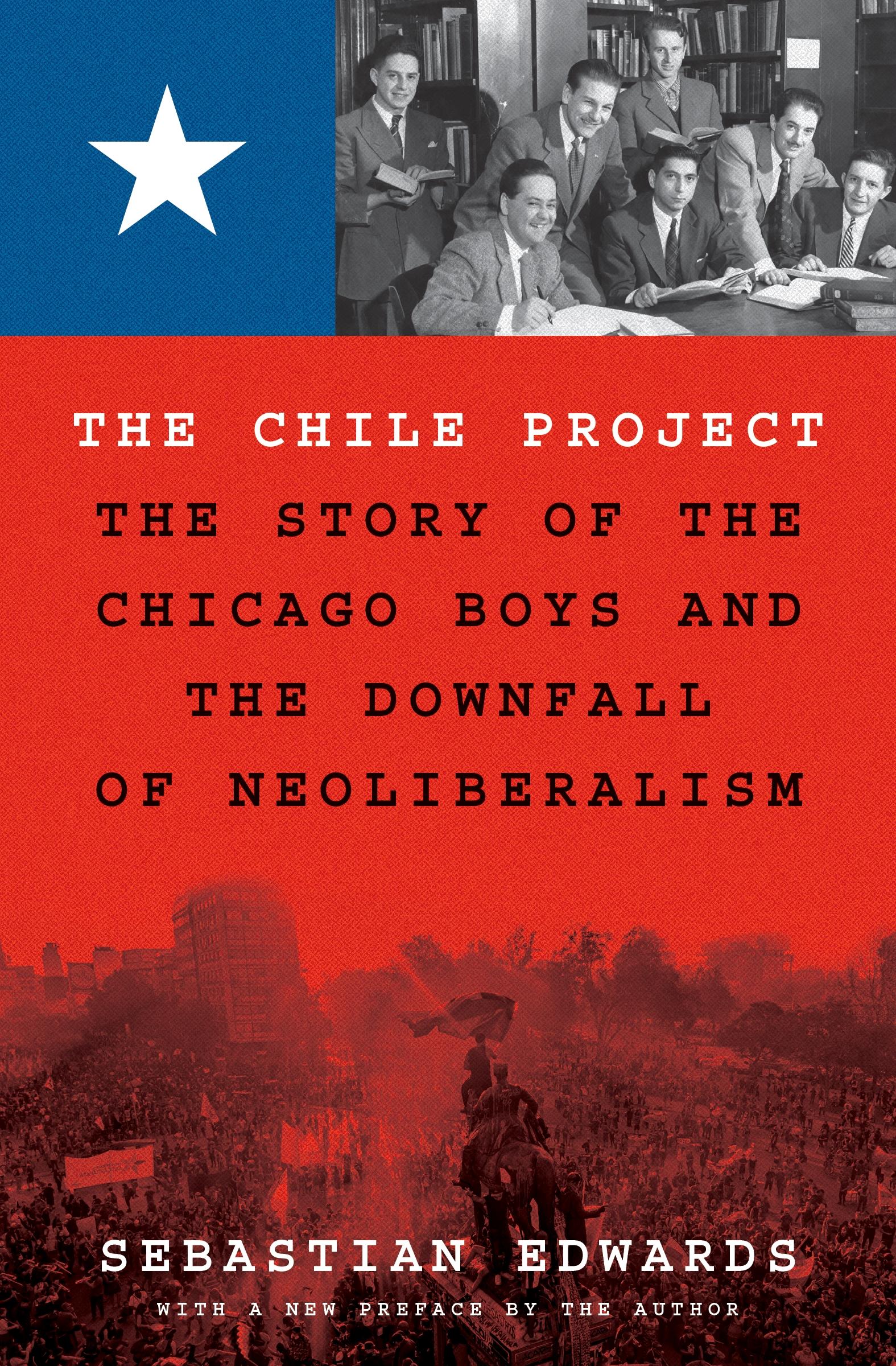
In The Chile Project, Sebastian Edwards tells the remarkable story of how the neoliberal economic model—installed in Chile during the Pinochet dictatorship and deepened during three decades of left-of-center governments—came to an end in 2021, when Gabriel Boric, a young former student activist, was elected president, vowing that “If Chile was the cradle of neoliberalism, it will also be its grave.” More than a story about one Latin American country, The Chile Project is a behind-the-scenes history of the spread and consequences of the free-market thinking that dominated economic policymaking around the world in the second half of the twentieth century—but is now on the retreat.
In 1955, the U.S. State Department launched the “Chile Project” to train Chilean economists at the University of Chicago, home of the libertarian Milton Friedman. After General Augusto Pinochet overthrew socialist president Salvador Allende in 1973, Chile’s “Chicago Boys” implemented the purest neoliberal model in the world for the next seventeen years, undertaking a sweeping package of privatization and deregulation, creating a modern capitalist economy, and sparking talk of a “Chilean miracle.” But under the veneer of success, a profound dissatisfaction with the vast inequalities caused by neoliberalism was growing. In 2019, protests erupted throughout the country, and in 2022 Boric began his presidency with a clear mandate: to end neoliberalismo.
In telling the fascinating story of the Chicago Boys and Chile’s free-market revolution, The Chile Project provides an important new perspective on the history of neoliberalism and its global decline today.
Before Memmo my notes were scattered across PDFs. Now a workspace pulls everything into one place — I see exactly what's still left to study.
Memmo's summaries are gold before exams. I don't have to re-read 800 pages two weeks before — just the important parts.
The AI chat has saved me the night before an exam more than once. I just keep asking until I get it — no waiting on a study group to reply.
The quizzes hit exactly what I need to know. Memmo tracks what I get stuck on — so I only practice what's worth it.
Flashcards with spaced repetition are magic. Memmo knows when I'm about to forget something and brings it back.
The AI podcasts are my favorite. I listen on my way to school and get a recap without sitting at a computer.

Handbok i kvalitativa metoder
281 kr

Hållbar utveckling: en introduktion för ingenjörer och andra problemlösare
334 kr

Brymans Samhällsvetenskapliga metoder
390 kr

Projektledning
491 kr

Den orättvisa hälsan: om socioekonomiska skillnader i hälsa och livslängd
326 kr

Vetenskapsteori för nybörjare
196 kr

Organizational Leadership
429 kr

På väg mot läraryrket
172 kr

Det sociala livet i skolan: Socialpsykologiska perspektiv
253 kr

Betygsättningens didaktik
151 kr

Personality
402 kr

Studying Leadership
404 kr

Managing Innovation
477 kr

Introduktion till samhällsvetenskaplig metod
347 kr

The Psychology of Sex and Gender
698 kr

Evidens och kunskap för socialt arbete
207 kr

Introduction to Leadership
605 kr