
Before Memmo my notes were scattered across PDFs. Now a workspace pulls everything into one place — I see exactly what's still left to study.
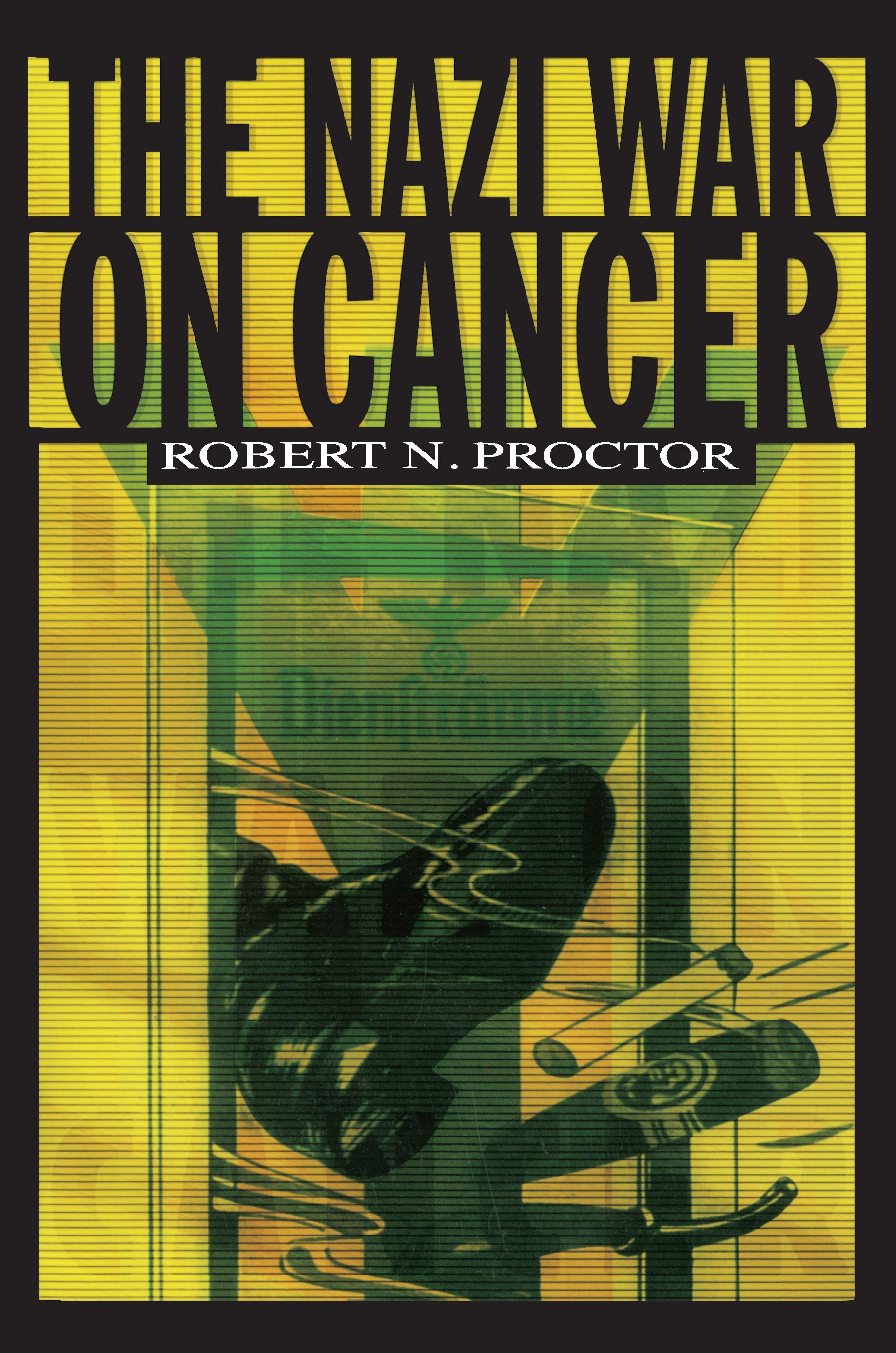
A troubling account of how good science can come from an evil regime
Collaboration in the Holocaust. Murderous and torturous medical experiments. The "euthanasia" of hundreds of thousands of people with mental or physical disabilities. Widespread sterilization of "the unfit." Nazi doctors committed these and countless other atrocities as part of Hitler's warped quest to create a German master race. Robert Proctor recently made the explosive discovery, however, that Nazi Germany was also decades ahead of other countries in promoting health reforms that we today regard as progressive and socially responsible. Most startling, Nazi scientists were the first to definitively link lung cancer and cigarette smoking. Proctor explores the controversial and troubling questions that such findings raise: Were the Nazis more complex morally than we thought? Can good science come from an evil regime? What might this reveal about health activism in our own society? Proctor argues that we must view Hitler's Germany more subtly than we have in the past. But he also concludes that the Nazis' forward-looking health activism ultimately came from the same twisted root as their medical crimes: the ideal of a sanitary racial utopia reserved exclusively for pure and healthy Germans.
Author of an earlier groundbreaking work on Nazi medical horrors, Proctor began this book after discovering documents showing that the Nazis conducted the most aggressive antismoking campaign in modern history. Further research revealed that Hitler's government passed a wide range of public health measures, including restrictions on asbestos, radiation, pesticides, and food dyes. Nazi health officials introduced strict occupational health and safety standards, and promoted such foods as whole-grain bread and soybeans. These policies went hand in hand with health propaganda that, for example, idealized the Führer's body and his nonsmoking, vegetarian lifestyle. Proctor shows that cancer also became an important social metaphor, as the Nazis portrayed Jews and other "enemies of the Volk" as tumors that must be eliminated from the German body politic.
This is a disturbing and profoundly important book. It is only by appreciating the connections between the "normal" and the "monstrous" aspects of Nazi science and policy, Proctor reveals, that we can fully understand not just the horror of fascism, but also its deep and seductive appeal even to otherwise right-thinking Germans.
Before Memmo my notes were scattered across PDFs. Now a workspace pulls everything into one place — I see exactly what's still left to study.
Memmo's summaries are gold before exams. I don't have to re-read 800 pages two weeks before — just the important parts.
The AI chat has saved me the night before an exam more than once. I just keep asking until I get it — no waiting on a study group to reply.
The quizzes hit exactly what I need to know. Memmo tracks what I get stuck on — so I only practice what's worth it.
Flashcards with spaced repetition are magic. Memmo knows when I'm about to forget something and brings it back.
The AI podcasts are my favorite. I listen on my way to school and get a recap without sitting at a computer.

Handbok i kvalitativa metoder
281 kr

Hållbar utveckling: en introduktion för ingenjörer och andra problemlösare
334 kr

Brymans Samhällsvetenskapliga metoder
390 kr

Projektledning
491 kr

Den orättvisa hälsan: om socioekonomiska skillnader i hälsa och livslängd
326 kr

Vetenskapsteori för nybörjare
196 kr

Organizational Leadership
429 kr

På väg mot läraryrket
172 kr

Det sociala livet i skolan: Socialpsykologiska perspektiv
253 kr

Betygsättningens didaktik
151 kr

Personality
402 kr

Studying Leadership
404 kr

Managing Innovation
477 kr

Introduktion till samhällsvetenskaplig metod
347 kr

The Psychology of Sex and Gender
698 kr

Evidens och kunskap för socialt arbete
207 kr

Introduction to Leadership
605 kr