
Before Memmo my notes were scattered across PDFs. Now a workspace pulls everything into one place — I see exactly what's still left to study.
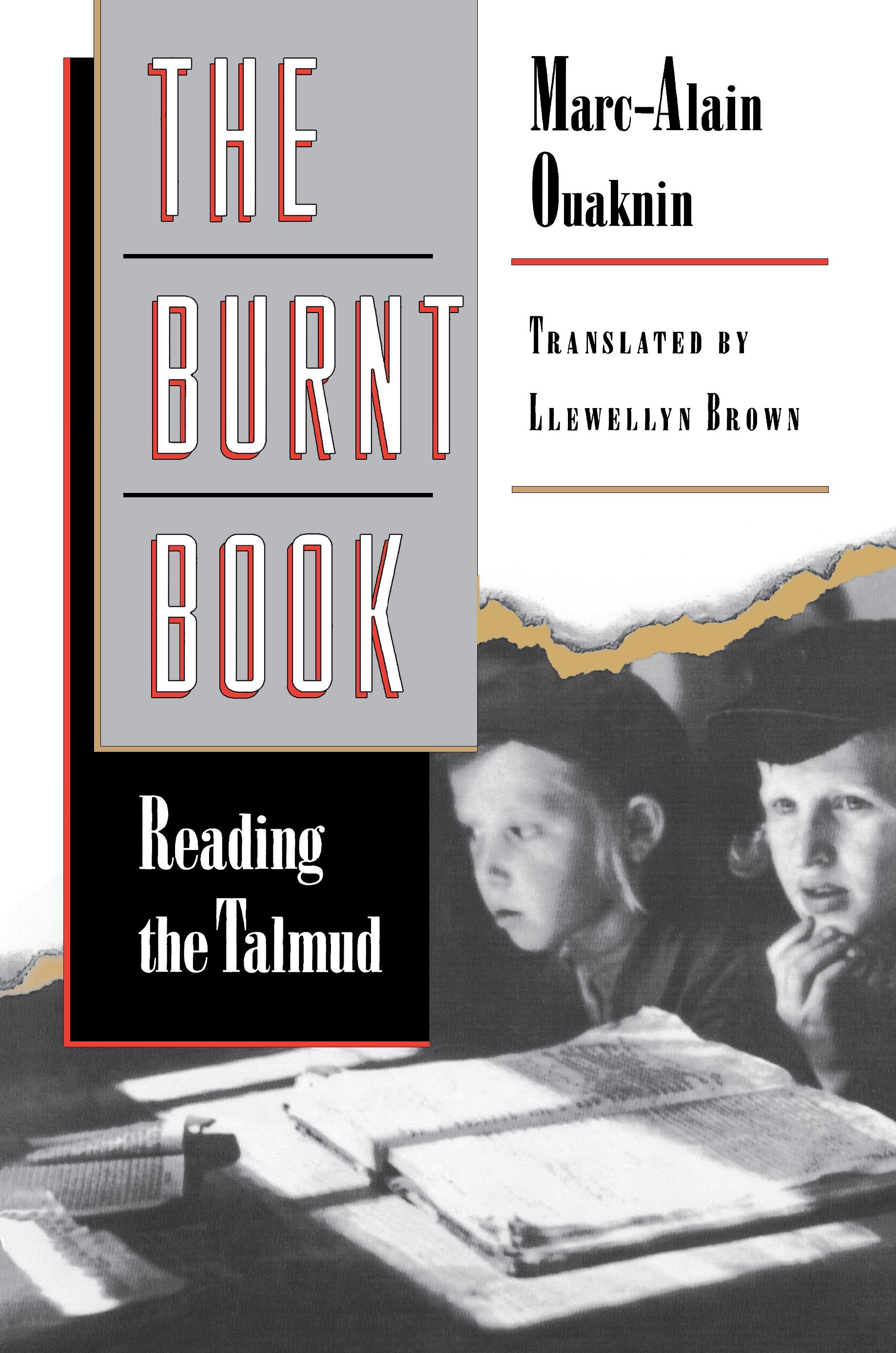
A profound look at what it means for new generations to read and interpret ancient religious texts
In this book, rabbi and philosopher Marc-Alain Ouaknin offers a postmodern reading of the Talmud. Combining traditional learning and contemporary thought, Ouaknin dovetails discussions of spirituality and religious practice with such concepts as deconstruction, intertextuality, undecidability, multiple voicing, and eroticism in the Talmud. On a broader level, he establishes a dialogue between Hebrew tradition and the social sciences, which draws, for example, on the works of Lévinas, Blanchot, and Jabès as well as Derrida. The Burnt Book represents the innovative thinking that has come to be associated with a school of French Jewish studies, headed by Lévinas and dedicated to new readings of traditional texts.
The Talmud, transcribed in 500 C.E., is shown to be a text that refrains from dogma and instead encourages the exploration of its meanings. A vast compilation of Jewish oral law, the Talmud also contains rabbinical commentaries that touch on everything from astronomy to household life. Examining its literary methods and internal logic, Ouaknin explains how this text allows readers to transcend its authority in that it invites them to interpret, discuss, and recreate their religious tradition. An in-depth treatment of selected texts from the oral law and commentary goes on to provide a model for secular study of the Talmud in light of contemporary philosophical issues.
Throughout, the author emphasizes the self-effacing quality of a text whose worth can be measured by the insights that live on in the minds of its interpreters long after they have closed the book. He points out that the burning of the Talmud in anti-Judaic campaigns throughout history has, in fact, been an unwitting act of complicity with Talmudic philosophy and the practice of self-effacement. Ouaknin concludes his discussion with the story of the Hasidic master Rabbi Nahman of Bratslav, who himself burned his life achievement—a work known by his students as "the Burnt Book." This story leaves us with the question, should all books be destroyed in order to give birth to thought and renew meaning?
Before Memmo my notes were scattered across PDFs. Now a workspace pulls everything into one place — I see exactly what's still left to study.
Memmo's summaries are gold before exams. I don't have to re-read 800 pages two weeks before — just the important parts.
The AI chat has saved me the night before an exam more than once. I just keep asking until I get it — no waiting on a study group to reply.
The quizzes hit exactly what I need to know. Memmo tracks what I get stuck on — so I only practice what's worth it.
Flashcards with spaced repetition are magic. Memmo knows when I'm about to forget something and brings it back.
The AI podcasts are my favorite. I listen on my way to school and get a recap without sitting at a computer.

Handbok i kvalitativa metoder
281 kr

Hållbar utveckling: en introduktion för ingenjörer och andra problemlösare
334 kr

Brymans Samhällsvetenskapliga metoder
390 kr

Projektledning
491 kr

Den orättvisa hälsan: om socioekonomiska skillnader i hälsa och livslängd
326 kr

Organizational Leadership
429 kr

Vetenskapsteori för nybörjare
196 kr

På väg mot läraryrket
172 kr

Det sociala livet i skolan: Socialpsykologiska perspektiv
253 kr

Betygsättningens didaktik
151 kr

Personality
402 kr

Studying Leadership
404 kr

Managing Innovation
477 kr

Introduktion till samhällsvetenskaplig metod
347 kr

The Psychology of Sex and Gender
698 kr

Evidens och kunskap för socialt arbete
207 kr

Introduction to Leadership
605 kr