
Before Memmo my notes were scattered across PDFs. Now a workspace pulls everything into one place — I see exactly what's still left to study.
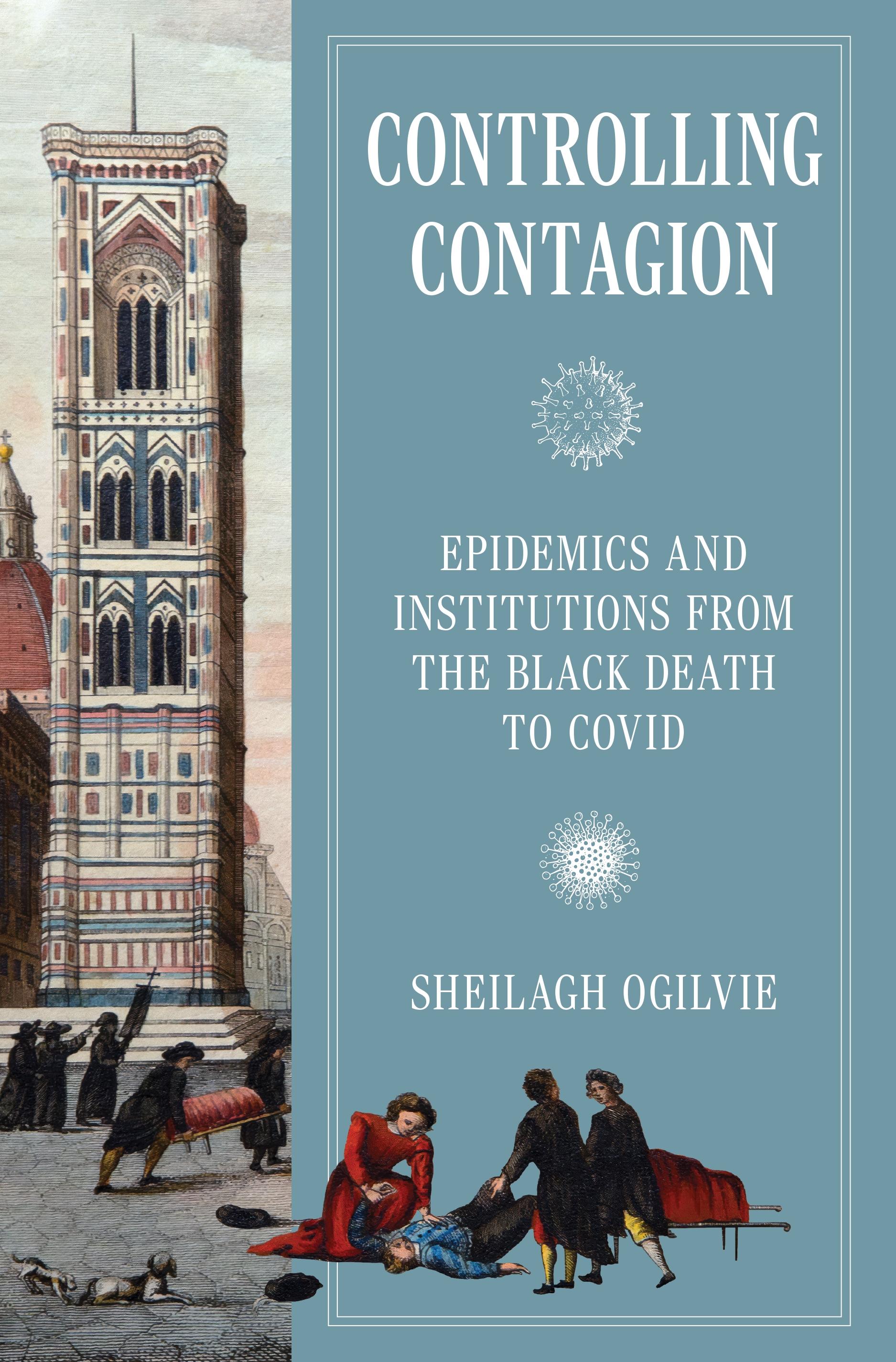
How human institutions—markets, states, communities, religions, guilds and families—have helped both to control and to exacerbate epidemics throughout history.
How do societies tackle epidemic disease? In Controlling Contagion, Sheilagh Ogilvie answers this question by exploring seven centuries of pandemics, from the Black Death to Covid-19. For most of history, infectious diseases have killed many more people than famine or war, and in 2019 they still caused one death in four. Today, we deal with epidemics more successfully than our ancestors managed plague, smallpox, cholera or influenza. But we use many of the same approaches. Long before scientific medicine, human societies coordinated and innovated in response to biological shocks—sometimes well, sometimes badly.
Ogilvie uses historical epidemics to analyse how human societies deal with “externalities”—situations where my action creates costs or benefits for others beyond those that I myself incur. Social institutions—markets, states, communities, religions, guilds, and families—help us manage the negative externalities of contagion and the positive externalities of social distancing, sanitation, and immunization. Ogilvie shows how each institution enables us to coordinate, innovate and inspire each other to limit contagion. But each institution also has weaknesses that can make things worse. Markets shut down voluntarily during every epidemic in history—but they also brought people together, spreading contagion. States mandated quarantines, sanitation, and immunization—but they also waged war and censored information, exacerbating epidemics. Religions admonished us to avoid infecting our neighbours—but they also preached against science and medical innovations. What decided the outcome, Ogilvie argues, was a temperate state, an adaptable market, and a strong civil society where a diversity of institutions played to their own strengths and checked each other’s flaws.
Before Memmo my notes were scattered across PDFs. Now a workspace pulls everything into one place — I see exactly what's still left to study.
Memmo's summaries are gold before exams. I don't have to re-read 800 pages two weeks before — just the important parts.
The AI chat has saved me the night before an exam more than once. I just keep asking until I get it — no waiting on a study group to reply.
The quizzes hit exactly what I need to know. Memmo tracks what I get stuck on — so I only practice what's worth it.
Flashcards with spaced repetition are magic. Memmo knows when I'm about to forget something and brings it back.
The AI podcasts are my favorite. I listen on my way to school and get a recap without sitting at a computer.

Handbok i kvalitativa metoder
281 kr

Hållbar utveckling: en introduktion för ingenjörer och andra problemlösare
334 kr

Brymans Samhällsvetenskapliga metoder
390 kr

Projektledning
491 kr

Den orättvisa hälsan: om socioekonomiska skillnader i hälsa och livslängd
326 kr

Vetenskapsteori för nybörjare
196 kr

Organizational Leadership
429 kr

På väg mot läraryrket
172 kr

Det sociala livet i skolan: Socialpsykologiska perspektiv
253 kr

Betygsättningens didaktik
151 kr

Personality
402 kr

Studying Leadership
404 kr

Managing Innovation
477 kr

Introduktion till samhällsvetenskaplig metod
347 kr

The Psychology of Sex and Gender
698 kr

Evidens och kunskap för socialt arbete
207 kr

Introduction to Leadership
605 kr