
Before Memmo my notes were scattered across PDFs. Now a workspace pulls everything into one place — I see exactly what's still left to study.
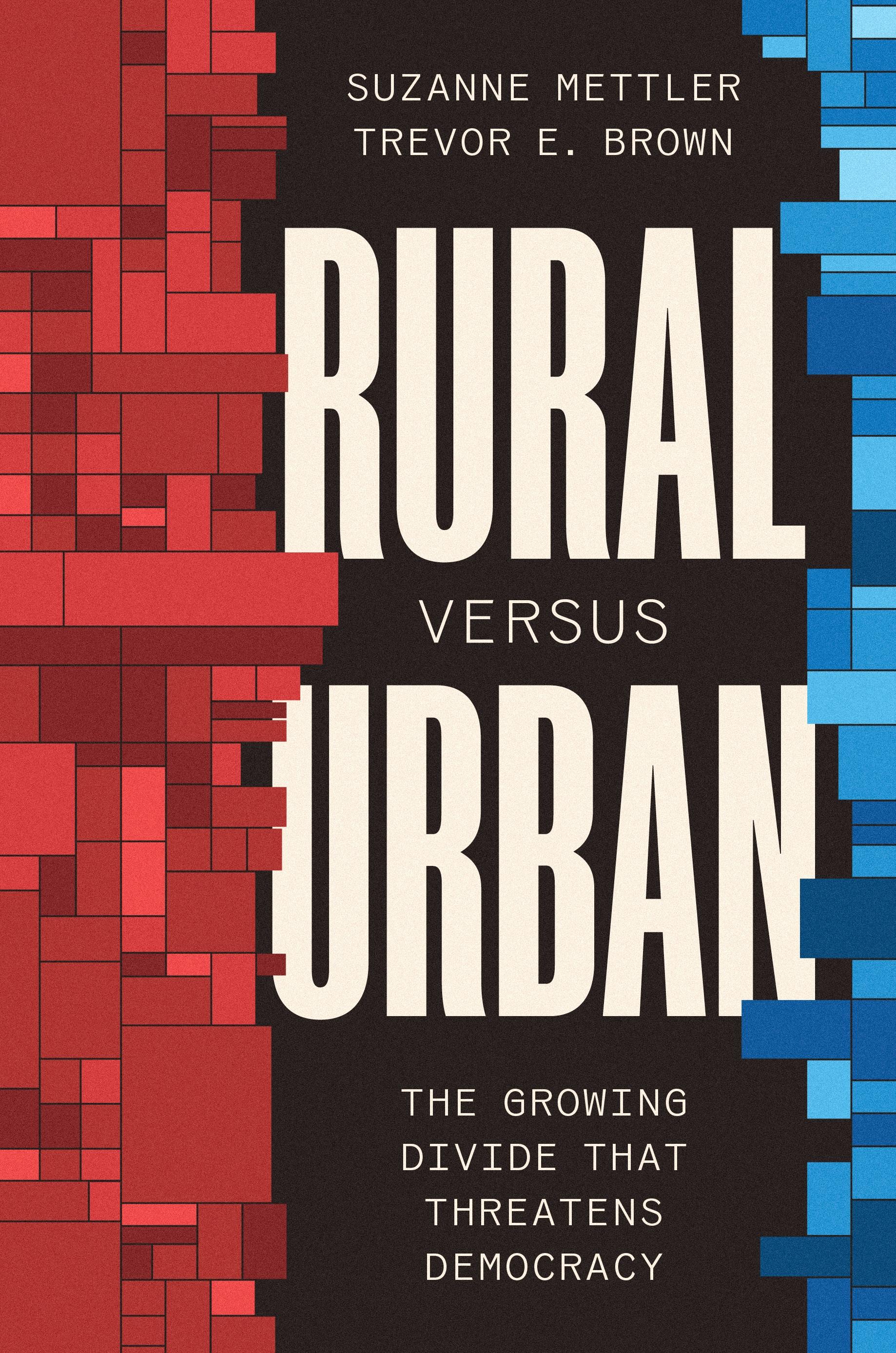
How the urban-rural divide drives partisan polarization
Why have Americans living in different places come to experience politics as a battle between “us” and “them”? In Rural Versus Urban, Suzanne Mettler and Trevor Brown argue that political polarization is not just about red states and blue states, or coastal elites who alienate those in fly-over country. Instead, polarization permeates every region and every state—and has become organized through a pernicious rural-urban division. Mettler and Brown explain the evolution of this gulf across five decades, charting political trends in both places. Drawing on data on individuals, communities, and members of Congress, as well as interviews with local party leaders and former elected officials, they show how the divide emerged and why it poses a threat to democracy.
Until about thirty years ago, both political parties attracted support from rural and urban voters. But after place-based inequality grew due to deregulation and trade liberalization, white rural dwellers began to view urban people and Democrats as affluent elites out of touch with their needs. Politically active evangelical churches, antiabortion organizations, and gun groups helped deepen the divide, encouraging many of these rural residents to become staunch supporters of the GOP. Now, regional one-party rule in rural America gives Republicans a systematic edge for gaining control of crucial political institutions, including the Senate, House of Representatives, the Presidency, and even the Supreme Court. This is helping enable an extremist political party and pushing democracy to the brink. Mettler and Brown argue that the divide can be repaired—but only if the Democrats build their own robust local organizations and offer citizens a meaningful choice.
Before Memmo my notes were scattered across PDFs. Now a workspace pulls everything into one place — I see exactly what's still left to study.
Memmo's summaries are gold before exams. I don't have to re-read 800 pages two weeks before — just the important parts.
The AI chat has saved me the night before an exam more than once. I just keep asking until I get it — no waiting on a study group to reply.
The quizzes hit exactly what I need to know. Memmo tracks what I get stuck on — so I only practice what's worth it.
Flashcards with spaced repetition are magic. Memmo knows when I'm about to forget something and brings it back.
The AI podcasts are my favorite. I listen on my way to school and get a recap without sitting at a computer.

Handbok i kvalitativa metoder
281 kr

Hållbar utveckling: en introduktion för ingenjörer och andra problemlösare
334 kr

Brymans Samhällsvetenskapliga metoder
390 kr

Projektledning
491 kr

Den orättvisa hälsan: om socioekonomiska skillnader i hälsa och livslängd
326 kr

Organizational Leadership
429 kr

Vetenskapsteori för nybörjare
196 kr

På väg mot läraryrket
172 kr

Det sociala livet i skolan: Socialpsykologiska perspektiv
253 kr

Betygsättningens didaktik
151 kr

Personality
402 kr

Studying Leadership
404 kr

Managing Innovation
477 kr

Introduktion till samhällsvetenskaplig metod
347 kr

The Psychology of Sex and Gender
698 kr

Evidens och kunskap för socialt arbete
207 kr

Introduction to Leadership
605 kr