
Before Memmo my notes were scattered across PDFs. Now a workspace pulls everything into one place — I see exactly what's still left to study.
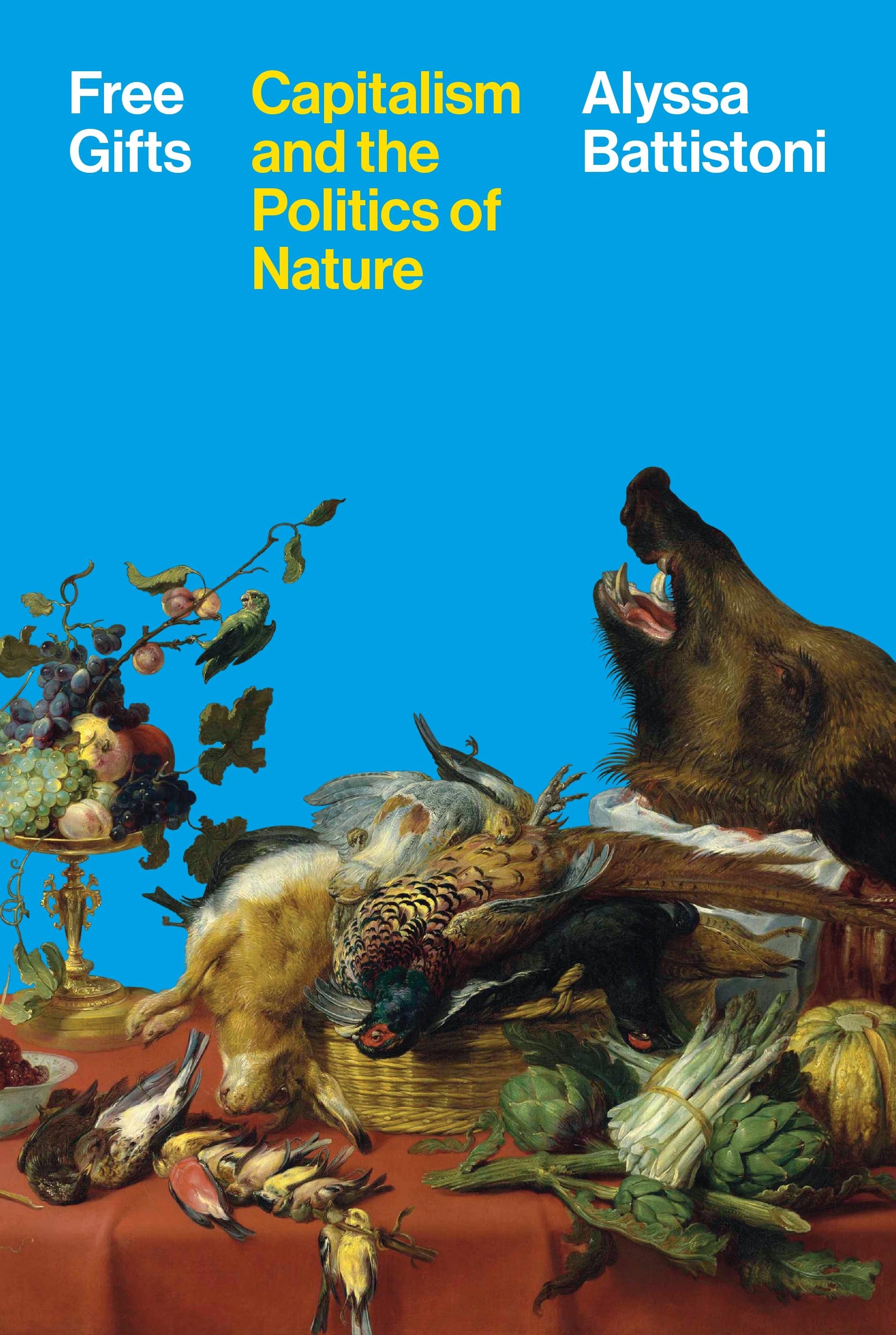
A timely new critique of capitalism’s persistent failure to value nature
Capitalism is typically treated as a force for relentless commodification. Yet it consistently fails to place value on vital aspects of the nonhuman world, whether carbon emissions or entire ecosystems. In Free Gifts, Alyssa Battistoni explores capitalism’s persistent failure to value nature, arguing that the key question is not the moral issue of why some kinds of nature shouldn’t be commodified, but the economic puzzle of why they haven’t been. To understand contemporary ecological problems from biodiversity collapse to climate change, she contends, we have to understand how some things come to have value under capitalism—and how others do not. To help us do so, Battistoni recovers and reinterprets the idea of the free gift of nature used by classical economic thinkers to describe what we gratuitously obtain from the natural world, and builds on Karl Marx’s critique of political economy to show how capitalism fundamentally treats nature as free for the taking. This novel theory of capitalism’s relationship to nature not only helps us understand contemporary ecological breakdown, but also casts capitalism’s own core dynamics in a new light.
Battistoni addresses four different instances of the free gift in political economic thought, each in a specific domain: natural agents in industry, pollution in the environment, reproductive labor in the household, and natural capital in the biosphere. In so doing, she offers new readings of major twentieth-century thinkers, including Friedrich Hayek, Simone de Beauvoir, Garrett Hardin, Silvia Federici, and Ronald Coase. Ultimately, she offers a novel account of freedom for our ecologically troubled present, developing a materialist existentialism to argue that capitalism limits our ability to be responsible for our relationships to the natural world, and imagining how we might live freely while valuing nature’s gifts.
Before Memmo my notes were scattered across PDFs. Now a workspace pulls everything into one place — I see exactly what's still left to study.
Memmo's summaries are gold before exams. I don't have to re-read 800 pages two weeks before — just the important parts.
The AI chat has saved me the night before an exam more than once. I just keep asking until I get it — no waiting on a study group to reply.
The quizzes hit exactly what I need to know. Memmo tracks what I get stuck on — so I only practice what's worth it.
Flashcards with spaced repetition are magic. Memmo knows when I'm about to forget something and brings it back.
The AI podcasts are my favorite. I listen on my way to school and get a recap without sitting at a computer.

Handbok i kvalitativa metoder
281 kr

Hållbar utveckling: en introduktion för ingenjörer och andra problemlösare
334 kr

Brymans Samhällsvetenskapliga metoder
390 kr

Projektledning
491 kr

Den orättvisa hälsan: om socioekonomiska skillnader i hälsa och livslängd
326 kr

Organizational Leadership
429 kr

Vetenskapsteori för nybörjare
196 kr

På väg mot läraryrket
172 kr

Det sociala livet i skolan: Socialpsykologiska perspektiv
253 kr

Betygsättningens didaktik
151 kr

Personality
402 kr

Studying Leadership
404 kr

Managing Innovation
477 kr

Introduktion till samhällsvetenskaplig metod
347 kr

The Psychology of Sex and Gender
698 kr

Evidens och kunskap för socialt arbete
207 kr

Introduction to Leadership
605 kr