
Before Memmo my notes were scattered across PDFs. Now a workspace pulls everything into one place — I see exactly what's still left to study.
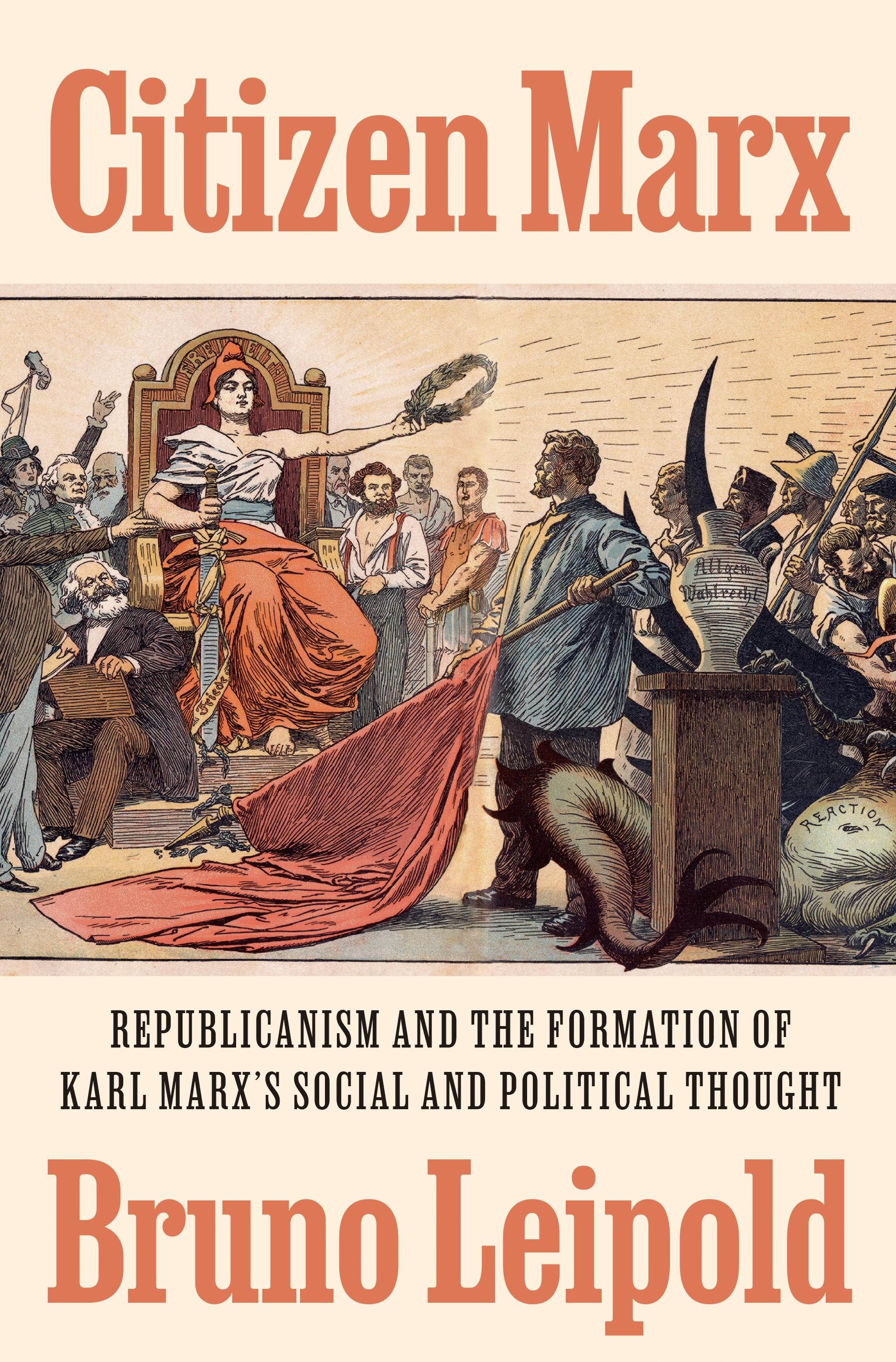
The first book to offer a comprehensive exploration of Marx’s relationship to republicanism, arguing that it is essential to understanding his thought
In Citizen Marx, Bruno Leipold argues that, contrary to certain interpretive commonplaces, Karl Marx’s thinking was deeply informed by republicanism. Marx’s relation to republicanism changed over the course of his life, but its complex influence on his thought cannot be reduced to wholesale adoption or rejection. Challenging common depictions of Marx that downplay or ignore his commitment to politics, democracy, and freedom, Leipold shows that Marx viewed democratic political institutions as crucial to overcoming the social unfreedom and domination of capitalism. One of Marx’s principal political values, Leipold contends, was a republican conception of freedom, according to which one is unfree when subjected to arbitrary power.
Placing Marx’s republican communism in its historical context—but not consigning him to that context—Leipold traces Marx’s shifting relationship to republicanism across three broad periods. First, Marx began his political life as a republican committed to a democratic republic in which citizens held active popular sovereignty. Second, he transitioned to communism, criticizing republicanism but incorporating the republican opposition to arbitrary power into his social critiques. He argued that although a democratic republic was not sufficient for emancipation, it was necessary for it. Third, spurred by the events of the Paris Commune of 1871, he came to view popular control in representation and public administration as essential to the realization of communism. Leipold shows how Marx positioned his republican communism to displace both antipolitical socialism and anticommunist republicanism. One of Marx’s great contributions, Leipold suggests, was to place politics (and especially democratic politics) at the heart of socialism.
Before Memmo my notes were scattered across PDFs. Now a workspace pulls everything into one place — I see exactly what's still left to study.
Memmo's summaries are gold before exams. I don't have to re-read 800 pages two weeks before — just the important parts.
The AI chat has saved me the night before an exam more than once. I just keep asking until I get it — no waiting on a study group to reply.
The quizzes hit exactly what I need to know. Memmo tracks what I get stuck on — so I only practice what's worth it.
Flashcards with spaced repetition are magic. Memmo knows when I'm about to forget something and brings it back.
The AI podcasts are my favorite. I listen on my way to school and get a recap without sitting at a computer.

Handbok i kvalitativa metoder
281 kr

Hållbar utveckling: en introduktion för ingenjörer och andra problemlösare
334 kr

Brymans Samhällsvetenskapliga metoder
390 kr

Projektledning
491 kr

Den orättvisa hälsan: om socioekonomiska skillnader i hälsa och livslängd
326 kr

Vetenskapsteori för nybörjare
196 kr

Organizational Leadership
429 kr

På väg mot läraryrket
172 kr

Det sociala livet i skolan: Socialpsykologiska perspektiv
253 kr

Betygsättningens didaktik
151 kr

Personality
402 kr

Studying Leadership
404 kr

Managing Innovation
477 kr

Introduktion till samhällsvetenskaplig metod
347 kr

The Psychology of Sex and Gender
698 kr

Evidens och kunskap för socialt arbete
207 kr

Introduction to Leadership
605 kr