
Before Memmo my notes were scattered across PDFs. Now a workspace pulls everything into one place — I see exactly what's still left to study.
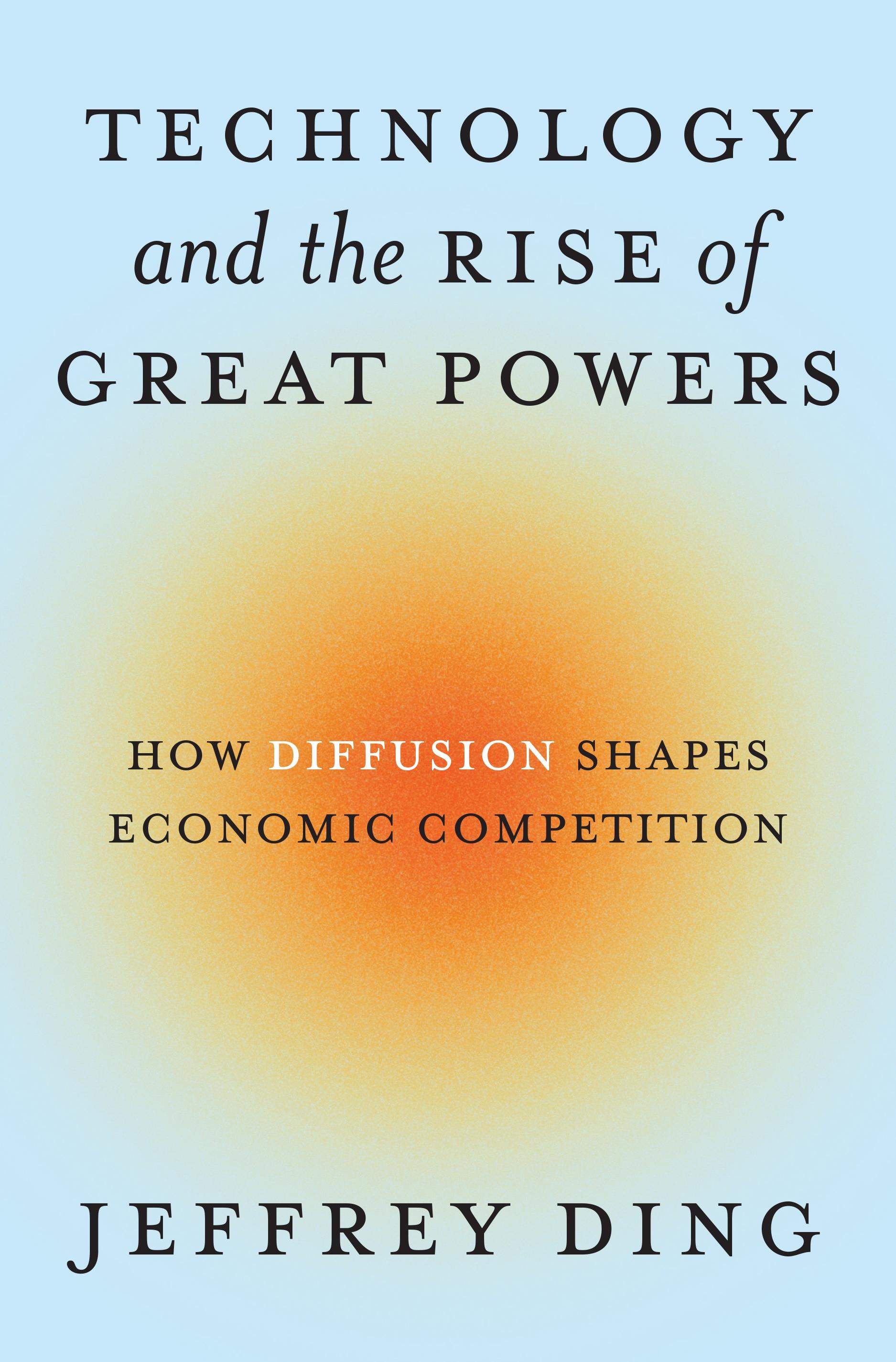
A novel theory of how technological revolutions affect the rise and fall of great powers
When scholars and policymakers consider how technological advances affect the rise and fall of great powers, they draw on theories that center the moment of innovation—the eureka moment that sparks astonishing technological feats. In this book, Jeffrey Ding offers a different explanation of how technological revolutions affect competition among great powers. Rather than focusing on which state first introduced major innovations, he investigates why some states were more successful than others at adapting and embracing new technologies at scale. Drawing on historical case studies of past industrial revolutions as well as statistical analysis, Ding develops a theory that emphasizes institutional adaptations oriented around diffusing technological advances throughout the entire economy.
Examining Britain’s rise to preeminence in the First Industrial Revolution, America and Germany’s overtaking of Britain in the Second Industrial Revolution, and Japan’s challenge to America’s technological dominance in the Third Industrial Revolution (also known as the “information revolution”), Ding illuminates the pathway by which these technological revolutions influenced the global distribution of power and explores the generalizability of his theory beyond the given set of great powers. His findings bear directly on current concerns about how emerging technologies such as AI could influence the US-China power balance.
Before Memmo my notes were scattered across PDFs. Now a workspace pulls everything into one place — I see exactly what's still left to study.
Memmo's summaries are gold before exams. I don't have to re-read 800 pages two weeks before — just the important parts.
The AI chat has saved me the night before an exam more than once. I just keep asking until I get it — no waiting on a study group to reply.
The quizzes hit exactly what I need to know. Memmo tracks what I get stuck on — so I only practice what's worth it.
Flashcards with spaced repetition are magic. Memmo knows when I'm about to forget something and brings it back.
The AI podcasts are my favorite. I listen on my way to school and get a recap without sitting at a computer.

Handbok i kvalitativa metoder
281 kr

Hållbar utveckling: en introduktion för ingenjörer och andra problemlösare
334 kr

Brymans Samhällsvetenskapliga metoder
390 kr

Projektledning
491 kr

Den orättvisa hälsan: om socioekonomiska skillnader i hälsa och livslängd
326 kr

Vetenskapsteori för nybörjare
196 kr

Organizational Leadership
429 kr

På väg mot läraryrket
172 kr

Det sociala livet i skolan: Socialpsykologiska perspektiv
253 kr

Betygsättningens didaktik
151 kr

Personality
402 kr

Studying Leadership
404 kr

Managing Innovation
477 kr

Introduktion till samhällsvetenskaplig metod
347 kr

The Psychology of Sex and Gender
698 kr

Evidens och kunskap för socialt arbete
207 kr

Introduction to Leadership
605 kr