
Before Memmo my notes were scattered across PDFs. Now a workspace pulls everything into one place — I see exactly what's still left to study.
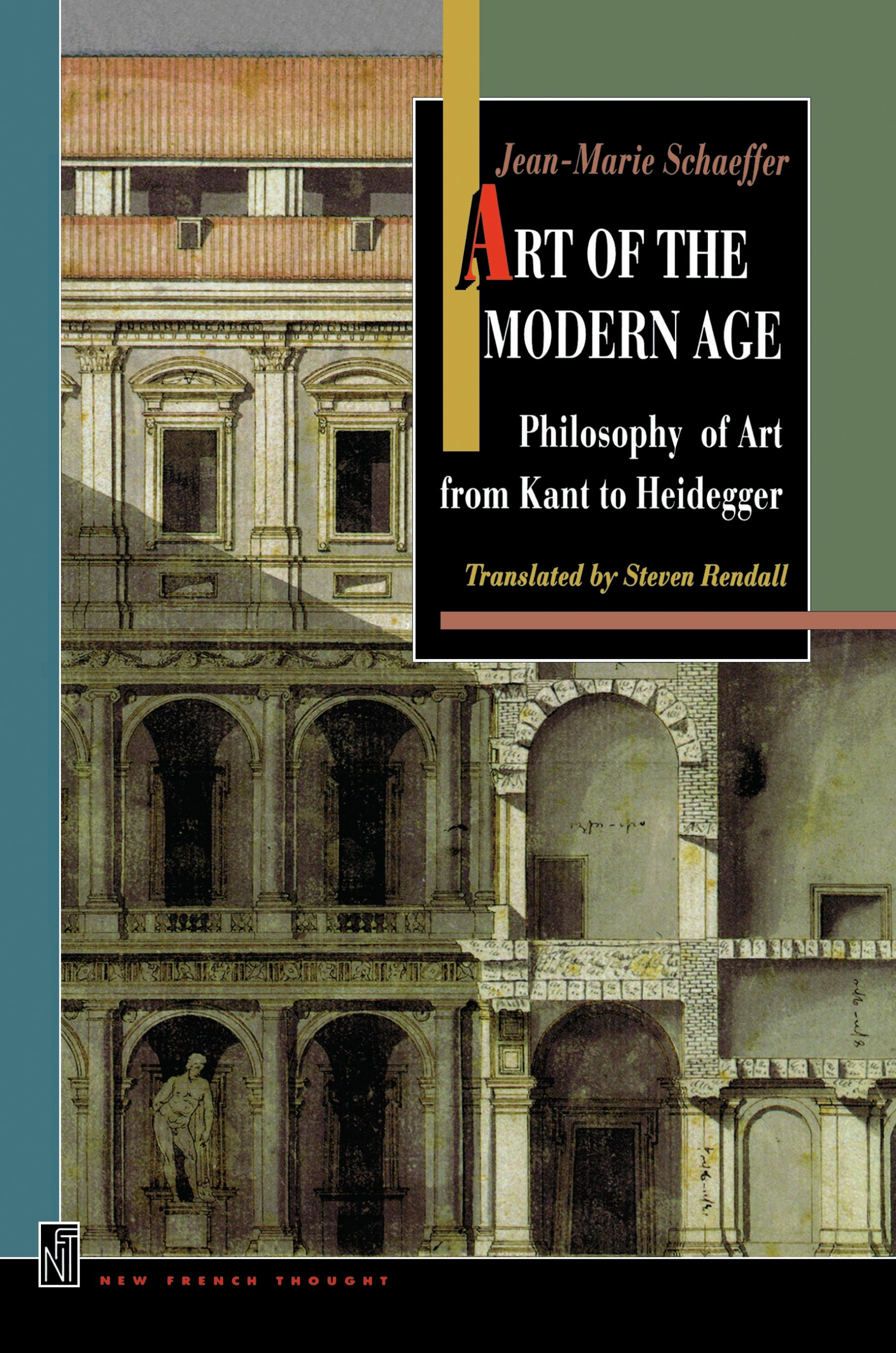
This is a sweeping and provocative work of aesthetic theory: a trenchant critique of the philosophy of art as it developed from the eighteenth century to the early twentieth century, combined with a carefully reasoned plea for a new and more flexible approach to art.
Jean-Marie Schaeffer, one of France's leading aestheticians, explores the writings of Kant, Schlegel, Novalis, Hegel, Schopenhauer, Nietzsche, and Heidegger to show that these diverse thinkers shared a common approach to art, which he calls the "speculative theory." According to this theory, art offers a special kind of intuitive, quasi-mystical knowledge, radically different from the rational knowledge acquired by science. This view encouraged theorists to consider artistic geniuses the high-priests of humanity, creators of works that reveal the invisible essence of the world. Philosophers came to regard inexpressibility as the aim of art, refused to consider second-tier creations genuine art, and helped to create conditions in which the genius was expected to shock, puzzle, and mystify the public. Schaeffer shows that this speculative theory helped give birth to romanticism, modernism, and the avant-garde, and paved the way for an unfortunate divorce between art and enjoyment, between "high art" and popular art, and between artists and their public.
Rejecting the speculative approach, Schaeffer concludes by defending a more tolerant theory of art that gives pleasure its due, includes popular art, tolerates less successful works, and accounts for personal tastes.
"[A] remarkable work.... [Schaeffer's] writing is governed by ... the ideals of clarity and consequence, the ideas of logic, truth, and evidence.... Schaeffer is so precise and unrelenting a philosophical critic that one wonders how some of the philosophies he anatomizes here can possibly survive the operation."--From the foreword by Arthur C. Danto
Before Memmo my notes were scattered across PDFs. Now a workspace pulls everything into one place — I see exactly what's still left to study.
Memmo's summaries are gold before exams. I don't have to re-read 800 pages two weeks before — just the important parts.
The AI chat has saved me the night before an exam more than once. I just keep asking until I get it — no waiting on a study group to reply.
The quizzes hit exactly what I need to know. Memmo tracks what I get stuck on — so I only practice what's worth it.
Flashcards with spaced repetition are magic. Memmo knows when I'm about to forget something and brings it back.
The AI podcasts are my favorite. I listen on my way to school and get a recap without sitting at a computer.

Handbok i kvalitativa metoder
281 kr

Hållbar utveckling: en introduktion för ingenjörer och andra problemlösare
334 kr

Brymans Samhällsvetenskapliga metoder
390 kr

Projektledning
491 kr

Den orättvisa hälsan: om socioekonomiska skillnader i hälsa och livslängd
326 kr

Vetenskapsteori för nybörjare
196 kr

Organizational Leadership
429 kr

På väg mot läraryrket
172 kr

Det sociala livet i skolan: Socialpsykologiska perspektiv
253 kr

Betygsättningens didaktik
151 kr

Personality
402 kr

Studying Leadership
404 kr

Managing Innovation
477 kr

Introduktion till samhällsvetenskaplig metod
347 kr

The Psychology of Sex and Gender
698 kr

Evidens och kunskap för socialt arbete
207 kr

Introduction to Leadership
605 kr