
Before Memmo my notes were scattered across PDFs. Now a workspace pulls everything into one place — I see exactly what's still left to study.
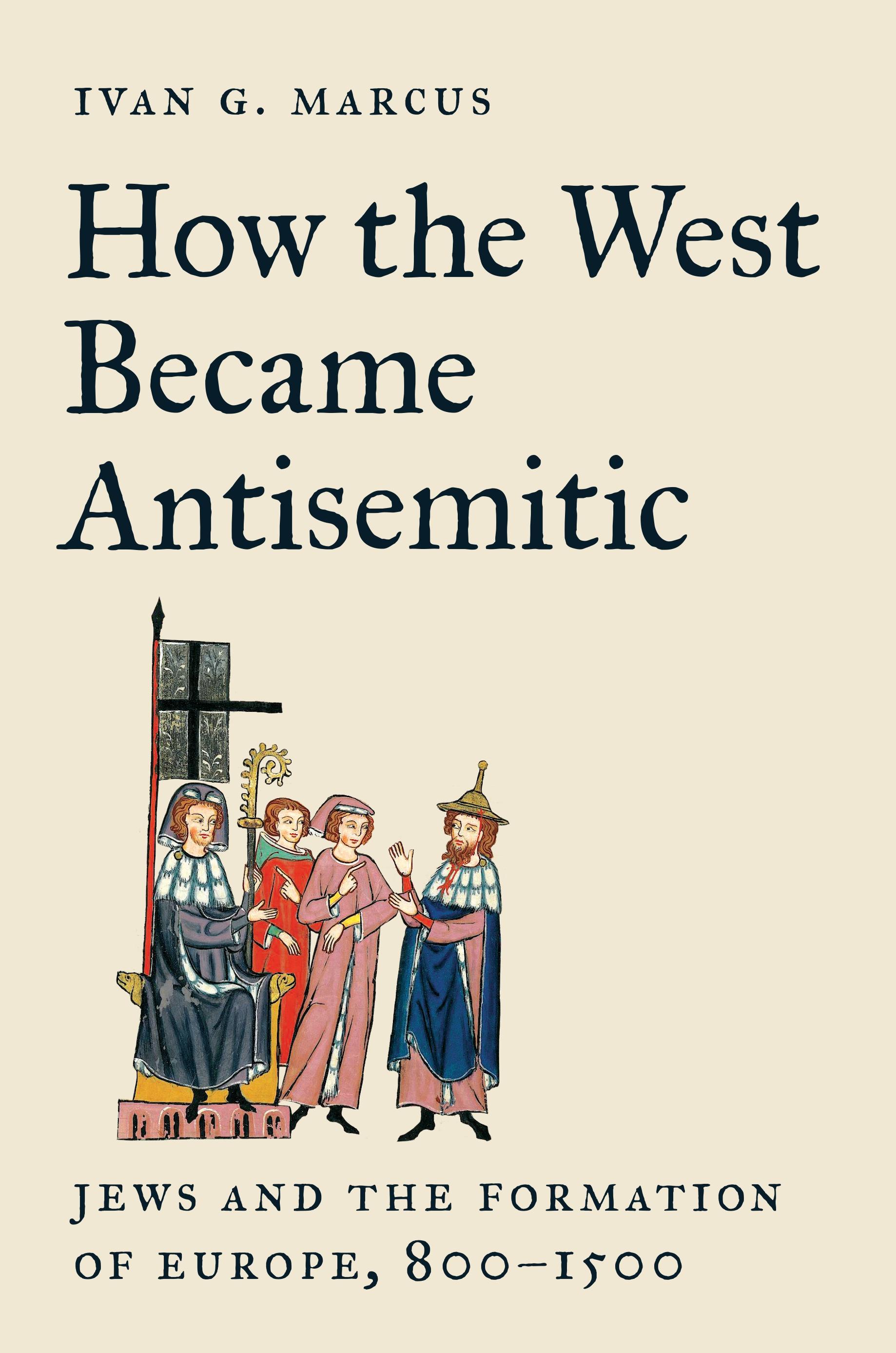
An examination of how the Jews—real and imagined—so challenged the Christian majority in medieval Europe that it became a society that was religiously and culturally antisemitic in new ways
In medieval Europe, Jews were not passive victims of the Christian community, as is often assumed, but rather were startlingly assertive, forming a Jewish civilization within Latin Christian society. Both Jews and Christians considered themselves to be God’s chosen people. These dueling claims fueled the rise of both cultures as they became rivals for supremacy. In How the West Became Antisemitic, Ivan Marcus shows how Christian and Jewish competition in medieval Europe laid the foundation for modern antisemitism.
Marcus explains that Jews accepted Christians as misguided practitioners of their ancestral customs, but regarded Christianity as idolatry. Christians, on the other hand, looked at Jews themselves—not Judaism—as despised. They directed their hatred at a real and imagined Jew: theoretically subordinate, but sometimes assertive, an implacable “enemy within.” In their view, Jews were permanently and physically Jewish—impossible to convert to Christianity. Thus Christians came to hate Jews first for religious reasons, and eventually for racial ones. Even when Jews no longer lived among them, medieval Christians could not forget their former neighbors. Modern antisemitism, based on the imagined Jew as powerful and world dominating, is a transformation of this medieval hatred.
A sweeping and well-documented history of the rivalry between Jewish and Christian civilizations during the making of Europe, How the West Became Antisemitic is an ambitious new interpretation of the medieval world and its impact on modernity.
Before Memmo my notes were scattered across PDFs. Now a workspace pulls everything into one place — I see exactly what's still left to study.
Memmo's summaries are gold before exams. I don't have to re-read 800 pages two weeks before — just the important parts.
The AI chat has saved me the night before an exam more than once. I just keep asking until I get it — no waiting on a study group to reply.
The quizzes hit exactly what I need to know. Memmo tracks what I get stuck on — so I only practice what's worth it.
Flashcards with spaced repetition are magic. Memmo knows when I'm about to forget something and brings it back.
The AI podcasts are my favorite. I listen on my way to school and get a recap without sitting at a computer.

Handbok i kvalitativa metoder
281 kr

Hållbar utveckling: en introduktion för ingenjörer och andra problemlösare
334 kr

Brymans Samhällsvetenskapliga metoder
390 kr

Projektledning
491 kr

Den orättvisa hälsan: om socioekonomiska skillnader i hälsa och livslängd
326 kr

Organizational Leadership
429 kr

Vetenskapsteori för nybörjare
196 kr

På väg mot läraryrket
172 kr

Det sociala livet i skolan: Socialpsykologiska perspektiv
253 kr

Betygsättningens didaktik
151 kr

Personality
402 kr

Studying Leadership
404 kr

Managing Innovation
477 kr

Introduktion till samhällsvetenskaplig metod
347 kr

The Psychology of Sex and Gender
698 kr

Evidens och kunskap för socialt arbete
207 kr

Introduction to Leadership
605 kr