
Before Memmo my notes were scattered across PDFs. Now a workspace pulls everything into one place — I see exactly what's still left to study.
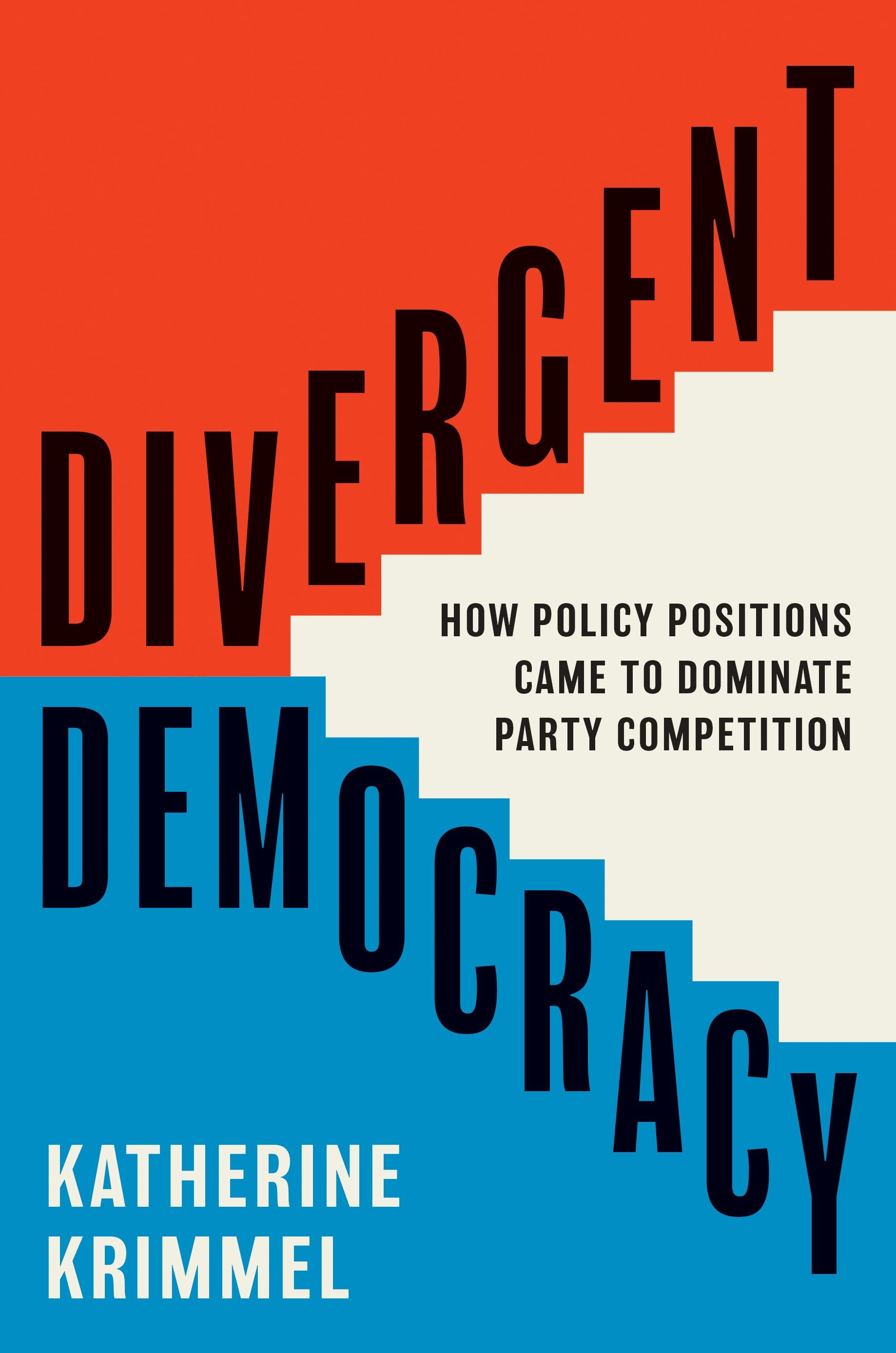
An innovative examination of the shift by American political parties toward issue-based differentiation
Recent Democratic and Republican party platforms display clear differences on such issues as abortion, LGBTQ+ rights, gun control, and the environment. These distinctions reflect a programmatic party system—that is, one in which policy positions serve as a key basis of electoral competition. Yet party politics were not always so issue-oriented; the rise of policy positions as the dominant marker of party appeal occurred largely over the last fifty years. In Divergent Democracy, Katherine Krimmel examines this transformation of the American party system, using innovative machine learning techniques to develop and present the first measure of party differentiation on issues since Democrats and Republicans began competing with each other in 1856.
Why did the shift to issue-based party competition take more than a century to materialize? Krimmel offers a groundbreaking theory, focusing on what aids and constrains parties’ abilities to do the difficult, conflict-ridden work of developing issue positions. She argues that clientelistic subnational party organizations, promising material support or jobs in return for votes, long impeded programmatic partisanship while the growth of national party organizations facilitated it. Moreover, institutions and agents of racial oppression extended the life of nonprogrammatic practices, as they attempted to shield discriminatory laws and institutions from interparty competition. Following the civil rights revolution of the 1960s, space opened for programmatic competition to grow.
Using both quantitative and qualitative tools, Krimmel offers a vital view of the foundations of today’s issue-based party competition and its alternatives.
Before Memmo my notes were scattered across PDFs. Now a workspace pulls everything into one place — I see exactly what's still left to study.
Memmo's summaries are gold before exams. I don't have to re-read 800 pages two weeks before — just the important parts.
The AI chat has saved me the night before an exam more than once. I just keep asking until I get it — no waiting on a study group to reply.
The quizzes hit exactly what I need to know. Memmo tracks what I get stuck on — so I only practice what's worth it.
Flashcards with spaced repetition are magic. Memmo knows when I'm about to forget something and brings it back.
The AI podcasts are my favorite. I listen on my way to school and get a recap without sitting at a computer.

Handbok i kvalitativa metoder
281 kr

Hållbar utveckling: en introduktion för ingenjörer och andra problemlösare
334 kr

Brymans Samhällsvetenskapliga metoder
390 kr

Projektledning
491 kr

Den orättvisa hälsan: om socioekonomiska skillnader i hälsa och livslängd
326 kr

Organizational Leadership
429 kr

Vetenskapsteori för nybörjare
196 kr

På väg mot läraryrket
172 kr

Det sociala livet i skolan: Socialpsykologiska perspektiv
253 kr

Betygsättningens didaktik
151 kr

Personality
402 kr

Studying Leadership
404 kr

Managing Innovation
477 kr

Introduktion till samhällsvetenskaplig metod
347 kr

The Psychology of Sex and Gender
698 kr

Evidens och kunskap för socialt arbete
207 kr

Introduction to Leadership
605 kr