
Before Memmo my notes were scattered across PDFs. Now a workspace pulls everything into one place — I see exactly what's still left to study.
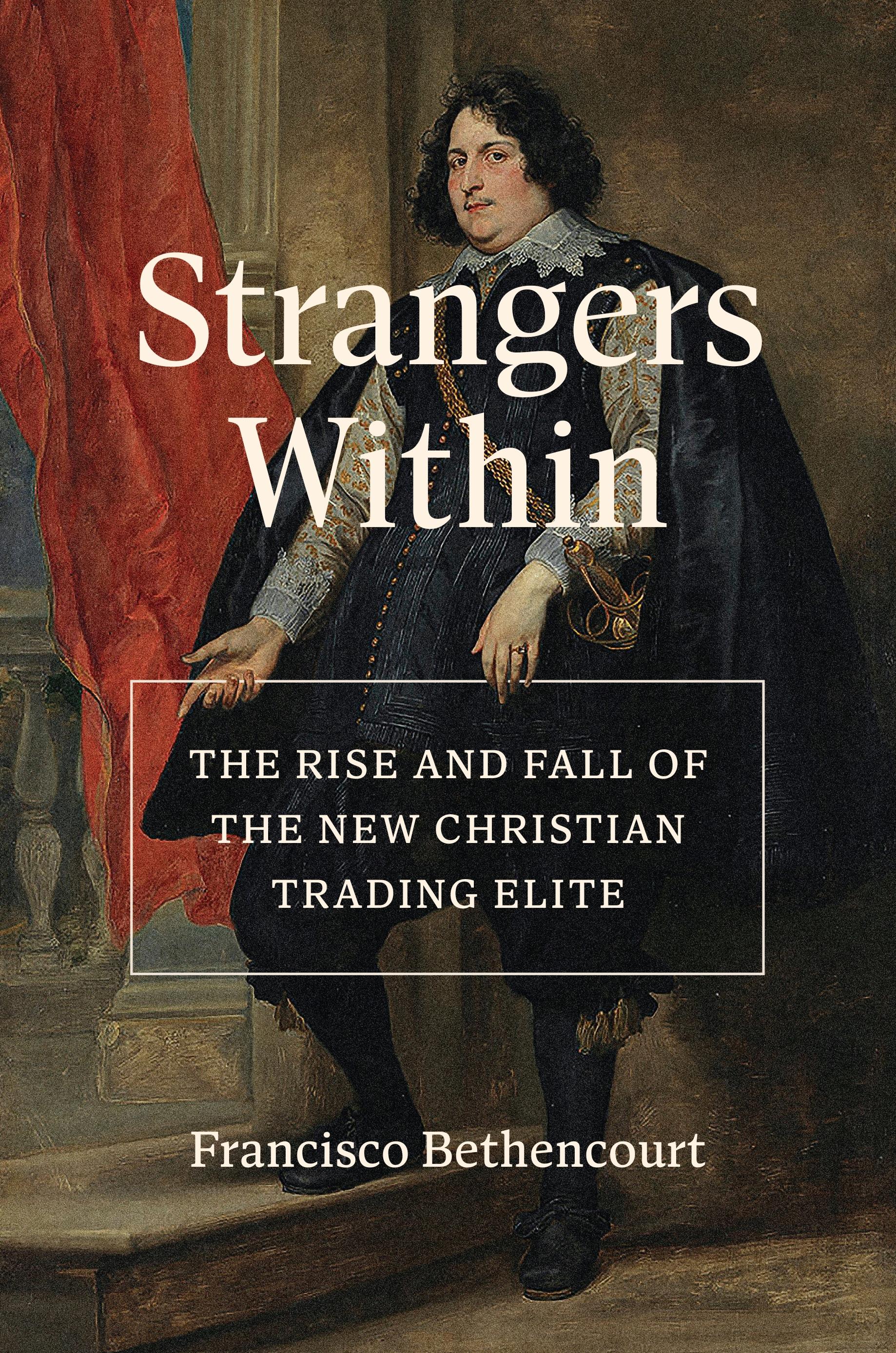
A comprehensive study of the New Christian elite of Jewish origin—prominent traders, merchants, bankers and men of letters—between the fifteenth and eighteenth centuries
In Strangers Within, Francisco Bethencourt provides the first comprehensive history of New Christians, the descendants of Jews forced to convert to Catholicism in late medieval Spain and Portugal. Bethencourt estimates that there were around 260,000 New Christians by 1500—more than half of Iberia’s urban population. The majority stayed in Iberia but a significant number moved throughout Europe, Africa, the Middle East, coastal Asia and the New World. They established Sephardic communities in North Africa, the Ottoman Empire, Italy, Amsterdam, Hamburg and London. Bethencourt focuses on the elite of bankers, financiers and merchants from the fifteenth to the eighteenth centuries and the crucial role of this group in global trade and financial services. He analyses their impact on religion (for example, Teresa de Ávila), legal and political thought (Las Casas), science (Amatus Lusitanus), philosophy (Spinoza) and literature (Enríquez Gomez).
Drawing on groundbreaking research in eighteen archives and library manuscript departments in six different countries, Bethencourt argues that the liminal position in which the New Christians found themselves explains their rise, economic prowess and cultural innovation. The New Christians created the first coherent legal case against the discrimination of a minority singled out for systematic judicial inquiry. Cumulative inquisitorial prosecution, coupled with structural changes in international trade, led to their decline and disappearance as a recognizable ethnicity by the mid-eighteenth century. Strangers Within tells an epic story of persecution, resistance and the making of Iberia through the oppression of one of the most powerful minorities in world history. Packed with genealogical information about families, their intercontinental networks, their power and their suffering, it is a landmark study.
Before Memmo my notes were scattered across PDFs. Now a workspace pulls everything into one place — I see exactly what's still left to study.
Memmo's summaries are gold before exams. I don't have to re-read 800 pages two weeks before — just the important parts.
The AI chat has saved me the night before an exam more than once. I just keep asking until I get it — no waiting on a study group to reply.
The quizzes hit exactly what I need to know. Memmo tracks what I get stuck on — so I only practice what's worth it.
Flashcards with spaced repetition are magic. Memmo knows when I'm about to forget something and brings it back.
The AI podcasts are my favorite. I listen on my way to school and get a recap without sitting at a computer.

Handbok i kvalitativa metoder
281 kr

Hållbar utveckling: en introduktion för ingenjörer och andra problemlösare
334 kr

Brymans Samhällsvetenskapliga metoder
390 kr

Projektledning
491 kr

Den orättvisa hälsan: om socioekonomiska skillnader i hälsa och livslängd
326 kr

Organizational Leadership
429 kr

Vetenskapsteori för nybörjare
196 kr

På väg mot läraryrket
172 kr

Det sociala livet i skolan: Socialpsykologiska perspektiv
253 kr

Betygsättningens didaktik
151 kr

Personality
402 kr

Studying Leadership
404 kr

Managing Innovation
477 kr

Introduktion till samhällsvetenskaplig metod
347 kr

The Psychology of Sex and Gender
698 kr

Evidens och kunskap för socialt arbete
207 kr

Introduction to Leadership
605 kr