
Before Memmo my notes were scattered across PDFs. Now a workspace pulls everything into one place — I see exactly what's still left to study.
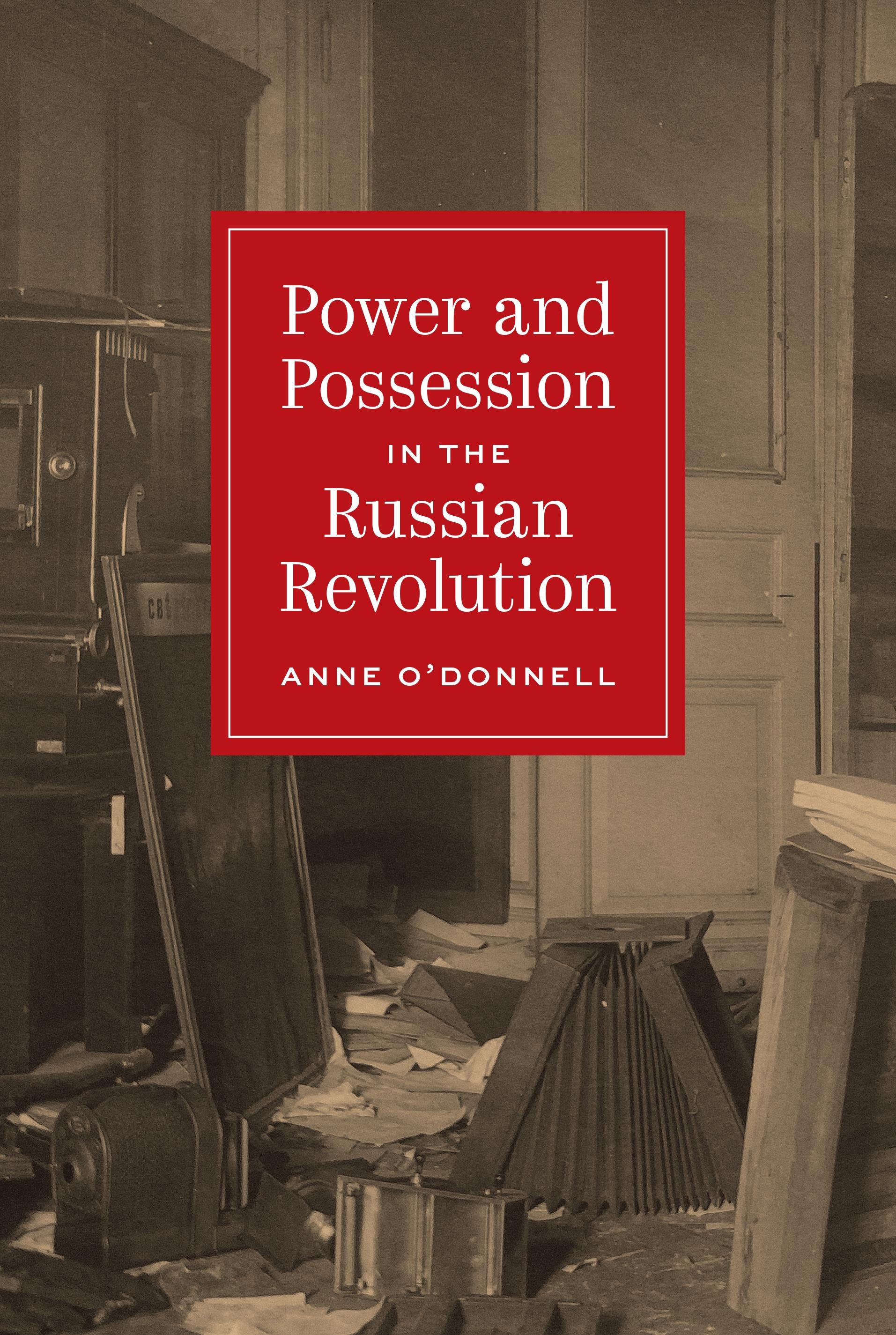
A history that reframes the Bolsheviks’ unprecedented attempts to abolish private property after the revolutions of 1917
The revolutions of 1917 swept away not only Russia’s governing authority but also the property order on which it stood. The upheaval sparked waves of dispossession that rapidly moved beyond the seizure of factories and farms from industrialists and landowners, envisioned by Bolshevik revolutionaries, to penetrate the bedrock of social life: the spaces where people lived. In Power and Possession in the Russian Revolution, Anne O’Donnell reimagines the Bolsheviks’ unprecedented effort to eradicate private property and to create a new political economy—socialism—to replace it.
O’Donnell’s account captures the story of property in reverse, showing how the bonds connecting people to their things were broken and how new ways of knowing things, valuing them, and possessing them coalesced amid the political ferment and economic disarray of the Revolution. O’Donnell reminds us that Russia’s postrevolutionary confiscation of property, like many other episodes of mass dispossession in the twentieth century, largely escaped traditional forms of record keeping. She repairs this omission, drawing on sources that chronicle the lived experience of upheaval—popular petitions, apartment inspections, internal audits of revolutionary institutions, and records of the political police—to reconstruct an archive of dispossession. The result is an unusually intimate history of the Bolsheviks’ attempts to conquer people and things.
The Bolsheviks’ reimagining of property not only changed peoples’ lives and destinies, it formed the foundation of a new type of state—one that eschewed the defense of private property rights in favor of an enduring but enigmatic new domain: socialist state property.
Before Memmo my notes were scattered across PDFs. Now a workspace pulls everything into one place — I see exactly what's still left to study.
Memmo's summaries are gold before exams. I don't have to re-read 800 pages two weeks before — just the important parts.
The AI chat has saved me the night before an exam more than once. I just keep asking until I get it — no waiting on a study group to reply.
The quizzes hit exactly what I need to know. Memmo tracks what I get stuck on — so I only practice what's worth it.
Flashcards with spaced repetition are magic. Memmo knows when I'm about to forget something and brings it back.
The AI podcasts are my favorite. I listen on my way to school and get a recap without sitting at a computer.

Handbok i kvalitativa metoder
281 kr

Hållbar utveckling: en introduktion för ingenjörer och andra problemlösare
334 kr

Brymans Samhällsvetenskapliga metoder
390 kr

Projektledning
491 kr

Den orättvisa hälsan: om socioekonomiska skillnader i hälsa och livslängd
326 kr

Vetenskapsteori för nybörjare
196 kr

Organizational Leadership
429 kr

På väg mot läraryrket
172 kr

Det sociala livet i skolan: Socialpsykologiska perspektiv
253 kr

Betygsättningens didaktik
151 kr

Personality
402 kr

Studying Leadership
404 kr

Managing Innovation
477 kr

Introduktion till samhällsvetenskaplig metod
347 kr

The Psychology of Sex and Gender
698 kr

Evidens och kunskap för socialt arbete
207 kr

Introduction to Leadership
605 kr