
Before Memmo my notes were scattered across PDFs. Now a workspace pulls everything into one place — I see exactly what's still left to study.
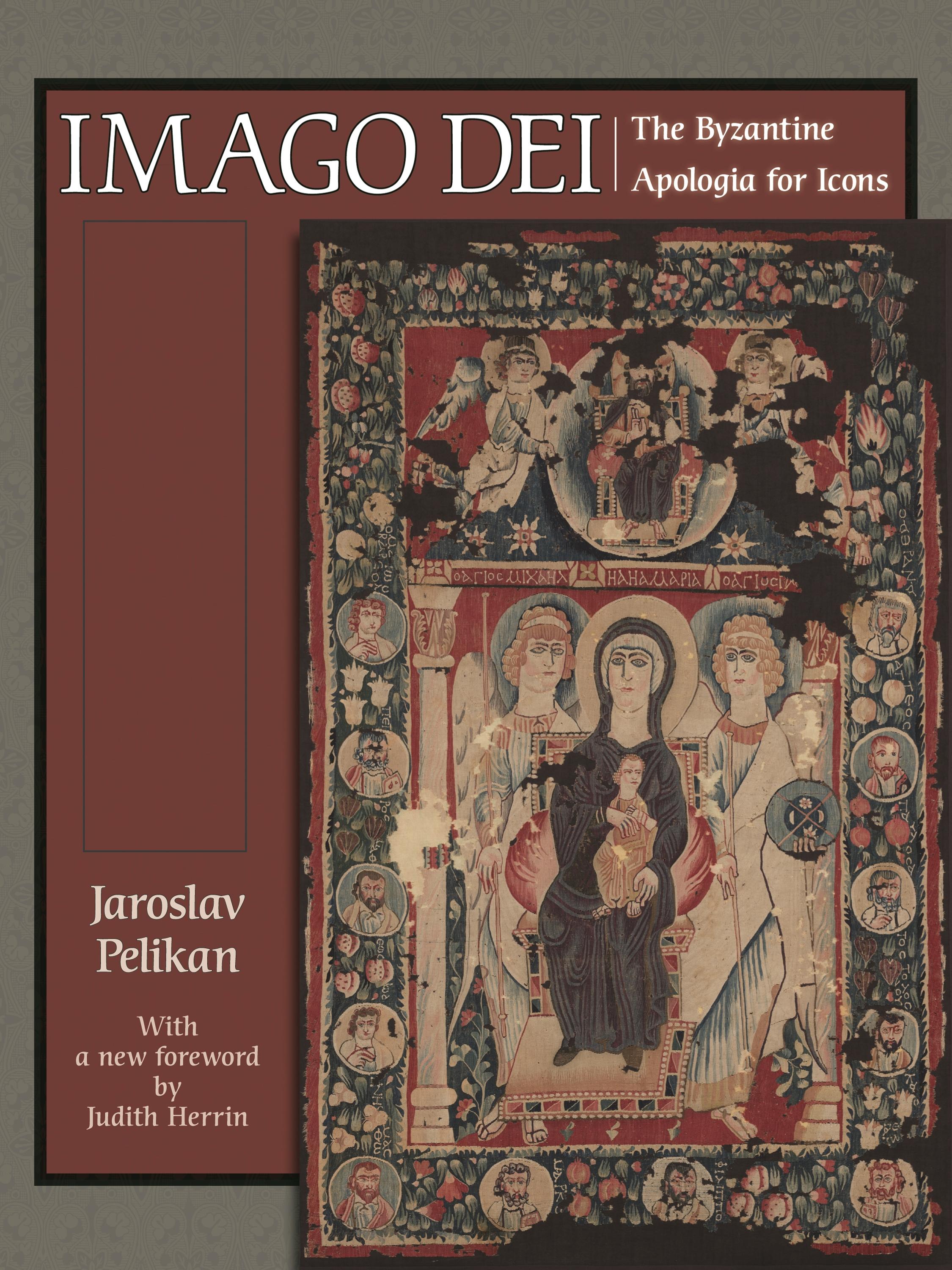
A sweeping account of the controversies surrounding the worship of images in the early Byzantine church
In 726, the Byzantine emperor, Leo III, issued an edict that all religious images in the empire were to be destroyed, a directive that was later endorsed by a synod of the church in 753 under his son, Constantine V. If the policy of Iconoclasm had succeeded, the entire history of Christian art—and of the Christian church, at least in the East—would have been altered.
Iconoclasm was defeated by Byzantine politics, popular revolts, monastic piety, and, most fundamentally of all, by theology, just as it had been theology that the opponents of images had used to justify their actions. Analyzing an intriguing chapter in the history of ideas, the renowned scholar Jaroslav Pelikan shows how a faith that began by attacking the worship of images ended first in permitting and then in commanding it.
Pelikan charts the theological defense of icons during the iconoclastic controversies of the eighth and ninth centuries, whose high point came in 787, when the Second Council of Nicaea restored the cult of images in the church. He demonstrates how the dogmas of the Trinity and the Incarnation eventually provided the basic rationale for images: because the invisible God had become human and therefore personally visible in Jesus Christ, it became permissible to make images of that Image. And because not only the human nature of Christ, but that of his Mother had been transformed by the Incarnation, she, too, could be “iconized,” together with all the other saints and angels.
The iconographic “text” of the book is provided by one of the very few surviving icons from the period before Iconoclasm, the Egyptian tapestry Icon of the Virgin now in the Cleveland Museum of Art. Other icons serve to illustrate the theological argument, just as the theological argument serves to explain the icons.
In an incisive foreword, Judith Herrin explains the enduring importance of the book and discusses how later scholars have built on Pelikan’s work.
Please note: All images in this ebook are presented in black and white and have been reduced in size.
Before Memmo my notes were scattered across PDFs. Now a workspace pulls everything into one place — I see exactly what's still left to study.
Memmo's summaries are gold before exams. I don't have to re-read 800 pages two weeks before — just the important parts.
The AI chat has saved me the night before an exam more than once. I just keep asking until I get it — no waiting on a study group to reply.
The quizzes hit exactly what I need to know. Memmo tracks what I get stuck on — so I only practice what's worth it.
Flashcards with spaced repetition are magic. Memmo knows when I'm about to forget something and brings it back.
The AI podcasts are my favorite. I listen on my way to school and get a recap without sitting at a computer.

Handbok i kvalitativa metoder
281 kr

Hållbar utveckling: en introduktion för ingenjörer och andra problemlösare
334 kr

Brymans Samhällsvetenskapliga metoder
390 kr

Projektledning
491 kr

Den orättvisa hälsan: om socioekonomiska skillnader i hälsa och livslängd
326 kr

Organizational Leadership
429 kr

Vetenskapsteori för nybörjare
196 kr

På väg mot läraryrket
172 kr

Det sociala livet i skolan: Socialpsykologiska perspektiv
253 kr

Betygsättningens didaktik
151 kr

Personality
402 kr

Studying Leadership
404 kr

Managing Innovation
477 kr

Introduktion till samhällsvetenskaplig metod
347 kr

The Psychology of Sex and Gender
698 kr

Evidens och kunskap för socialt arbete
207 kr

Introduction to Leadership
605 kr