
Before Memmo my notes were scattered across PDFs. Now a workspace pulls everything into one place — I see exactly what's still left to study.
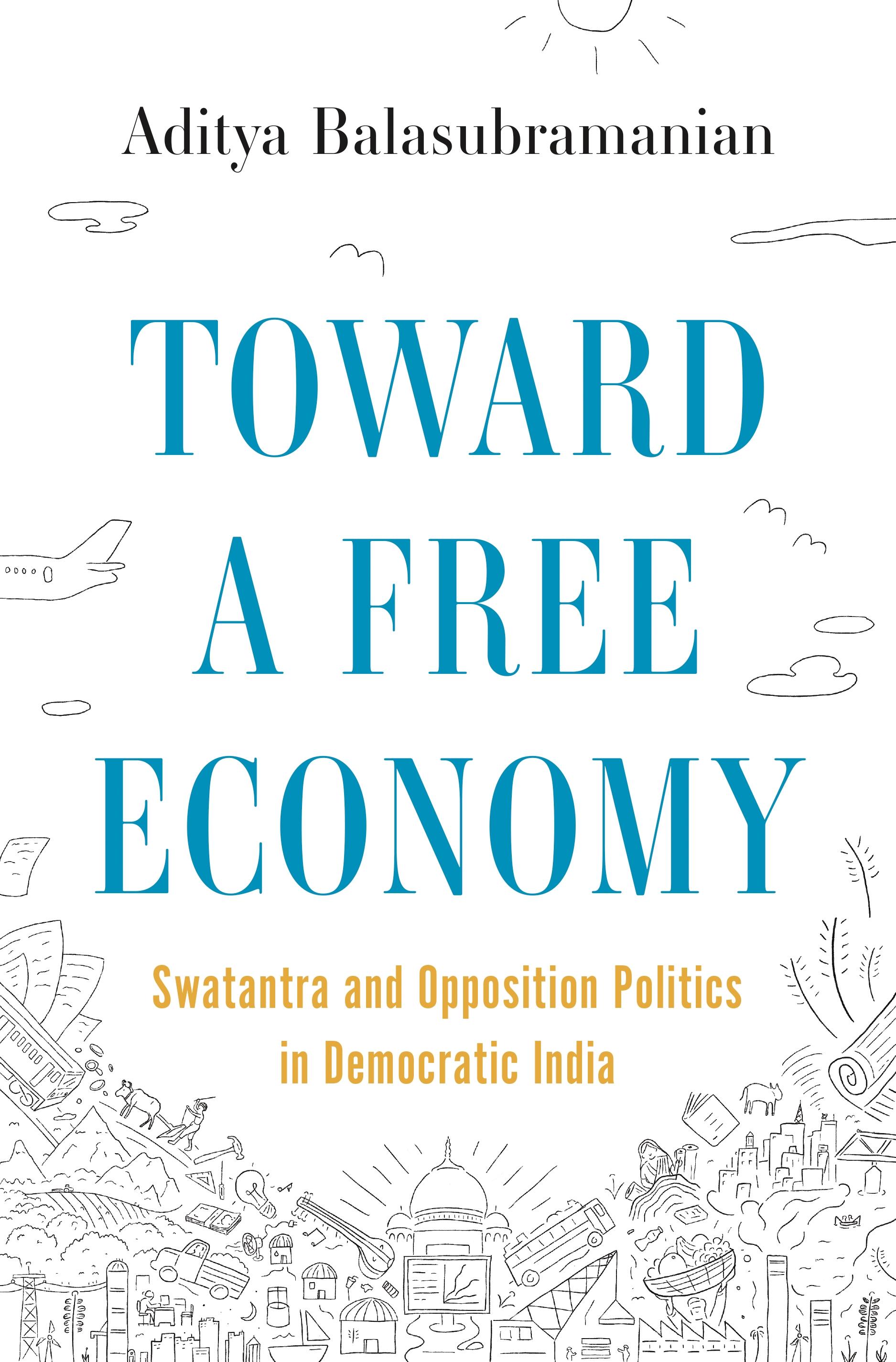
The unknown history of economic conservatism in India after independence
Neoliberalism is routinely characterized as an antidemocratic, expert-driven project aimed at insulating markets from politics, devised in the North Atlantic and projected on the rest of the world. Revising this understanding, Toward a Free Economy shows how economic conservatism emerged and was disseminated in a postcolonial society consistent with the logic of democracy.
Twelve years after the British left India, a Swatantra (“Freedom”) Party came to life. It encouraged Indians to break with the Indian National Congress Party, which spearheaded the anticolonial nationalist movement and now dominated Indian democracy. Rejecting Congress’s heavy-industrial developmental state and the accompanying rhetoric of socialism, Swatantra promised “free economy” through its project of opposition politics.
As it circulated across various genres, “free economy” took on meanings that varied by region and language, caste and class, and won diverse advocates. These articulations, informed by but distinct from neoliberalism, came chiefly from communities in southern and western India as they embraced new forms of entrepreneurial activity. At their core, they connoted anticommunism, unfettered private economic activity, decentralized development, and the defense of private property.
Opposition politics encompassed ideas and practice. Swatantra’s leaders imagined a conservative alternative to a progressive dominant party in a two-party system. They communicated ideas and mobilized people around such issues as inflation, taxation, and property. And they made creative use of India’s institutions to bring checks and balances to the political system.
Democracy’s persistence in India is uncommon among postcolonial societies. By excavating a perspective of how Indians made and understood their own democracy and economy, Aditya Balasubramanian broadens our picture of neoliberalism, democracy, and the postcolonial world.
Before Memmo my notes were scattered across PDFs. Now a workspace pulls everything into one place — I see exactly what's still left to study.
Memmo's summaries are gold before exams. I don't have to re-read 800 pages two weeks before — just the important parts.
The AI chat has saved me the night before an exam more than once. I just keep asking until I get it — no waiting on a study group to reply.
The quizzes hit exactly what I need to know. Memmo tracks what I get stuck on — so I only practice what's worth it.
Flashcards with spaced repetition are magic. Memmo knows when I'm about to forget something and brings it back.
The AI podcasts are my favorite. I listen on my way to school and get a recap without sitting at a computer.

Handbok i kvalitativa metoder
281 kr

Hållbar utveckling: en introduktion för ingenjörer och andra problemlösare
334 kr

Brymans Samhällsvetenskapliga metoder
390 kr

Projektledning
491 kr

Den orättvisa hälsan: om socioekonomiska skillnader i hälsa och livslängd
326 kr

Organizational Leadership
429 kr

Vetenskapsteori för nybörjare
196 kr

På väg mot läraryrket
172 kr

Det sociala livet i skolan: Socialpsykologiska perspektiv
253 kr

Betygsättningens didaktik
151 kr

Personality
402 kr

Studying Leadership
404 kr

Managing Innovation
477 kr

Introduktion till samhällsvetenskaplig metod
347 kr

The Psychology of Sex and Gender
698 kr

Evidens och kunskap för socialt arbete
207 kr

Introduction to Leadership
605 kr