
Before Memmo my notes were scattered across PDFs. Now a workspace pulls everything into one place — I see exactly what's still left to study.
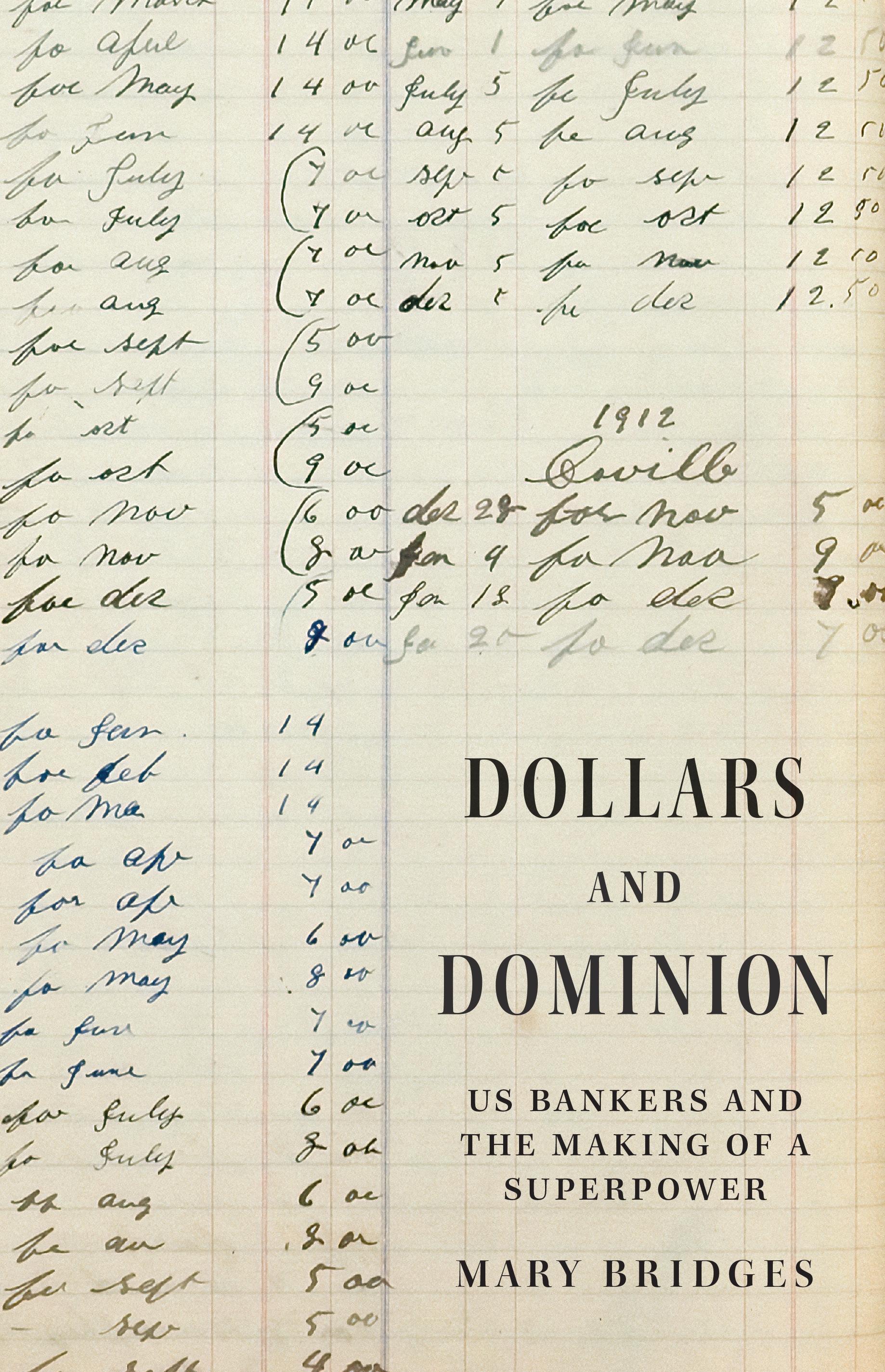
How the creation of a new banking infrastructure in the early twentieth century established the United States as a global financial power
The dominance of US multinational businesses today can seem at first like an inevitable byproduct of the nation’s superpower status. In Dollars and Dominion, Mary Bridges tells a different origin story. She explores the ramshackle beginnings of US financial power overseas, showing that US bankers in the early twentieth century depended on the US government, European know-how, and last-minute improvisation to sustain their work abroad. Bridges focuses on an underappreciated piece of the nation’s financial infrastructure—the overseas branch bank—as a brick-and-mortar foundation for expanding US commercial influence.
Bridges explores how bankers sorted their new communities into “us”—potential clients—and “them”—local populations, who often existed on the periphery of the banking world. She argues that US bankers mapped their new communities by creating foreign credit information—and by using a financial asset newly enabled by the Federal Reserve System, the bankers’ acceptance, in the process. In doing so, they constructed a new architecture of US trade finance that relied on long-standing inequalities and hierarchies of privilege. Thus, racialized, class-based, and gendered ideas became baked into the financial infrastructure.
Contrary to conventional wisdom, there was nothing inevitable or natural about the rise of US finance capitalism. Bridges shows that US foreign banking was a bootstrapped project that began as a side hustle of Gilded Age tycoons and sustained itself by relying on the power of the US state, copying the example of British foreign bankers, and building alliances with local elites. In this way, US bankers constructed a flexible and durable new infrastructure to support the nation’s growing global power.
Before Memmo my notes were scattered across PDFs. Now a workspace pulls everything into one place — I see exactly what's still left to study.
Memmo's summaries are gold before exams. I don't have to re-read 800 pages two weeks before — just the important parts.
The AI chat has saved me the night before an exam more than once. I just keep asking until I get it — no waiting on a study group to reply.
The quizzes hit exactly what I need to know. Memmo tracks what I get stuck on — so I only practice what's worth it.
Flashcards with spaced repetition are magic. Memmo knows when I'm about to forget something and brings it back.
The AI podcasts are my favorite. I listen on my way to school and get a recap without sitting at a computer.

Handbok i kvalitativa metoder
281 kr

Hållbar utveckling: en introduktion för ingenjörer och andra problemlösare
334 kr

Brymans Samhällsvetenskapliga metoder
390 kr

Projektledning
491 kr

Den orättvisa hälsan: om socioekonomiska skillnader i hälsa och livslängd
326 kr

Vetenskapsteori för nybörjare
196 kr

Organizational Leadership
429 kr

På väg mot läraryrket
172 kr

Det sociala livet i skolan: Socialpsykologiska perspektiv
253 kr

Betygsättningens didaktik
151 kr

Personality
402 kr

Studying Leadership
404 kr

Managing Innovation
477 kr

Introduktion till samhällsvetenskaplig metod
347 kr

The Psychology of Sex and Gender
698 kr

Evidens och kunskap för socialt arbete
207 kr

Introduction to Leadership
605 kr