
Before Memmo my notes were scattered across PDFs. Now a workspace pulls everything into one place — I see exactly what's still left to study.
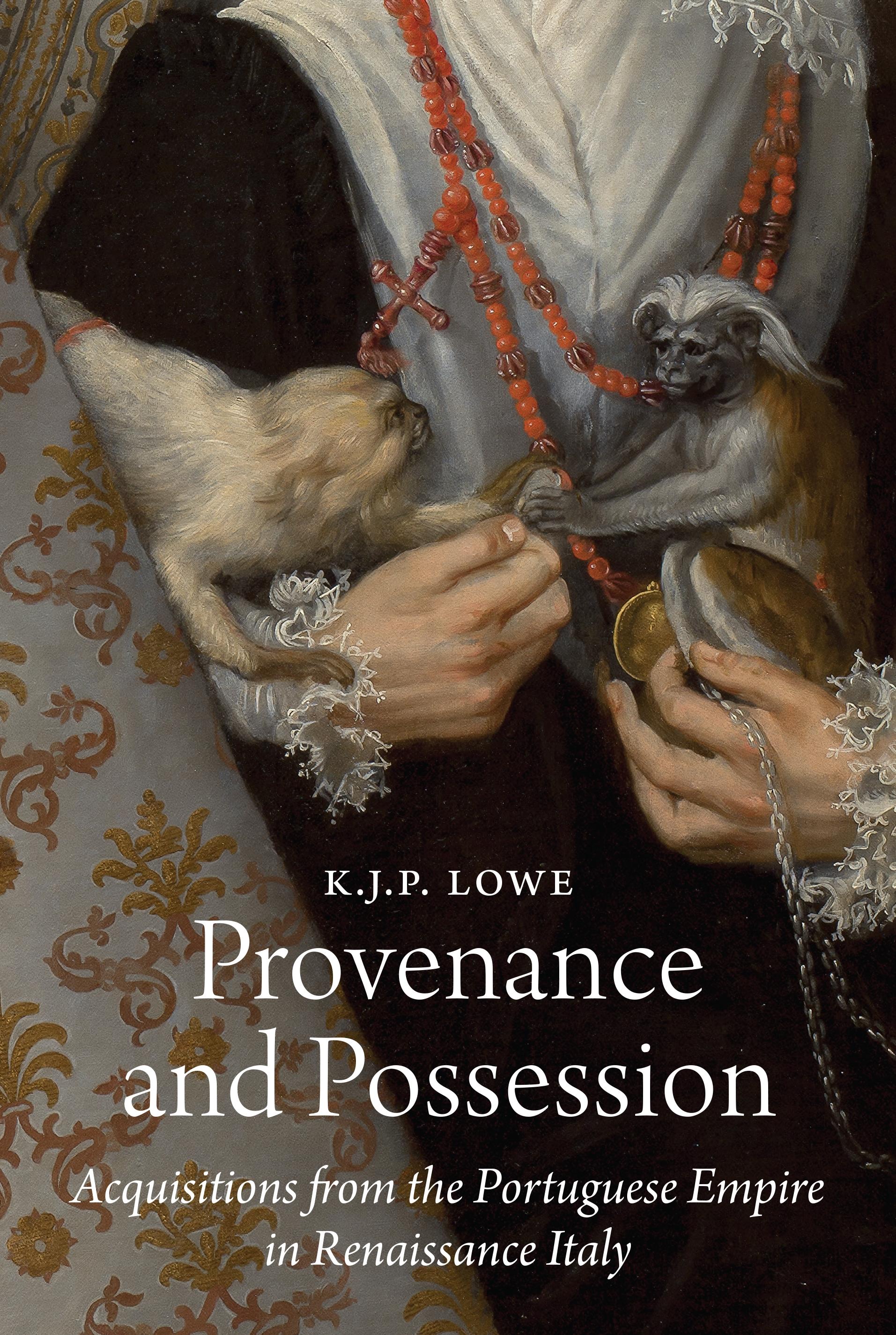
A thought-provoking study of how knowledge of provenance was not transferred with enslaved people and goods from the Portuguese trading empire to Renaissance Italy
In the fifteenth and sixteenth centuries, Renaissance Italy received a bounty of "goods" from Portuguese trading voyages—fruits of empire that included luxury goods, exotic animals and even enslaved people. Many historians hold that this imperial "opening up" of the world transformed the way Europeans understood the global. In this book, K.J.P. Lowe challenges such an assumption, showing that Italians of this era cared more about the possession than the provenance of their newly acquired global goods. With three detailed case studies involving Florence and Rome, and drawing on unpublished archival material, Lowe documents the myriad occasions on which global knowledge became dissociated from overseas objects, animals and people. Fundamental aspects of these imperial imports, including place of origin and provenance, she shows, failed to survive the voyage and make landfall in Europe. Lowe suggests that there were compelling reasons for not knowing or caring about provenance, and concludes that geographical knowledge, like all knowledge, was often restricted and not valued.
Examining such documents as ledger entries, journals and public and private correspondence as well as extant objects, and asking previously unasked questions, Lowe meticulously reconstructs the backstories of Portuguese imperial acquisitions, painstakingly supplying the context. She chronicles the phenomenon of mixed-ancestry children at Florence’s foundling hospital; the ownership of inanimate luxury goods, notably those possessed by the Medicis; and the acquisition of enslaved people and animals. How and where goods were acquired, Lowe argues, were of no interest to fifteenth- and sixteenth-century Italians; possession was paramount.
Before Memmo my notes were scattered across PDFs. Now a workspace pulls everything into one place — I see exactly what's still left to study.
Memmo's summaries are gold before exams. I don't have to re-read 800 pages two weeks before — just the important parts.
The AI chat has saved me the night before an exam more than once. I just keep asking until I get it — no waiting on a study group to reply.
The quizzes hit exactly what I need to know. Memmo tracks what I get stuck on — so I only practice what's worth it.
Flashcards with spaced repetition are magic. Memmo knows when I'm about to forget something and brings it back.
The AI podcasts are my favorite. I listen on my way to school and get a recap without sitting at a computer.

Handbok i kvalitativa metoder
281 kr

Hållbar utveckling: en introduktion för ingenjörer och andra problemlösare
334 kr

Brymans Samhällsvetenskapliga metoder
390 kr

Projektledning
491 kr

Den orättvisa hälsan: om socioekonomiska skillnader i hälsa och livslängd
326 kr

Organizational Leadership
429 kr

Vetenskapsteori för nybörjare
196 kr

På väg mot läraryrket
172 kr

Det sociala livet i skolan: Socialpsykologiska perspektiv
253 kr

Betygsättningens didaktik
151 kr

Personality
402 kr

Studying Leadership
404 kr

Managing Innovation
477 kr

Introduktion till samhällsvetenskaplig metod
347 kr

The Psychology of Sex and Gender
698 kr

Evidens och kunskap för socialt arbete
207 kr

Introduction to Leadership
605 kr