
Before Memmo my notes were scattered across PDFs. Now a workspace pulls everything into one place — I see exactly what's still left to study.
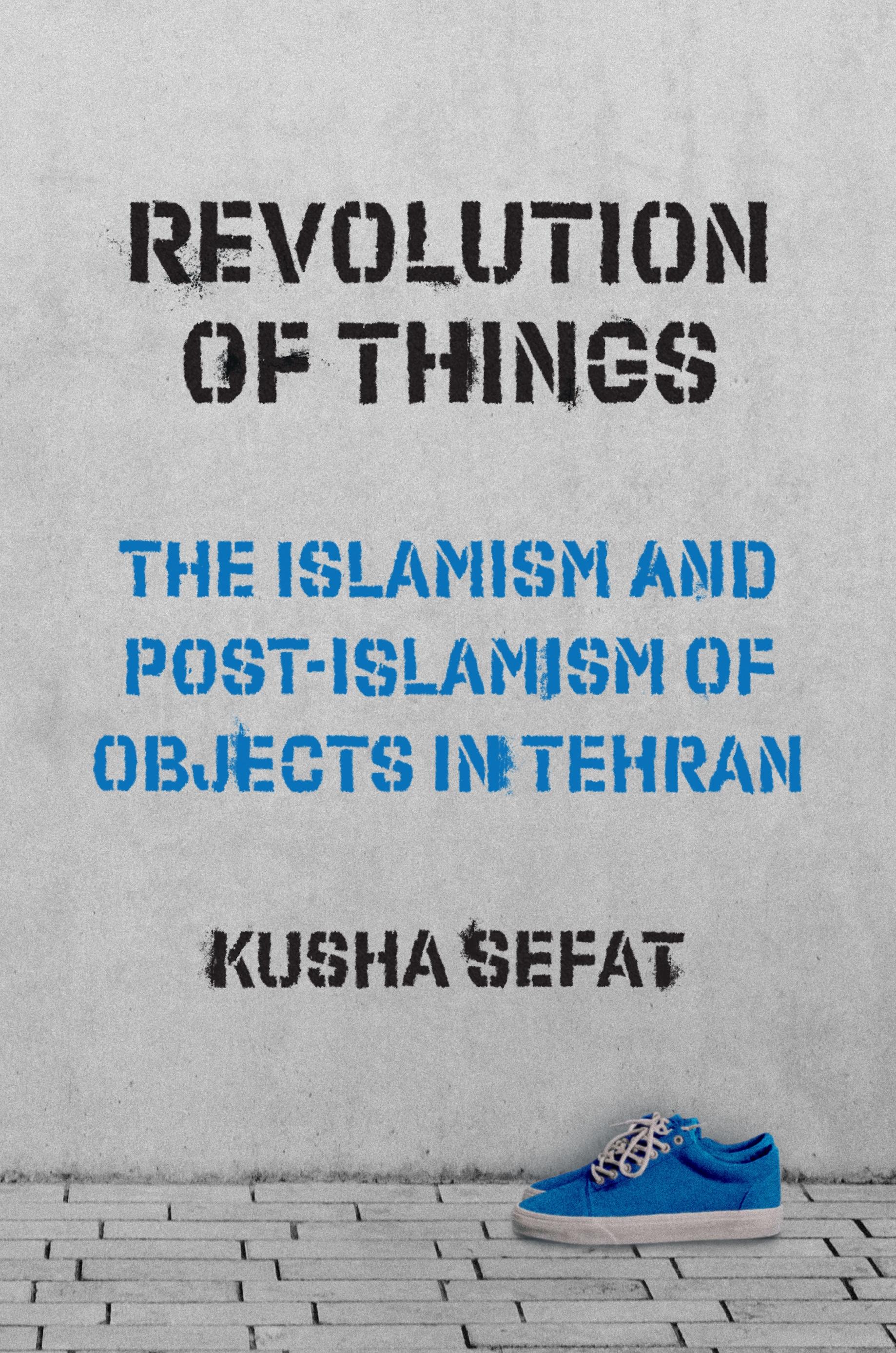
An exploration of the ways that shifting relations between materiality and language bring about different forms of politics in Tehran
In Revolution of Things, Kusha Sefat traces a dynamism between materiality and language that sheds light on how the merger of the two permeates politics. To show how shifting relations between things and terms form the grounds for different modes of action, Sefat reconstructs the political history of postrevolutionary Iran at the intersection of everyday objects and words. Just as Islamism fashioned its own objects in Tehran during the 1980s, he explains, tyrannical objects generated a distinct form of Islamism by means of their material properties; everyday things from walls to shoes to foods were active political players that helped consolidate the Islamic Republic. Moreover, President Rafsanjani’s “liberalization” in the 1990s was based not merely on state policies and post-Islamist ideologies but also on the unlikely things—including consumer products from the West—that engendered and sustained “liberalism” in Tehran.
Sefat shows how provincial vocabularies transformed into Islamist and post-Islamist discourses through the circulation of international objects. The globalization of objects, he argues, was constitutive of the different forms that politics took in Tehran, with each constellation affording and foreclosing distinct modes of agency. Sefat’s intention is not to alter historical facts about the Islamic Republic but to show how we can rethink the matter of those facts. By bringing the recent “material turn” into conversation with the canons of structural analysis, poststructuralist theory, sociolinguistics, and Middle East studies, Sefat offers a unique perspective on Iran’s revolution and its aftermath.
Before Memmo my notes were scattered across PDFs. Now a workspace pulls everything into one place — I see exactly what's still left to study.
Memmo's summaries are gold before exams. I don't have to re-read 800 pages two weeks before — just the important parts.
The AI chat has saved me the night before an exam more than once. I just keep asking until I get it — no waiting on a study group to reply.
The quizzes hit exactly what I need to know. Memmo tracks what I get stuck on — so I only practice what's worth it.
Flashcards with spaced repetition are magic. Memmo knows when I'm about to forget something and brings it back.
The AI podcasts are my favorite. I listen on my way to school and get a recap without sitting at a computer.

Handbok i kvalitativa metoder
281 kr

Hållbar utveckling: en introduktion för ingenjörer och andra problemlösare
334 kr

Brymans Samhällsvetenskapliga metoder
390 kr

Projektledning
491 kr

Den orättvisa hälsan: om socioekonomiska skillnader i hälsa och livslängd
326 kr

Vetenskapsteori för nybörjare
196 kr

Organizational Leadership
429 kr

På väg mot läraryrket
172 kr

Det sociala livet i skolan: Socialpsykologiska perspektiv
253 kr

Betygsättningens didaktik
151 kr

Personality
402 kr

Studying Leadership
404 kr

Managing Innovation
477 kr

Introduktion till samhällsvetenskaplig metod
347 kr

The Psychology of Sex and Gender
698 kr

Evidens och kunskap för socialt arbete
207 kr

Introduction to Leadership
605 kr