
Before Memmo my notes were scattered across PDFs. Now a workspace pulls everything into one place — I see exactly what's still left to study.
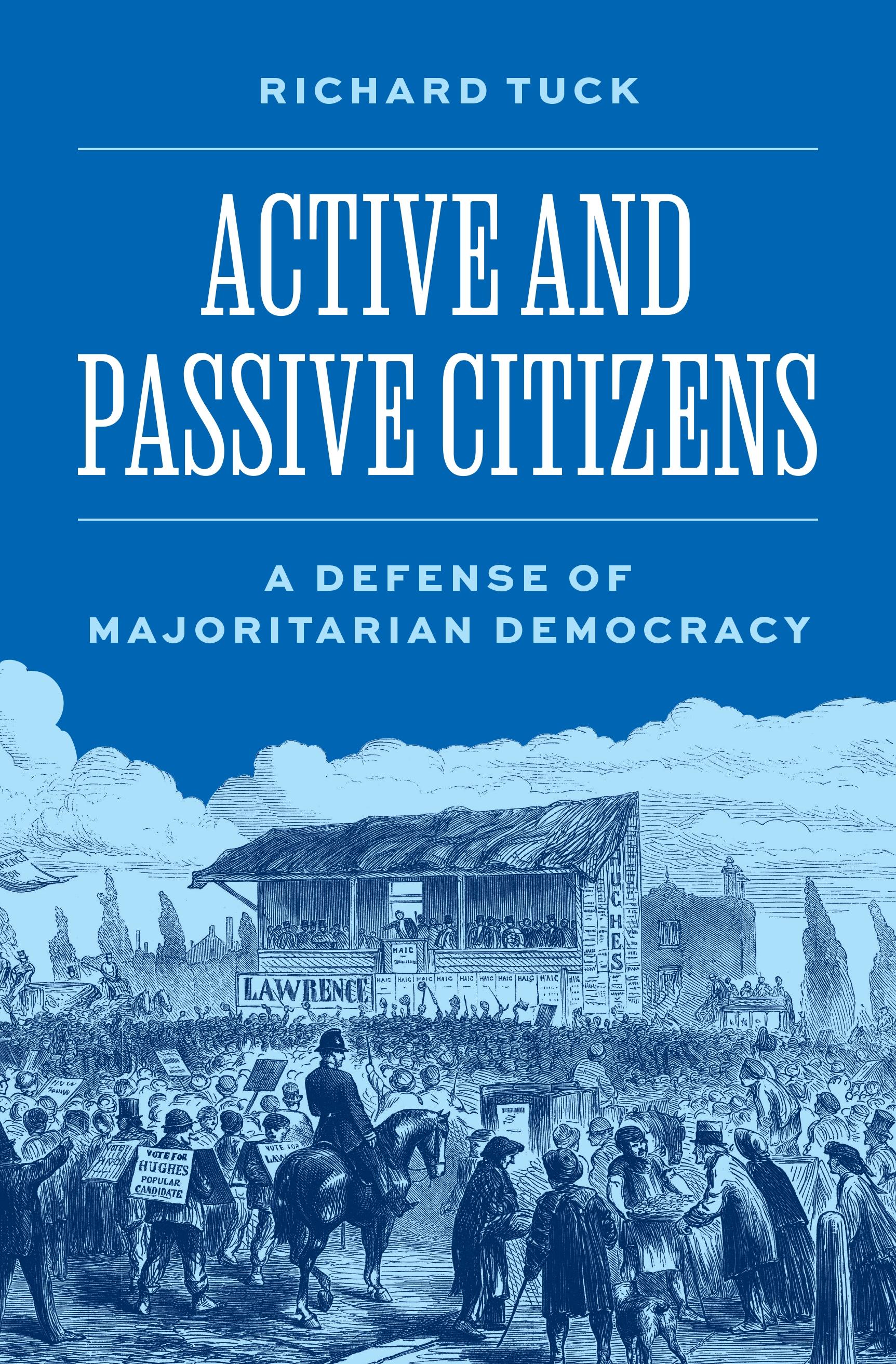
A powerful case for why majority rule—not representation—is the defining feature of democratic politics
The idea that democratic governance rests on active self-rule by citizens plays surprisingly little part in current theories of democracy, which instead stress the importance of representation by elected, appointed, or randomly selected bodies such as legislatures, courts, and juries. This would have astonished eighteenth-century theorists of democracy, who viewed universal suffrage and majoritarian voting as the sole criteria for democratic politics. Active and Passive Citizens defends the view of these earlier thinkers, asserting that individual agency is the very essence of democracy.
In this provocative and lucidly argued book, Richard Tuck draws on the distinction made by the Abbé Sieyès, a leading political theorist of the French Revolution, between “active” citizens (the electorate) and “passive” ones (those who are represented by the institutions of the state). Tuck traces our current representative view of democracy to Sieyès and contrasts him with Rousseau, a theorist of active self-rule by the people. Tuck argues that modern theories of democracy have effectively turned us into passive citizens and calls for a renewal of a majoritarian democracy that realizes the full potential of active citizenship.
Based on the prestigious Tanner Lectures delivered at Princeton University’s Center for Human Values, Active and Passive Citizens is edited and introduced by Stephen Macedo and includes commentary by political theorists Simone Chambers, Joshua Cohen, John Ferejohn, and Melissa Schwartzberg.
Before Memmo my notes were scattered across PDFs. Now a workspace pulls everything into one place — I see exactly what's still left to study.
Memmo's summaries are gold before exams. I don't have to re-read 800 pages two weeks before — just the important parts.
The AI chat has saved me the night before an exam more than once. I just keep asking until I get it — no waiting on a study group to reply.
The quizzes hit exactly what I need to know. Memmo tracks what I get stuck on — so I only practice what's worth it.
Flashcards with spaced repetition are magic. Memmo knows when I'm about to forget something and brings it back.
The AI podcasts are my favorite. I listen on my way to school and get a recap without sitting at a computer.

Handbok i kvalitativa metoder
281 kr

Hållbar utveckling: en introduktion för ingenjörer och andra problemlösare
334 kr

Brymans Samhällsvetenskapliga metoder
390 kr

Projektledning
491 kr

Den orättvisa hälsan: om socioekonomiska skillnader i hälsa och livslängd
326 kr

Organizational Leadership
429 kr

Vetenskapsteori för nybörjare
196 kr

På väg mot läraryrket
172 kr

Det sociala livet i skolan: Socialpsykologiska perspektiv
253 kr

Betygsättningens didaktik
151 kr

Personality
402 kr

Studying Leadership
404 kr

Managing Innovation
477 kr

Introduktion till samhällsvetenskaplig metod
347 kr

The Psychology of Sex and Gender
698 kr

Evidens och kunskap för socialt arbete
207 kr

Introduction to Leadership
605 kr